DIGITAL VS PAPER CHRISTMAS CARDS: WHICH IS BETTER?
Choosing between digital Christmas cards and paper Christmas cards can feel overwhelming when you want to spread holiday cheer the right way. This guide helps busy families, small business owners, and anyone planning their Christmas greeting card strategy make an informed decision that fits their budget, values, and lifestyle.
We'll break down the Christmas card cost analysis to show you the real price differences over time. You'll also discover the Christmas card environmental impact of both options, including which eco-friendly Christmas cards actually make a difference for the planet. Finally, we'll explore how design flexibility and personal connection vary between electronic holiday greetings and traditional printed cards, so you can choose the option that best matches your holiday style.
Cost Analysis of Digital and Paper Christmas Cards
Initial Investment Requirements for Each Option
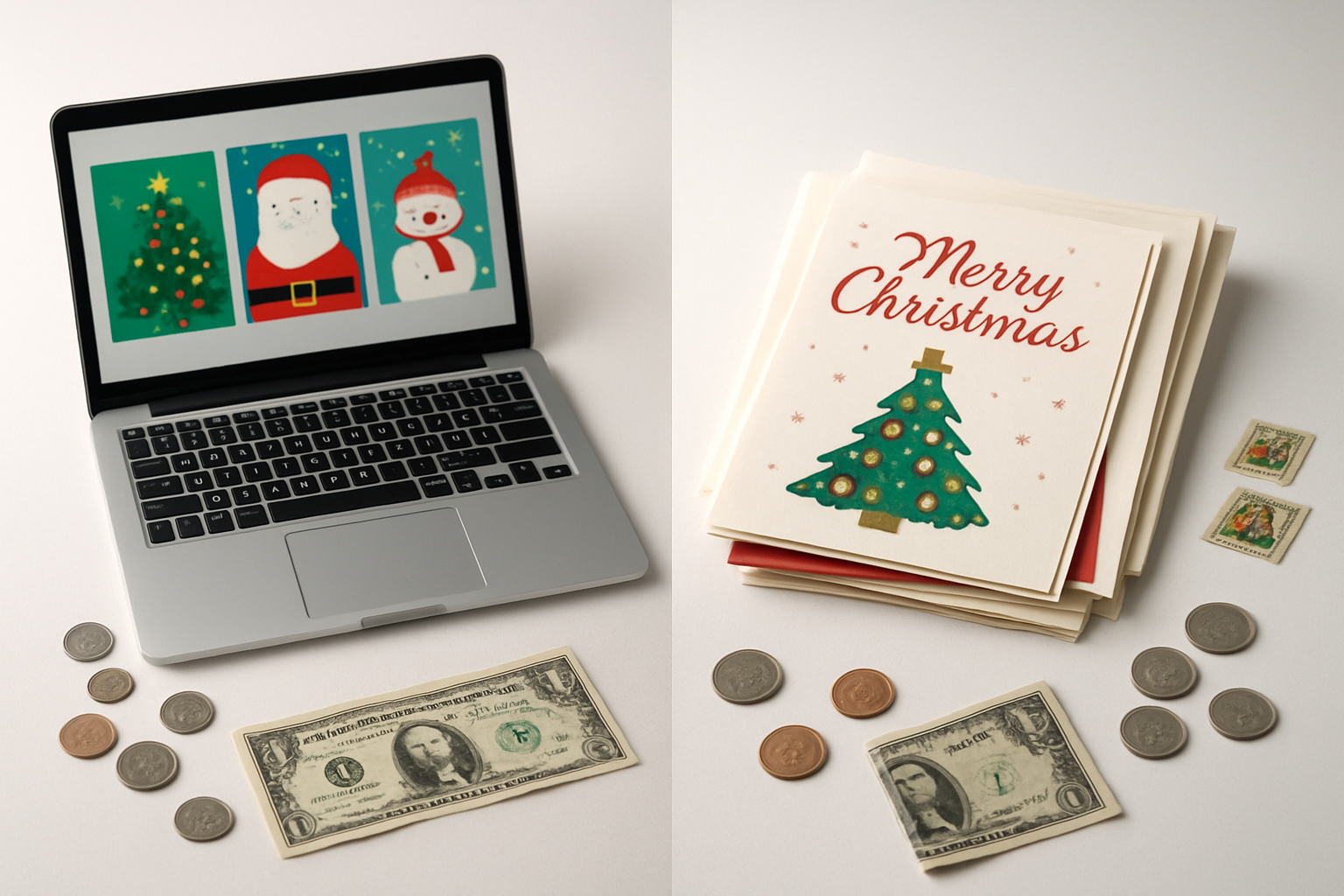
When diving into a Christmas card cost analysis, the upfront expenses reveal stark differences between digital and paper options. Digital Christmas cards typically require minimal initial investment – often just the cost of an online platform subscription or design software. Many platforms offer free tiers, while premium services range from $10-50 annually. Your smartphone or computer becomes your design studio, meaning no additional equipment purchases.
Paper Christmas cards comparison shows higher entry costs. Quality cardstock, envelopes, stamps, and printing services create immediate expenses. A basic pack of 50 blank cards costs $15-30, while custom printed cards range from $50-200 depending on design complexity and paper quality. Professional printing services add another $0.50-3.00 per card, and don't forget postage – currently $0.68 per card domestically.
| Card Type | Initial Setup Cost | Per Card Cost |
|---|---|---|
| Digital | $0-50 (platform fee) | $0-0.10 |
| Paper | $30-100 (supplies) | $1.50-4.00 |
Long-term Financial Impact Over Multiple Years
The financial picture shifts dramatically when examining multi-year scenarios. Electronic holiday greetings maintain their cost advantage year after year. Once you've established your digital workflow, annual expenses remain minimal – perhaps $20-40 for premium templates or platform subscriptions.
Paper cards create recurring financial commitments that compound over time. Families sending 100 cards annually spend approximately $200-400 each holiday season on printing, postage, and materials. Over five years, this investment reaches $1,000-2,000, while digital alternatives cost under $200 for the same period.
The savings become even more pronounced for businesses or families with extensive contact lists. Companies sending 500+ cards annually can save thousands by switching to digital formats, redirecting those funds toward other holiday initiatives or business investments.
Hidden Costs You Need to Consider
Beyond obvious expenses, several overlooked costs impact the true price of each option. Traditional vs digital Christmas cards comparison must account for time investment – paper cards require shopping trips, addressing envelopes, and post office visits. Valuing your time at $15-25 per hour adds $50-150 to paper card costs annually.
Digital cards carry their own hidden expenses. Reliable internet connections, device upgrades, and potential learning curves for new software represent indirect costs. However, these investments typically serve multiple purposes beyond holiday greetings.
Storage represents another factor – paper cards require physical space and filing systems, while digital versions live in cloud storage you're likely already paying for. International shipping costs for paper cards can reach $1.50-5.00 per card, making digital alternatives especially attractive for global connections.
Design changes or errors prove costly with paper cards, requiring complete reprints. Digital cards allow unlimited revisions without additional expense, providing flexibility that translates to real savings when perfection matters.
Environmental Impact Comparison

Carbon Footprint of Digital Card Creation and Delivery
Digital Christmas cards produce a significantly smaller carbon footprint compared to their paper counterparts. When you send electronic holiday greetings, the primary environmental impact comes from the energy used by data centers, servers, and devices. A typical digital card generates approximately 0.3 grams of CO2, primarily from electricity consumption during creation, storage, and transmission.
The carbon emissions from digital cards remain relatively stable regardless of how many recipients you include. Whether you send one digital card or 500, the environmental cost stays nearly constant. Cloud storage and email servers run on renewable energy sources at many major tech companies, which has dramatically reduced the carbon intensity of digital communications over the past decade.
Device manufacturing represents the largest environmental cost in the digital card lifecycle, but since people typically use existing smartphones, tablets, or computers to send cards, this impact gets distributed across thousands of daily activities rather than attributed solely to card sending.
Paper Production and Waste Generation Effects
Paper Christmas cards carry a substantial environmental burden that begins long before the card reaches your mailbox. Traditional Christmas card production requires harvesting trees, processing wood pulp, manufacturing paper, printing with inks and dyes, and packaging materials. A single paper card generates approximately 140 grams of CO2 throughout its lifecycle.
The paper industry ranks among the world's most resource-intensive manufacturing sectors. Producing one ton of paper requires roughly 24 trees and 20,000 gallons of water. The bleaching process introduces chlorine compounds into waterways, while printing inks often contain volatile organic compounds that contribute to air pollution.
Christmas card waste creates additional environmental challenges. Americans discard approximately 2.6 billion Christmas cards annually, generating over 300,000 tons of waste. While many cards are recyclable, decorative elements like glitter, foil, ribbons, and plastic components contaminate recycling streams and force cards into landfills where they contribute to methane emissions.
Transportation amplifies the environmental impact of paper Christmas cards comparison scenarios. Cards travel from manufacturing facilities to retail stores, then from senders to recipients through postal networks involving trucks, planes, and delivery vehicles.
Sustainable Alternatives Within Each Category
Eco-friendly Christmas cards options exist within both digital and paper categories for environmentally conscious senders. Digital platforms now offer carbon-neutral services by purchasing renewable energy credits or investing in reforestation projects to offset their operational emissions. Some companies allow users to make small donations to environmental causes with each card sent.
For paper card enthusiasts, sustainable alternatives include cards made from recycled content, agricultural waste, or rapidly renewable materials like bamboo or hemp. Seed paper cards embedded with wildflower or herb seeds allow recipients to plant the card after the holidays, creating a positive environmental impact. Soy-based inks and water-based coatings reduce chemical pollution compared to traditional printing methods.
Local printing services often provide eco-friendly options with shorter transportation distances. Some specialty retailers offer cards made from post-consumer recycled content or Forest Stewardship Council certified paper, ensuring responsible forestry practices.
Minimalist designs without foil, glitter, or plastic elements make paper cards fully recyclable. Choosing smaller card sizes reduces material consumption while maintaining the personal touch many people value in traditional cards.
Real-world Environmental Statistics
Environmental data reveals striking differences between digital Christmas cards and paper alternatives. Life cycle assessments show that paper cards generate 47 times more greenhouse gases than digital versions. The manufacturing phase alone accounts for 60% of a paper card's total environmental impact.
Water consumption statistics highlight another significant disparity. Digital cards require virtually no water beyond standard data center cooling systems, while paper card production consumes approximately 2-3 gallons of water per card when accounting for tree growing, pulp processing, and manufacturing operations.
| Environmental Factor | Digital Cards | Paper Cards |
|---|---|---|
| CO2 Emissions per card | 0.3g | 140g |
| Water Usage per card | Negligible | 2-3 gallons |
| Trees required per card | 0 | 0.01 |
| Waste generation | None | 100% card weight |
Energy consumption studies demonstrate that sending 100 digital cards requires roughly the same energy as keeping a LED light bulb on for one hour. In contrast, producing 100 paper cards consumes energy equivalent to running that same bulb for nearly two weeks.
Postal delivery systems add substantial emissions to paper card environmental calculations. The average Christmas card travels 1,000 miles from creation to disposal, generating additional transportation-related emissions throughout the postal network.
Convenience and Time-Saving Benefits
Speed of Creation and Customization Options
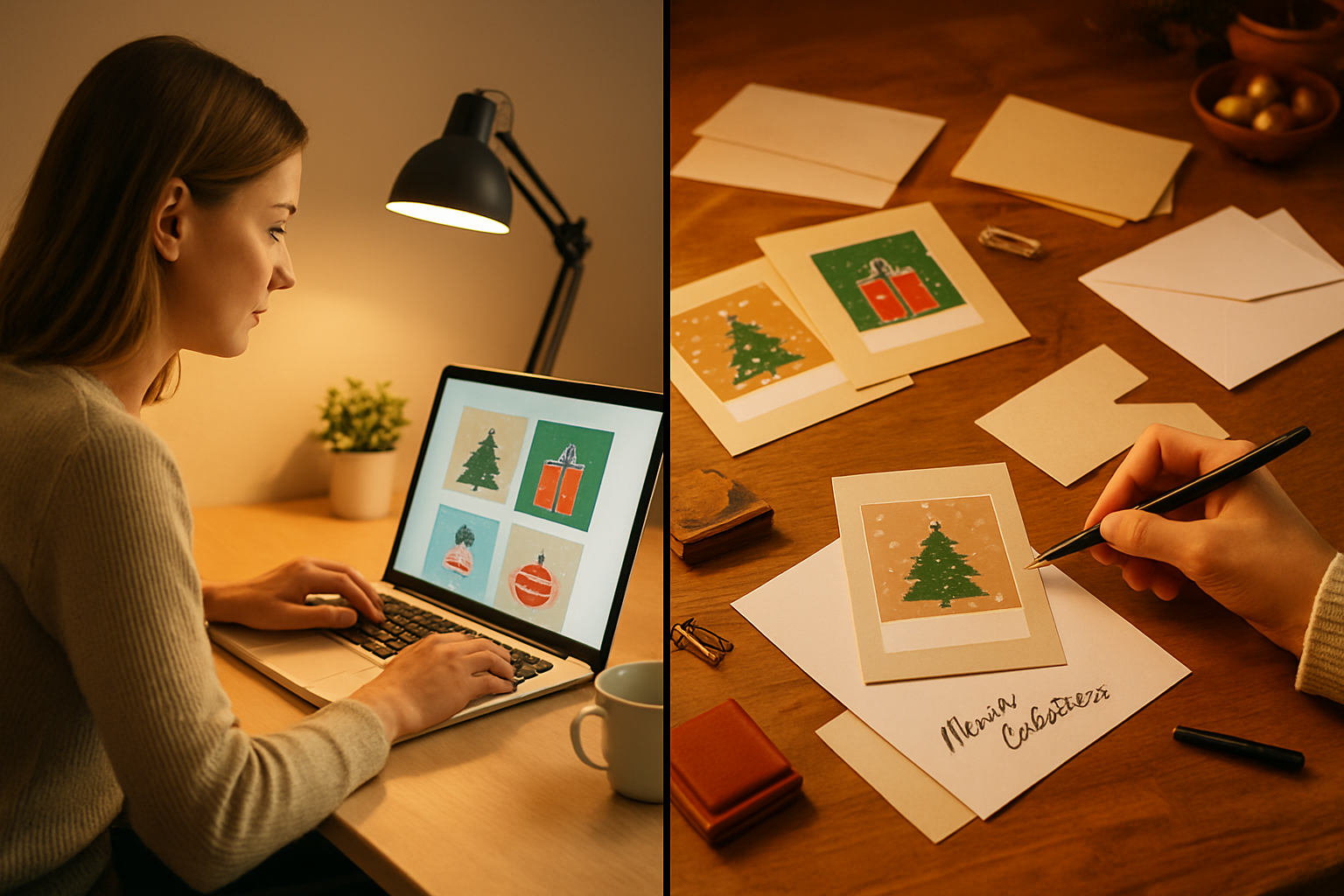
Digital Christmas cards blow traditional paper cards out of the water when it comes to speed and customization. With online Christmas card platforms, you can design, personalize, and finalize your holiday greetings in under 30 minutes. Paper cards require planning weeks ahead - choosing designs, placing orders, waiting for printing, and manually addressing each envelope.
Digital platforms offer instant customization with drag-and-drop editors, photo uploads, and text modifications. You can create multiple versions for different recipients, adjust colors, fonts, and layouts in real-time. Many services provide templates that automatically resize your content for various formats, from email-friendly versions to social media posts.
The speed advantage becomes even more pronounced for last-minute senders. Forgot about your Christmas cards until December 20th? Digital Christmas cards can be created and sent within hours, while paper alternatives would never arrive on time.
Distribution and Delivery Efficiency
Electronic holiday greetings reach recipients instantly, regardless of geographic location. While paper cards face postal delays, weather disruptions, and international shipping challenges, digital versions arrive in inboxes within seconds of sending.
Mass distribution becomes effortless with digital cards. Most platforms allow bulk sending to entire contact lists with personalized messages for each recipient. You can schedule deliveries for specific dates and times, ensuring your greetings arrive at the perfect moment.
Paper cards require individual addressing, stamping, and mailing - a process that becomes increasingly tedious with larger recipient lists. International postage costs and delivery uncertainties add complexity to traditional Christmas card distribution.
Storage and Organization Advantages
Digital Christmas cards eliminate physical storage concerns entirely. Your holiday memories live safely in cloud storage, searchable and accessible from any device. No more boxes of cards cluttering closets or worry about damage from moisture, pets, or time.
Organizational benefits include automatic contact management, delivery tracking, and response monitoring. Digital platforms often integrate with existing contact lists, updating addresses automatically and flagging bounced emails. You can easily track which recipients opened their cards and responded.
Traditional paper Christmas cards create ongoing storage challenges for both senders and recipients. Senders must find space for leftover inventory, while recipients face decisions about keeping, displaying, or discarding physical cards. Digital alternatives free everyone from these space constraints while preserving the sentimental value through permanent digital archives.
Personal Touch and Emotional Connection

Tangible Experience and Keepsake Value
Paper Christmas cards create a physical connection that digital Christmas cards simply can't match. When you hold a traditional card in your hands, you feel the texture of the paper, notice the weight of quality cardstock, and experience the satisfaction of opening an envelope addressed specifically to you. This sensory experience triggers emotional responses that screen-based messages rarely achieve.
The keepsake value of paper cards stands unmatched. Many families treasure holiday cards from loved ones, creating annual displays on mantels or refrigerators that become part of their Christmas traditions. Children often save special cards from grandparents, and adults keep meaningful messages from friends who have moved away. These physical mementos become part of family history, something you can rediscover years later in a box of memories.
Digital holiday greetings, while convenient, lack this lasting physical presence. They might sit in an email inbox or get lost among countless other digital messages. The ephemeral nature of electronic communication means these greetings rarely become cherished keepsakes that families pass down through generations.
Customization and Personalization Capabilities
Both digital and paper Christmas cards offer extensive personalization options, but each format provides unique advantages. Paper cards allow for handwritten notes, personal signatures, and even small additions like photos or stickers. The act of writing by hand adds authenticity and shows the recipient that you invested time specifically for them.
Digital Christmas cards excel in multimedia personalization. You can include multiple photos, videos, animations, and even recorded voice messages. Online platforms offer sophisticated design tools that let you create interactive elements, embed music, or add moving graphics that capture attention in ways paper cards cannot.
Traditional Christmas card customization often involves:
-
Handwritten personal messages
-
Family photo inserts
-
Custom envelope addressing
-
Personal signatures from each family member
-
Added decorative elements
Electronic holiday greetings can feature:
-
Multiple photo galleries
-
Video messages
-
Animated graphics
-
Embedded music or sounds
-
Interactive elements
-
Instant social media sharing capabilities
Recipient Reception and Perceived Thoughtfulness
The way recipients perceive your Christmas greetings varies significantly between digital and paper formats. Many people, particularly older generations, view paper cards as more thoughtful because they require more effort to purchase, address, stamp, and mail. The physical act of going to a store, selecting cards, and taking time to write personal messages signals genuine care.
Younger recipients might appreciate digital Christmas cards for their creativity and multimedia features. They understand the effort involved in creating animated greetings or compiling photo montages. The immediate sharing capabilities also allow them to easily show friends and family your creative holiday message.
Research suggests that receiving physical mail triggers different emotional responses than digital communication. The anticipation of opening mail, the surprise factor, and the deliberate nature of sending paper cards often create stronger positive associations. However, digital cards can reach recipients instantly, making them perfect for last-minute greetings or connecting with distant relatives.
Memory Creation and Lasting Impact
Paper Christmas cards contribute to memory creation through their physical permanence and association with holiday traditions. The ritual of checking the mailbox for cards, displaying them around the home, and revisiting them throughout the season becomes part of the Christmas experience. These cards often trigger specific memories years later when rediscovered.
The lasting impact of traditional vs digital Christmas cards depends largely on how they're preserved and accessed. Paper cards naturally become part of physical memory collections, while digital cards require intentional saving and organization to avoid being lost in the digital shuffle. Families who create annual photo books or scrapbooks might incorporate both formats, but paper cards more easily become part of these tangible memory-keeping traditions.
Digital cards excel at capturing and sharing moments instantly, making them valuable for families separated by distance. The ability to include multiple photos and videos can create richer immediate experiences, but their long-term memory impact depends on recipients actively saving and organizing these digital keepsakes.
Technology Requirements and Accessibility
Digital Skills and Device Compatibility Needs
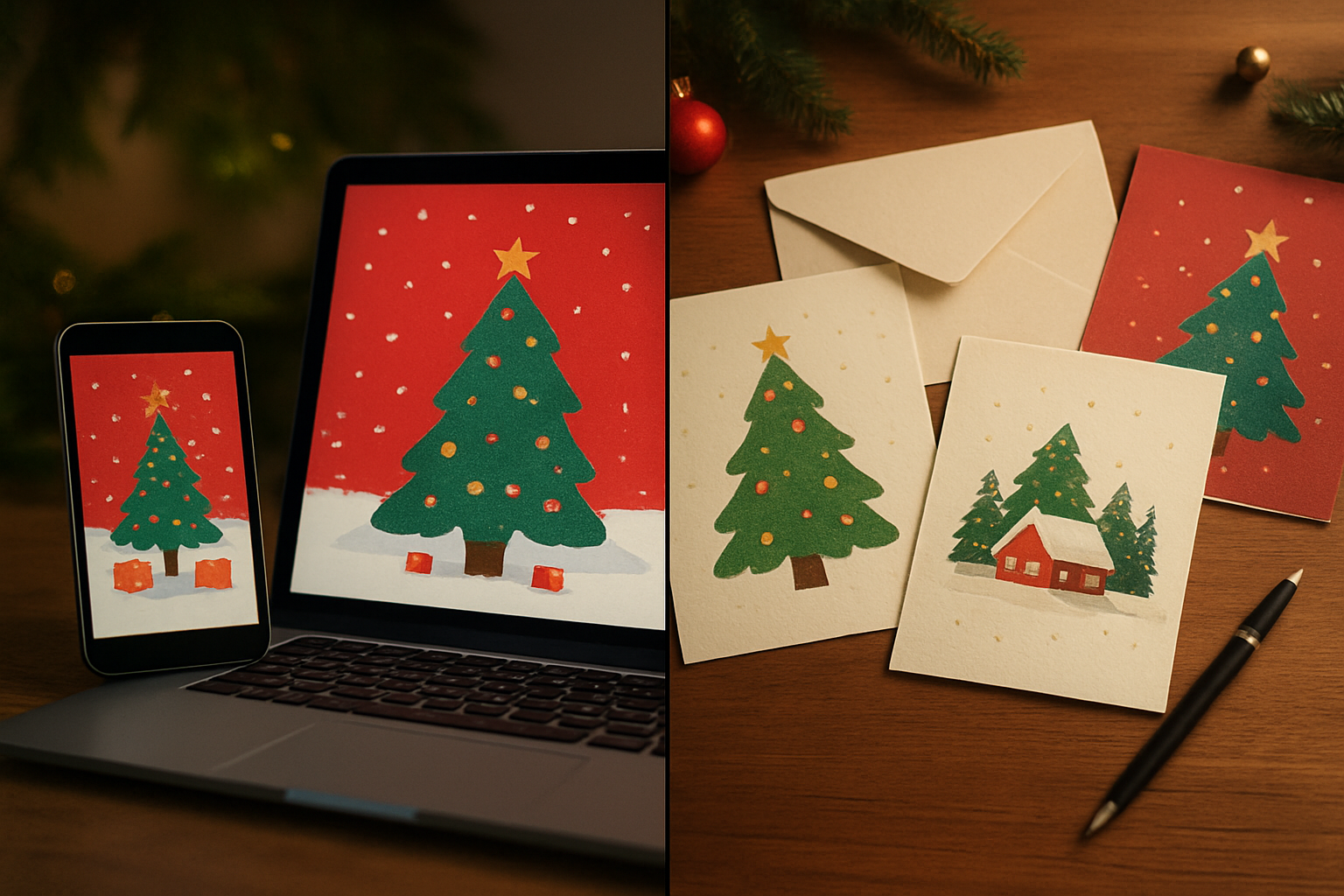
Digital Christmas cards require a baseline level of tech savviness that varies dramatically among users. Recipients need smartphones, computers, or tablets to view electronic holiday greetings properly, and these devices must have updated operating systems and compatible browsers or apps.
Many digital Christmas card platforms require users to create accounts, navigate websites, or download specific applications. While these steps seem straightforward to digital natives, they can present significant hurdles for less tech-comfortable individuals. Consider your grandmother who still uses a flip phone – she'll miss out entirely on beautifully designed online Christmas cards vs printed alternatives that arrive in her mailbox.
Device compatibility creates another layer of complexity. iOS and Android systems may display digital cards differently, and older devices might struggle with newer file formats or interactive features. Email clients also vary in their ability to render multimedia content, potentially turning your animated Christmas greeting into a broken link or garbled text.
Storage limitations on older devices can prevent people from downloading or viewing larger digital card files, especially those with video elements or high-resolution graphics. This technological divide means your carefully crafted digital Christmas cards might not reach their intended audience in the format you envisioned.
Internet Connectivity Dependencies
Electronic holiday greetings rely entirely on stable internet connections for both sending and receiving. Rural areas with spotty Wi-Fi or limited data plans face significant barriers when accessing digital Christmas cards. Even in urban settings, network congestion during peak holiday seasons can delay delivery or cause loading issues.
Mobile data costs add another consideration. Large digital card files can quickly consume monthly data allowances, making recipients hesitant to open or fully experience your greeting. Video cards, interactive elements, and high-quality images demand substantial bandwidth that isn't universally available.
Power outages during winter storms can knock out internet access for days, making digital cards temporarily inaccessible when people most need connection during the holidays. Paper Christmas cards comparison shows clear advantages here – physical cards remain readable regardless of technical infrastructure challenges.
International sending presents additional connectivity hurdles. Different countries have varying internet speeds and restrictions that might block certain platforms or file types. What loads instantly in one location might take minutes elsewhere or fail completely.
Age-Related Preferences and Barriers
Generational digital divides significantly impact Christmas card accessibility. Baby Boomers and older adults often prefer the tangible experience of traditional vs digital Christmas cards, finding comfort in familiar routines of opening physical mail and displaying cards on mantels.
Many seniors struggle with small touchscreen interfaces, making it difficult to navigate digital card platforms or view content clearly. Vision impairments compound these challenges, as screen brightness and font sizes may not adjust adequately for comfortable reading. Unlike paper cards that can be held closer or farther away naturally, digital displays require specific technical knowledge to modify viewing settings.
Cognitive load increases with digital platforms that require multiple steps – clicking links, entering passwords, navigating menus. Older adults may feel overwhelmed by interfaces designed for younger users, leading to frustration rather than holiday joy. The fear of accidentally deleting important messages or clicking wrong buttons creates anxiety around digital Christmas cards.
Social aspects matter too. Older generations value showing cards to visitors and creating physical holiday displays. Digital cards exist only in virtual spaces, removing opportunities for shared experiences and traditional holiday decorating practices that strengthen social bonds.
Technical Support and Troubleshooting Challenges
When digital Christmas cards malfunction, recipients often lack immediate access to technical support. Unlike paper cards that simply work upon arrival, electronic versions can fail due to countless variables – expired links, account issues, software conflicts, or format incompatibilities.
Family members frequently become involuntary IT support for relatives struggling with digital cards. This creates additional holiday stress as tech-savvy individuals field calls about login problems, missing attachments, or display issues. The burden shifts from simple card enjoyment to technical problem-solving.
Platform-specific issues multiply complications. Each service – whether email providers, social media platforms, or specialized card sites – has unique quirks and limitations. Troubleshooting requires knowledge of multiple systems, which exceeds most users' technical expertise.
Christmas card accessibility suffers when problems arise during holiday travel. Recipients checking messages from unfamiliar devices or networks may encounter security restrictions, different interfaces, or limited functionality. Technical difficulties during family gatherings can disrupt celebration moods and create generational tensions over technology adoption.
Recovery options for failed digital deliveries remain limited compared to postal service tracking and redelivery systems. When electronic holiday greetings disappear into spam folders or fail to load, senders often remain unaware of delivery problems, missing opportunities to reconnect through alternative methods.
Design Flexibility and Creative Options
Template Variety and Customization Freedom
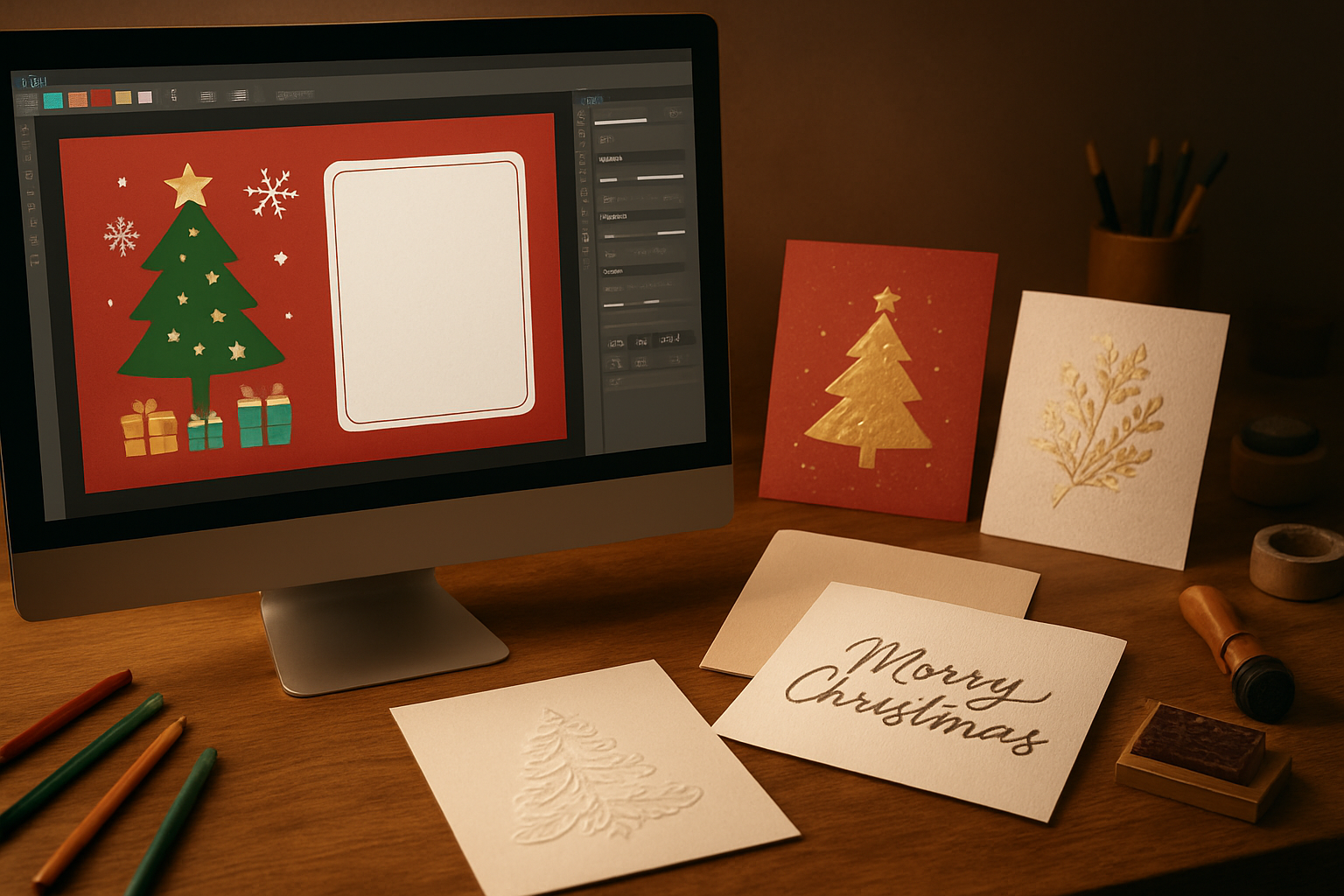
Digital Christmas cards blow paper cards out of the water when it comes to design options. Online platforms offer thousands of templates that you can tweak instantly – change colors, fonts, layouts, and add personal photos with just a few clicks. You're not stuck with whatever the card shop has in stock. Want a minimalist design with your family photo? Done. Prefer something bold and festive with animated elements? Easy.
Paper cards, while beautiful in their own right, come with serious limitations. You pick from what's available at the store, and that's pretty much it. Sure, you can find gorgeous designs, but customization usually means expensive special orders or DIY projects that eat up your time.
The real game-changer with digital Christmas cards is the ability to create multiple versions for different recipients. Send a formal design to your boss and a fun, casual one to your college friends – all from the same platform. Try doing that with paper cards without breaking the bank.
Multimedia Integration Possibilities
This is where digital cards really shine. You can embed videos of your kids opening presents, add voice messages from grandparents, or include a slideshow of your year's highlights. Electronic holiday greetings can tell your story in ways paper simply can't match.
Music adds another layer of magic. Imagine opening a card and hearing your favorite Christmas song or a recording of your child singing "Silent Night." These multimedia touches create memorable experiences that recipients actually want to share with others.
Paper cards stick to static images and text. While they can be tactile and visually stunning, they can't compete with the dynamic storytelling possibilities of digital formats.
Professional Quality Achievement Methods
Getting professional results with online Christmas cards vs printed options has never been easier. Digital platforms provide high-resolution templates designed by professional artists. You don't need graphic design skills to create something that looks like it came from a boutique studio.
For paper cards, achieving that same professional look often requires expensive printing services or advanced design software. The learning curve is steep, and mistakes mean reprinting – which costs time and money.
Holiday card design options in the digital realm include sophisticated features like automatic photo enhancement, smart cropping, and professional typography. Many platforms even offer design assistance, helping you create cards that rival expensive custom print jobs at a fraction of the cost.
The choice between digital and paper Christmas cards really comes down to what matters most to you. If saving money and protecting the environment are your top priorities, digital cards are clearly the winner - they cost next to nothing and leave zero carbon footprint. But if you want to create lasting memories and show people you care enough to send something they can hold onto, traditional paper cards still have that special magic that a screen just can't match.
Your decision should also consider your audience and circumstances. Digital cards work great when you're short on time, dealing with long-distance relationships, or sending to tech-savvy friends and family. Paper cards shine when you're reaching out to older relatives, want to include a handwritten note, or simply love the tradition of holiday mail. The good news is you don't have to pick just one - many people are finding success with a hybrid approach, using digital cards for acquaintances and saving paper cards for their closest loved ones.


Comments
Post a Comment