How to create a vision board for the New Year
.png)
Creating a vision board for goals doesn't require artistic talent or expensive materials. You just need clarity about what you want and the right approach to bring those dreams to life visually.
We'll walk through everything you need to know about how to create a vision board that actually works. You'll discover the essential vision board materials that won't break the bank, learn how to design a vision board layout that speaks to your subconscious mind, and explore practical techniques to turn your manifestation board into a daily tool for achieving your biggest New Year goals.
Understand the Power of Vision Boards for Goal Achievement
Your brain processes visual information 60,000 times faster than text, making vision boards incredibly powerful tools for goal achievement. When you create a New Year vision board, you're tapping into your mind's natural ability to recognize patterns and opportunities that align with your visual representations.
The science behind visual manifestation lies in your reticular activating system (RAS) - the brain's filtering mechanism that decides what information deserves your attention. When you regularly view images representing your goals, your RAS becomes fine-tuned to notice relevant opportunities, resources, and connections in your daily life that might otherwise go unnoticed.
Visual representation also activates multiple areas of your brain simultaneously, creating stronger neural pathways than words alone. This multi-sensory engagement helps embed your goals deeper into your subconscious mind, where they can influence your decisions and behaviors throughout the year.
Learn why vision boards outperform written goals alone
Studies reveal that people who use visual goal-setting techniques are 42% more likely to achieve their objectives compared to those who only write down their goals. Vision boards create what psychologists call "mental rehearsal," allowing your mind to practice achieving your goals before you take physical action.
Written goals engage primarily your analytical left brain, while vision boards activate both hemispheres. This whole-brain approach strengthens your emotional connection to your aspirations, making them feel more real and attainable. The combination of images, colors, and textures on your manifestation board creates a rich sensory experience that written lists simply cannot match.
Vision boards also bypass your inner critic more effectively than written goals. When you read "I want to travel to Paris," your logical mind might immediately list obstacles. However, seeing a beautiful image of the Eiffel Tower evokes feelings of excitement and possibility rather than doubt.
Explore the psychological benefits of daily visual reminders
Regular exposure to your vision board creates positive psychological anchoring, where specific images become associated with feelings of success and accomplishment. This daily reinforcement gradually shifts your mindset from hoping for change to expecting it, building the confidence necessary for taking bold action toward your goals.
Visual reminders also combat the natural tendency to forget or abandon New Year resolutions. Research shows that 80% of people give up on their goals by February, often because they lose sight of their original motivation. Your dream board serves as a constant reminder of why you started and what you're working toward.
The practice of viewing your vision board becomes a form of meditation, creating moments of focus and intention in your busy day. These brief mental breaks help reduce stress while reinforcing positive thought patterns that support goal achievement.
Identify how vision boards increase motivation and focus
Vision boards transform abstract goals into concrete visual targets, making it easier for your mind to stay focused on what matters most. When faced with daily decisions, the images on your board serve as a compass, helping you choose actions that align with your bigger picture rather than getting distracted by less important activities.
The visual nature of your goal setting vision board also makes it easier to track progress and celebrate small wins along the way. As you achieve milestones, you can add new elements or modify existing images, creating a dynamic representation of your evolving journey.
Motivation naturally fluctuates throughout the year, but your vision board provides consistent inspiration during challenging periods. The carefully selected images remind you of the emotions and experiences you're working toward, reigniting your passion when willpower alone isn't enough to keep you moving forward.
Gather Essential Materials and Tools for Your Vision Board
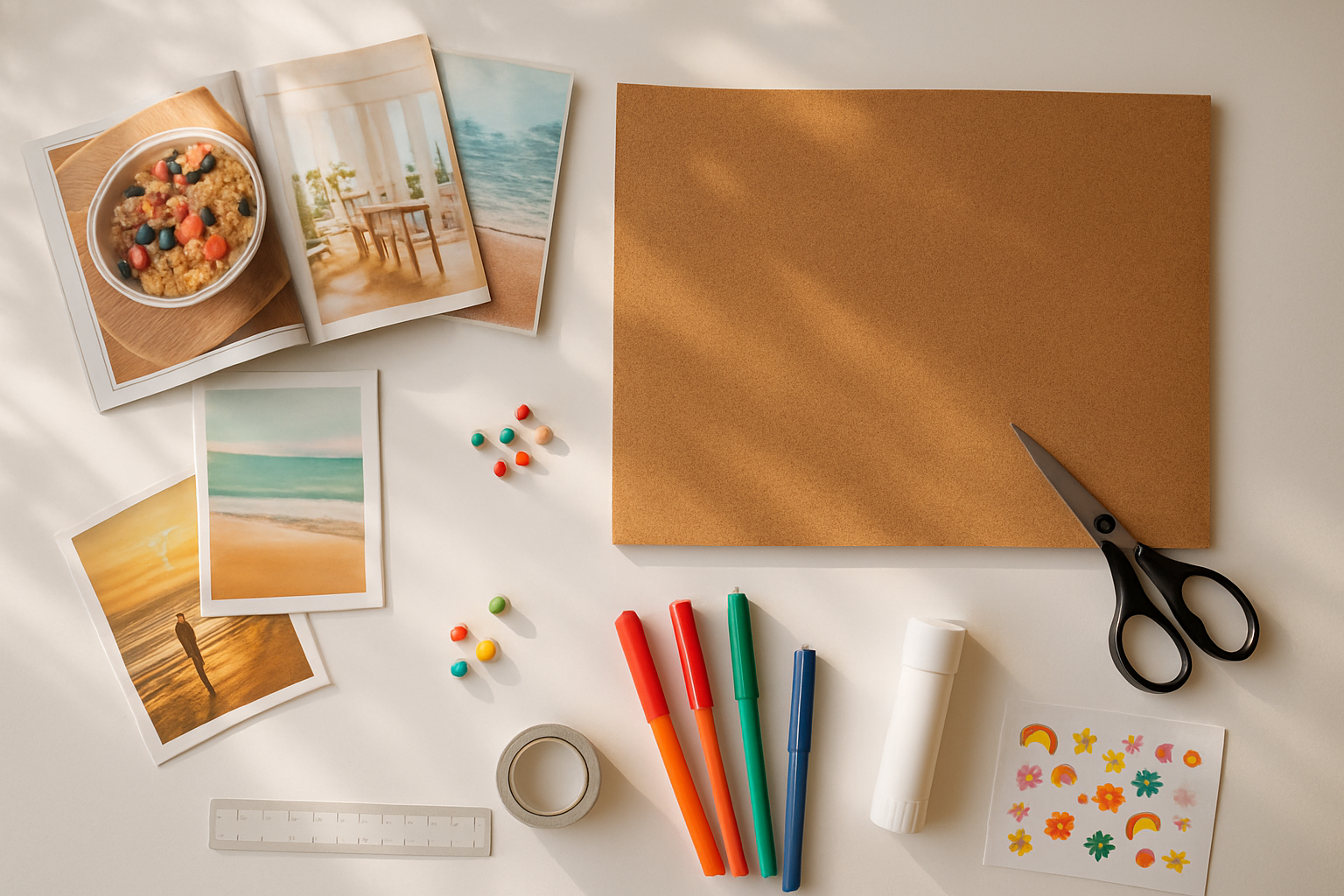
Choose between physical board options and digital alternatives
Creating your New Year vision board starts with deciding whether to go physical or digital. Physical boards offer a tangible experience that many find more engaging and memorable. Cork boards provide the classic vision board foundation – they're durable, allow easy repositioning with pins, and come in various sizes from desktop versions to large wall-mounted options. Poster boards work well for permanent displays and cost less than cork boards, though they're less flexible for changes.
Foam core boards offer a professional look and smooth surface perfect for gluing images directly. They're lightweight yet sturdy, making them ideal for hanging or propping up anywhere in your home. For those wanting something unique, canvas boards create an artistic feel and can double as room decor.
Digital vision board creation has gained popularity with apps like Pinterest, Canva, and Milanote. These platforms let you create vision boards for goals using drag-and-drop features, making it simple to experiment with different layouts. Digital boards work perfectly as phone wallpapers or computer screensavers, keeping your goals visible throughout the day.
| Board Type | Pros | Cons | Best For |
|---|---|---|---|
| Cork Board | Repositionable, durable | Higher cost | Long-term goals |
| Poster Board | Affordable, large surface | Permanent placement | Budget-conscious creators |
| Digital Apps | Easy editing, always accessible | Less tactile | Tech-savvy users |
Collect magazines, printouts, and inspirational images
Your vision board materials determine how effectively your goals come to life visually. Start collecting magazines that align with your aspirations – lifestyle magazines for health and wellness goals, business publications for career objectives, travel magazines for adventure dreams, and home decor magazines for living space goals.
Don't limit yourself to current magazines. Thrift stores, libraries, and friends often have older issues with unique images you won't find elsewhere. Fashion magazines provide excellent images for personal style goals, while fitness magazines offer motivation for health transformations.
Print high-resolution images from the internet when you can't find what you need in magazines. Search for specific terms related to your vision board ideas – if you want to travel to Japan, print photos of cherry blossoms, temples, or cityscapes. For career goals, find images of your ideal workspace, professional settings, or symbols of success in your field.
Consider these image sources:
-
Stock photo websites with free downloads
-
Social media platforms like Instagram or Pinterest
-
Your own photos representing achieved mini-goals
-
Inspirational quotes in beautiful fonts
-
Color swatches that represent the emotions you want to feel
Personal photos add powerful meaning to your manifestation board. Include pictures of yourself looking confident, happy moments with loved ones, or places that inspire you. These personal touches make your dream board creation feel authentic and connected to your real life.
Select quality scissors, glue, and decorative supplies
The right tools make your vision board assembly smooth and enjoyable. Invest in sharp, comfortable scissors – dull blades create ragged edges that detract from your board's visual impact. Craft scissors with ergonomic handles reduce hand fatigue during longer cutting sessions. Small detail scissors help with intricate cutting around curved edges or fine text.
For adhesives, glue sticks work best for paper materials because they dry clear and won't cause wrinkling. Avoid liquid glue that can seep through thin magazine pages. Double-sided tape provides clean application and strong hold, especially useful for thicker materials or when you might want to reposition items later.
Spray adhesive creates smooth, bubble-free application across larger images but requires good ventilation and protective covering for your work surface. Photo mounting squares offer precise placement and work excellently for creating layered effects on your vision board layout design.
Decorative supplies add personality and energy to your board:
-
Colorful washi tape for borders and frames
-
Metallic markers for highlighting important words
-
Stickers and gems for adding sparkle to key goals
-
Colored pens for writing affirmations directly on the board
-
Ribbon or twine for creating sections or hanging elements
Don't forget practical supplies like a ruler for straight lines, pencil for light guidelines, and a cutting mat to protect your work surface. These vision board materials might seem basic, but they make the difference between a sloppy-looking board and one that truly inspires you every time you see it.
Define Your New Year Goals Across Key Life Areas

Clarify Your Career and Professional Aspirations
Start by getting crystal clear about where you want your career to go this year. Think about the promotion you've been eyeing, the new skills you want to develop, or maybe that side hustle you've been putting off. Your vision board for goals should include specific images that represent your professional dreams - whether that's a corner office, a laptop representing remote work freedom, or symbols of the industry you want to break into.
Consider what success looks like for you personally. Some people want leadership roles, while others crave creative freedom or work-life balance. Write down three specific career goals, then find visuals that make you feel excited about achieving them. A picture of someone giving a presentation might represent your goal to become a better public speaker, while an image of a diploma could symbolize that certification you want to earn.
Establish Health and Wellness Objectives
Your health deserves prime real estate on your New Year vision board. This goes way beyond just wanting to "get in shape" - dig deeper into what wellness means for you. Maybe you want to run your first 5K, cook more meals at home, or finally get eight hours of sleep consistently.
Think about both physical and mental health goals. Pictures of fresh vegetables might represent better nutrition, while an image of someone meditating could symbolize your commitment to stress management. Don't forget about preventive care - that dental checkup you've been avoiding or the annual physical you keep rescheduling.
Create a mix of outcome goals (like reaching a certain weight) and process goals (like working out three times per week). Process goals often work better for vision board creation because they're more actionable and within your control.
Set Relationship and Family Priorities
Relationships often get pushed to the back burner when life gets busy, but your vision board should remind you of what truly matters. Think about how you want to show up for the people you care about this year. Maybe you want to plan monthly date nights with your partner, call your parents more often, or be more present when playing with your kids.
Include images that represent quality time and connection. A picture of a family dinner might remind you to put phones away during meals, while an image of friends laughing could represent your goal to nurture friendships. If you're single and looking to meet someone, include visuals that represent the kind of relationship you want to build.
Don't overlook your relationship with yourself. Self-compassion and personal boundaries are relationship goals too.
Determine Financial and Material Goals
Money goals work great for vision boards because they're often tied to specific numbers and tangible outcomes. But go beyond just "save more money" - what do you actually want to do with that money? Are you saving for a house down payment, planning an amazing vacation, or building an emergency fund for peace of mind?
Include both short-term and long-term financial objectives. Maybe you want to pay off credit card debt by summer and start investing by the end of the year. Visual elements could include images of the home you want to buy, the car you're saving for, or even just a picture of a piggy bank to represent building your savings habit.
Remember that financial goals often connect to your other life areas. That emergency fund supports your wellness goals by reducing stress, and saving for a vacation strengthens relationships by creating shared experiences.
Outline Personal Growth and Spiritual Intentions
Personal development goals can be the most powerful part of your vision board ideas because they influence everything else in your life. Think about the person you want to become, not just what you want to achieve. Maybe you want to be more patient, develop better communication skills, or cultivate gratitude.
Spiritual goals don't have to be religious - they might involve connecting with nature, developing mindfulness, or finding more meaning in your daily activities. Images of sunrise, mountains, or peaceful settings can represent your desire for inner peace and reflection.
Consider habits that support personal growth, like reading more books, keeping a journal, or practicing meditation. A stack of books or a peaceful meditation scene might represent these intentions perfectly.
The key with personal growth goals is making them specific enough to visualize but flexible enough to evolve as you do.
Source and Select Powerful Visual Elements

Find Images That Emotionally Resonate with Your Dreams
The heart of any powerful vision board lies in selecting images that spark genuine emotion and excitement within you. When creating a vision board for your New Year goals, look for pictures that make you feel something deep in your chest—that flutter of possibility, that surge of motivation, or that quiet sense of "yes, this is what I want."
Start by browsing magazines, Pinterest, or stock photo websites with your specific goals in mind. If your dream involves traveling to Italy, don't just grab any random photo of Rome. Search for that one image that captures the exact feeling you want—maybe it's a sunset over Tuscany that makes you feel peaceful, or a bustling Italian market that energizes you.
The key is authenticity. Your subconscious mind responds to images that genuinely resonate with your desires, not what you think should inspire you. If you're working toward financial freedom, you might be drawn to a cozy home office setup rather than stacks of money. Trust that instinct.
Save multiple options for each goal area, then narrow down to the ones that give you the strongest emotional response. These vision board ideas work best when every image serves as a personal trigger that reconnects you with your why.
Choose Colors and Fonts That Inspire Positive Energy
Color psychology plays a massive role in how your brain processes and responds to your vision board. Different colors trigger different emotions and energy levels, so choosing the right palette can amplify your manifestation board's effectiveness.
Green represents growth, abundance, and new beginnings—perfect for financial goals or health transformations. Blue promotes calm focus and clear communication, making it ideal for career advancement or educational pursuits. Red energizes and motivates, while gold suggests prosperity and success.
Consider your personality and what colors naturally draw you in. Some people feel energized by bright, vibrant hues, while others find inspiration in soft, muted tones. Your New Year vision board should reflect your authentic self.
For fonts and text elements, readability matters more than fancy styling. Bold, clean fonts work best for affirmations and goal statements. Script fonts can add elegance to personal mantras, but use them sparingly. Stick to two or three font styles maximum to maintain visual harmony.
Create a cohesive look by choosing a main color palette of three to five colors that work well together. This doesn't mean everything has to match perfectly, but having a general color theme helps your vision board layout design feel intentional rather than chaotic.
Include Meaningful Quotes and Affirmations
Words have incredible power to reinforce your visual goals and keep you motivated during challenging times. The right quotes and affirmations on your goal setting vision board act as daily reminders of your capabilities and intentions.
Choose quotes that speak directly to your specific goals rather than generic motivational sayings. If you're focused on building confidence, find quotes about courage and self-belief. For career goals, look for words about persistence and professional growth. Personal affirmations work even better because they're tailored to your exact situation and written in your voice.
Write affirmations in present tense, as if your goals are already happening. Instead of "I will be successful," try "I am creating success in my life every day." This subtle shift helps your mind accept these statements as current reality rather than distant possibilities.
Keep your text readable and strategically placed. Don't overcrowd your vision board with too many words—they should complement your images, not compete with them. Consider handwriting some affirmations for a more personal touch, or use letter stickers for a clean, intentional look.
Mix longer inspirational quotes with shorter, punchy affirmations. This variety keeps your eyes engaged and provides different types of motivation depending on what you need in the moment.
Add Personal Photos and Symbolic Representations
Personal elements transform your vision board from a generic collection of aspirational images into a deeply meaningful representation of your unique journey. Including photos of yourself, loved ones, or meaningful moments creates emotional anchors that make your goals feel more attainable.
Add a photo of yourself looking happy and confident—this reinforces that you're the person who achieves these dreams. Include pictures of family members or friends who support your goals, especially if your aspirations involve spending more time with them or creating experiences together.
Symbolic representations add layers of meaning that speak to your subconscious mind. A key might represent new opportunities or home ownership. A butterfly could symbolize transformation and personal growth. A compass might represent finding direction in your career. These symbols don't need to be obvious to others—they just need to resonate with you.
Consider adding small meaningful objects to create a three-dimensional element. This could be a small charm, a pressed flower from a meaningful location, or a ticket stub from an experience that represents your goals. These tactile elements make your vision board ideas more engaging and memorable.
The combination of personal photos and symbolic elements creates a vision board for goals that feels uniquely yours, making it more powerful as a daily inspiration tool for your New Year goals planning journey.
Design and Arrange Your Vision Board Layout
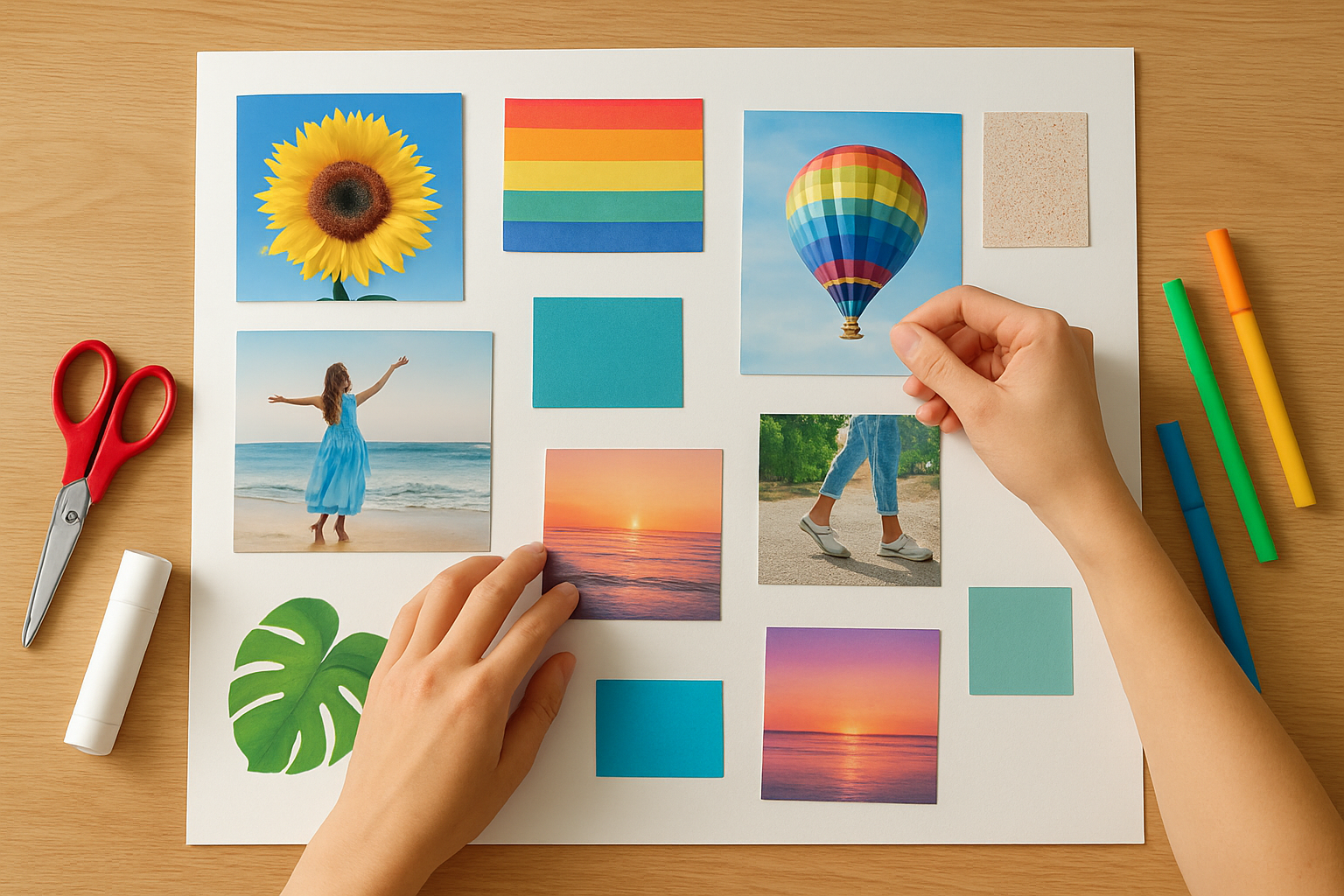
Create Focal Points for Your Most Important Goals
The secret to an effective vision board layout lies in creating clear focal points that immediately draw your eye to your most important aspirations. Start by identifying your top three New Year goals and position these elements in the center or upper portion of your board, where they'll naturally command attention.
Use larger images or text for these priority goals - think of them as the stars of your vision board show. A central focal point might feature a dream home, career achievement, or relationship goal that represents your biggest aspiration for the year ahead. Consider using bright colors, bold typography, or frames around these key elements to make them pop against the background.
The rule of thirds works beautifully for vision board layout design. Imagine your board divided into nine equal sections and place your most important goals at the intersection points. This creates natural viewing patterns that keep your eyes engaged and your mind focused on what matters most.
Balance Visual Elements for Optimal Impact
Visual balance transforms a cluttered collection of images into a cohesive, inspiring vision board that actually works. Think of your board as a puzzle where each piece needs to complement the others without overwhelming the overall message.
Mix different types of content strategically - combine photographs with inspiring quotes, add texture with fabric swatches or natural elements like leaves, and incorporate both color and black-and-white images to create visual interest. The key is avoiding information overload while maintaining variety.
Size matters when balancing your vision board elements. Large images should anchor your design, medium-sized elements fill the gaps, and smaller accents add detail without distraction. If you're working with bright, vibrant images, balance them with some neutral or calming elements to give your eyes a place to rest.
Consider the emotional weight of different elements too. A powerful quote about success might need more breathing room than a simple color swatch, even if they're physically the same size.
Organize Content by Theme or Priority Level
Smart organization turns your vision board from a random collage into a powerful goal-setting vision board that tells your story. Group related goals and dreams together to create natural flow and make your board easier to read and internalize.
Create distinct zones for different life areas - place all career-related images in one corner, health and wellness goals in another, and relationship aspirations in their own space. This thematic approach helps your brain process and remember your goals more effectively.
Priority-based organization works especially well for New Year vision boards. Place your most urgent or time-sensitive goals prominently at the top, with longer-term dreams flowing toward the bottom. This creates a natural timeline that reinforces when you want to achieve different milestones.
Color coding adds another layer of organization that your subconscious mind will appreciate. Use similar color families for related themes - blues for career goals, greens for financial aspirations, warm colors for relationships and personal growth.
Leave Space for Future Additions and Updates
Your vision board isn't a museum piece - it's a living document that should evolve as you grow and achieve your goals throughout the year. Smart vision board layout design includes intentional white space and flexible areas for updates.
Reserve about 20% of your board space for future additions. Life changes, new opportunities arise, and some goals might shift as you progress. Having designated areas for updates prevents your board from becoming overcrowded or outdated.
Consider using removable elements like sticky notes, small magnets, or clips that allow you to swap out achieved goals for new ones. This keeps your vision board fresh and relevant while celebrating your progress.
Create a small "wins" section where you can add photos, stickers, or notes about goals you've accomplished. This positive reinforcement strengthens your belief in the process and motivates you to keep pushing toward your remaining aspirations. The key is maintaining that perfect balance between structure and flexibility that keeps your vision board both organized and adaptable.
Activate Your Vision Board for Maximum Results
Your vision board needs prime real estate in your living space to work its magic. Place it somewhere you'll see it multiple times throughout the day - your bedroom wall facing your bed, above your desk, or in your kitchen where you grab your morning coffee. The key is making it impossible to ignore.
Avoid tucking your vision board away in a closet or spare room where it becomes "out of sight, out of mind." The whole point is to keep your New Year goals front and center in your daily awareness. Some people create smaller portable versions for their office or car dashboard alongside their main vision board at home.
Consider the lighting and visibility angles too. A dimly lit corner won't give your manifestation board the attention it deserves. Natural light works best, but good artificial lighting will do the trick if that's what you have to work with.
Establish a daily viewing and visualization routine
Creating your vision board is just the beginning - the real power comes from consistent daily interaction. Set aside 5-10 minutes each morning to stand in front of your board and really absorb what you see. Don't just glance at it while rushing past.
During these moments, close your eyes and visualize yourself already living these goals. Feel the emotions you'd experience when achieving each milestone. If you've included a dream vacation on your board, imagine the sand between your toes and the sound of waves. This emotional connection strengthens the neural pathways that drive goal-oriented behavior.
Evening reviews work just as well, especially before bed when your subconscious mind is most receptive. Some people prefer meditation or journaling sessions while facing their vision board for goals. Find what feels natural for your routine and stick with it.
Update and refresh content as goals evolve
Your vision board isn't a static piece of artwork - it's a living document of your aspirations. As you grow and your priorities shift, your board should evolve too. Maybe that career goal you had in January feels different by March, or you've discovered new dreams you want to pursue.
Schedule monthly check-ins to evaluate what's still resonating and what needs updating. Remove images or words that no longer spark excitement and replace them with fresh inspiration. This keeps your vision board ideas current and prevents it from becoming stale wallpaper you barely notice.
Don't feel guilty about changing directions. Life happens, and flexibility is a strength, not a weakness. Your goal setting vision board should reflect who you're becoming, not just who you were when you created it.
Track progress and celebrate achieved milestones
Transform your vision board into an accountability partner by creating a simple tracking system alongside it. Keep a journal or use a phone app to note small wins and progress markers related to each goal on your board. This builds momentum and keeps motivation high during challenging periods.
When you achieve something from your New Year vision board, celebrate it properly. Take a photo of yourself with that accomplished goal, write the date on it, and either add it to your board or create a separate "wins" section nearby. These visual reminders of success fuel your belief in the process.
Consider creating quarterly progress photos of yourself with your board. You'll be amazed at how your energy and confidence change as goals start materializing. These photos become powerful testimonials to your commitment and the effectiveness of consistent visualization practice.
Replace achieved goals with new ones, but don't rush to fill every space immediately. Sometimes leaving room for unexpected opportunities creates space for goals you haven't even imagined yet.
Your vision board is only as powerful as the energy you put into it. Place it somewhere you'll see it daily, spend a few minutes each morning connecting with your goals, and don't forget to take action. As the months go by and you start checking off those dreams, remember to celebrate the wins and update your board. This isn't just about pretty pictures on a wall – it's about creating a roadmap for the life you want to build this year.


Comments
Post a Comment