Letting Go of Toxic Love
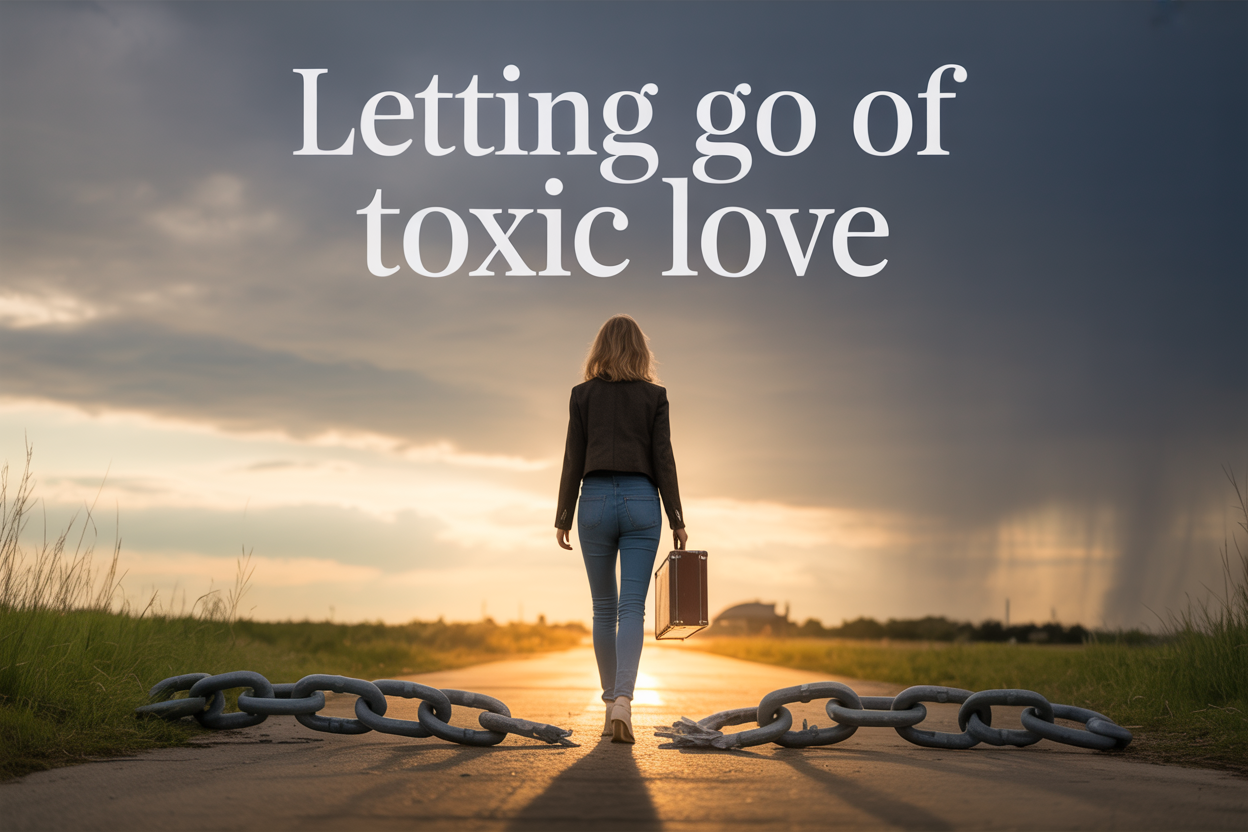
Breaking Free: Your Guide to Letting Go of Toxic Love
Toxic relationships drain your energy, crush your confidence, and keep you trapped in cycles of pain. If you're stuck in unhealthy relationship patterns or struggling with toxic love addiction, you're not alone—and you deserve so much better.
This guide is for anyone who recognizes the signs of toxic relationship behavior in their life, whether you're currently in one, recently left, or supporting someone you care about. You'll discover practical steps for how to leave toxic relationship situations safely and start your journey toward healing from toxic relationship trauma.
We'll walk through recognizing red flags you might be missing, understanding the psychological reasons that keep you stuck, and building the self-worth you need to break free. You'll also learn how to create a safe exit plan and navigate the emotional challenges of toxic relationship recovery.
Your path to healthier love starts with understanding that you have the power to choose differently.
Recognize the Warning Signs of Toxic Love

Identify controlling and manipulative behaviors
Controlling partners often start small, making their behavior seem like care or concern. They might track your daily activities, question where you've been, or insist on knowing your passwords and checking your phone. These actions gradually escalate into dictating what you wear, who you spend time with, or how you manage your money.
Manipulation takes many forms in toxic relationships. Your partner might use guilt trips, saying things like "If you really loved me, you'd..." or twist your words to make you question your own memory. They often play the victim when confronted, turning discussions about their behavior into arguments about how you're hurting them.
Financial control is another red flag that many people overlook. This includes preventing you from working, controlling all the finances, or creating debt in your name. Some partners monitor every purchase or refuse to let you access shared accounts.
Spot emotional abuse patterns and red flags
Emotional abuse in toxic relationships creates a pattern of fear, shame, and confusion. Your partner might regularly criticize your appearance, intelligence, or abilities, often disguised as "jokes" or "constructive feedback." They dismiss your feelings, calling you "too sensitive" or "crazy" when you express hurt or concern.
Name-calling, insults, and threats become normalized over time. You might notice that conversations frequently turn into shouting matches where you end up apologizing, even when you didn't start the conflict. Your partner may threaten to hurt themselves, you, or others when they don't get their way.
Silent treatment is a powerful emotional abuse tactic. Your partner might ignore you for days after disagreements, leaving you walking on eggshells and desperate to restore peace. They withhold affection, intimacy, or basic communication as punishment for perceived wrongs.
Understand the cycle of love bombing and devaluation
Love bombing marks the beginning of most toxic relationships. Your partner showers you with excessive attention, gifts, and declarations of love unusually early in the relationship. They might text constantly, want to spend every moment together, and talk about your future together within weeks of meeting.
This intense phase feels intoxicating and creates a powerful emotional bond. Your partner seems to understand you perfectly, shares your interests, and makes you feel like you've found your soulmate. They often push for quick commitment, saying things like "I've never felt this way before" or "You're different from everyone else."
The devaluation phase arrives gradually. The same person who once praised everything about you now finds fault constantly. They become critical, distant, and unpredictable. You find yourself working harder to recreate those early magical moments, not realizing that the initial intensity was a calculated strategy.
Recognize isolation tactics from friends and family
Isolation doesn't happen overnight in toxic relationships. Your partner starts by subtly criticizing your friends and family, planting seeds of doubt about their motives or loyalty. They might say your friends don't really care about you or that your family doesn't understand your relationship.
Social plans become increasingly difficult to maintain. Your partner creates drama before important events, picks fights that make you cancel plans, or refuses to attend gatherings, pressuring you to stay home with them instead. They might show up unannounced to events you're attending without them, creating uncomfortable situations.
Gradually, maintaining relationships becomes exhausting. Friends stop inviting you places because you always cancel or bring unwanted drama. Family members express concern about your relationship, which your partner uses as evidence that they're "against you both." Over time, your world shrinks until your partner becomes your primary source of social connection, exactly as they intended.
Understand Why You Stay in Toxic Relationships

Examine Trauma Bonding and Addiction to Chaos
Your brain creates powerful chemical bonds during intense emotional experiences, and toxic relationships exploit this biological response. When your partner alternates between extreme highs and devastating lows, your nervous system becomes addicted to the unpredictable cycle. The relief you feel during brief moments of kindness releases dopamine, creating the same neurochemical response as substance addiction.
This addiction to chaos makes calm, healthy relationships feel boring or unfamiliar. You might find yourself unconsciously creating drama or gravitating toward partners who keep you on edge. The constant state of hypervigilance becomes your normal, and anything less feels like something's missing. Your body literally craves the adrenaline rush of walking on eggshells.
Trauma bonding deepens through shared intense experiences, both positive and negative. Those magical moments when your partner is loving and attentive feel more powerful because they contrast so sharply with the pain. Your brain interprets this intermittent reinforcement as proof that the relationship is special and worth fighting for.
Identify Low Self-Worth and Fear of Abandonment
Deep down, you might believe you don't deserve better treatment. This isn't your fault – it's often the result of years of conditioning that taught you to accept crumbs instead of demanding a full meal. When someone treats you poorly, part of you thinks it confirms what you secretly fear about yourself.
Fear of abandonment drives many people to tolerate unacceptable behavior. The thought of being alone feels more terrifying than staying in a relationship that hurts you. You convince yourself that bad love is better than no love at all. This fear often stems from early experiences where love felt conditional or unpredictable.
You might stay because you've invested so much time, energy, and emotion into making the relationship work. The sunk cost fallacy tricks you into believing that leaving means all your efforts were wasted. You keep hoping that if you just try harder, love more, or change enough, your partner will transform into the person you need them to be.
Recognize Familiar Patterns from Childhood Experiences
The relationship dynamics you witnessed growing up become your blueprint for what love looks like. If you saw one parent constantly trying to win the other's approval, you learned that love requires effort, sacrifice, and persistence in the face of rejection. These early lessons feel like truth, even when they're destroying your happiness.
Childhood trauma creates a lens through which you view all future relationships. If you experienced neglect, abuse, or inconsistent caregiving, your nervous system learned to associate love with pain, uncertainty, and the need to earn affection. Healthy, stable love might actually trigger anxiety because it doesn't match your internal programming.
Your inner child still seeks healing from the original wound, often choosing partners who recreate familiar painful dynamics. This isn't masochism – it's an unconscious attempt to finally get the love right. You hope that if you can make this difficult person love you consistently, you'll heal the original hurt. Unfortunately, this strategy keeps you trapped in unhealthy relationship patterns that mirror your earliest experiences with attachment and abandonment.
Build Your Inner Strength and Self-Worth

Practice Daily Self-Compassion and Positive Affirmations
Breaking free from toxic love addiction starts with changing how you speak to yourself. After months or years in an unhealthy relationship, your inner voice probably sounds pretty harsh. That critical voice telling you you're not good enough? It's time to retrain it.
Self-compassion means treating yourself like you would a good friend going through a tough time. When you catch yourself thinking "I'm so stupid for staying," try switching to "I was doing my best with what I knew then." This shift takes practice, but it's the foundation of building self-worth after toxic relationship experiences.
Daily affirmations work best when they feel authentic to you. Instead of generic phrases, create personal statements that address your specific struggles. If you've been told you're too sensitive, your affirmation might be "My sensitivity is a strength that helps me connect deeply with others." Write these down and repeat them every morning – your brain will start believing what it hears most often.
Reconnect with Your Authentic Self and Personal Values
Toxic relationships have a sneaky way of making you lose yourself. You've probably spent so much energy trying to keep the peace or make someone else happy that you've forgotten who you really are. Rediscovering your authentic self is like finding buried treasure.
Start by remembering what you loved before this relationship consumed your world. What made you laugh? What activities brought you joy? What values guided your decisions? These core parts of yourself are still there, just buried under layers of accommodation and survival.
Creating a personal values list helps you make decisions that align with who you really are. Write down 5-10 values that matter most to you – things like honesty, creativity, adventure, or family. When faced with choices, ask yourself which option honors these values. This compass will guide you away from toxic relationship patterns and toward healthier connections.
Develop Healthy Boundaries and Communication Skills
Boundaries aren't walls; they're the property lines of your emotional world. In toxic relationships, these lines get crossed so often that you might not even remember where they should be. Learning to set and maintain boundaries is crucial for your emotional abuse recovery.
Start small with low-stakes situations. Practice saying "I need some time to think about that" when someone asks for an immediate decision. Or try "That doesn't work for me" instead of over-explaining why you can't do something. These phrases help you avoid the trap of justifying your needs.
Communication skills go hand-in-hand with boundaries. Learn to express your feelings without attacking or defending. Use "I" statements like "I feel frustrated when plans change last minute" rather than "You always do this." This approach reduces conflict and helps you advocate for yourself without starting a war.
Cultivate Independence and Personal Interests
Independence doesn't mean isolation – it means having a full life that doesn't revolve around someone else's mood or approval. Building this independence is like creating a safety net that catches you when relationships get rocky.
Start rebuilding your social circle beyond your toxic relationship. Reach out to old friends you might have neglected. Join clubs, take classes, or volunteer for causes you care about. These connections remind you that you're valued and interesting outside of romantic relationships.
Pursue hobbies and interests that are purely yours. Maybe it's painting, hiking, learning a new language, or starting a side business. These activities give you confidence and joy that no one can take away. When you have your own sources of fulfillment, you're less likely to tolerate unhealthy relationship patterns.
Seek Professional Therapy or Counseling Support
Working with a therapist isn't admitting defeat – it's like hiring a personal trainer for your emotional health. A skilled counselor can help you identify patterns you might miss and teach you tools for toxic relationship recovery that you won't find in self-help books.
Different therapy approaches work for different people. Cognitive Behavioral Therapy (CBT) helps you change thought patterns that keep you stuck. Trauma-focused therapy addresses the deeper wounds from emotional abuse. Don't be afraid to shop around until you find a therapist who gets you.
Support groups, either in-person or online, connect you with others who understand your struggle. Hearing other people's stories of leaving toxic relationships reminds you that recovery is possible and you're not alone in this journey.
Create Your Exit Strategy Safely

Document Abusive Incidents and Gather Important Documents
Creating a paper trail becomes your strongest protection when planning to leave toxic relationships. Start a private journal documenting every incident of abuse, manipulation, or controlling behavior. Record dates, times, locations, and detailed descriptions of what happened. Include any witnesses present and photograph visible injuries or damage to property.
Store this documentation securely away from your partner's reach - consider a safety deposit box, trusted friend's home, or encrypted cloud storage. Screenshots of threatening texts, voicemails, and emails serve as powerful evidence of the toxic relationship patterns you've endured.
Gather essential documents before your departure: identification cards, passport, social security card, birth certificates for yourself and children, insurance policies, bank statements, credit reports, and medical records. Make copies and store originals separately. Financial documents like tax returns, pay stubs, and investment account information help establish your economic situation.
Don't overlook items with sentimental value that you can't replace - family photos, heirlooms, or children's keepsakes. These emotional anchors support your healing from toxic relationship trauma later.
Build a Support Network of Trusted Friends and Family
Isolation feeds toxic love addiction, making your support network absolutely critical for safe departure. Identify people who consistently show genuine care for your wellbeing - these become your lifeline during the most challenging moments of letting go of toxic love.
Start rebuilding connections that may have deteriorated during your relationship. Abusive partners often systematically damage relationships with friends and family to maintain control. Reach out gradually, explaining your situation honestly to those you trust most.
Consider these support categories:
-
Emotional support: Friends who listen without judgment and validate your experiences
-
Practical support: People who can provide temporary housing, transportation, or childcare
-
Professional support: Therapists, counselors, or domestic violence advocates
-
Financial support: Family members who might help with temporary expenses
-
Safety support: Those willing to check on you regularly or provide emergency assistance
Join support groups for people leaving unhealthy relationship patterns. Online communities offer 24/7 connection with others who understand your journey. Local domestic violence organizations provide group counseling and peer support programs.
Remember that rebuilding trust takes time after experiencing emotional abuse recovery. Start small with low-stakes interactions and gradually deepen connections as you feel safer.
Establish Financial Independence and Secure Housing
Financial control often keeps people trapped in toxic relationships longer than they'd choose. Breaking free requires careful financial planning and resourcefulness. Begin by understanding your complete financial picture - all accounts, debts, assets, and monthly expenses.
Open a bank account at a different institution than your partner uses, preferably one they don't know about. Direct a portion of any income you control into this account. If you don't work outside the home, look for small ways to accumulate emergency funds - returning items for cash, selling possessions online, or asking family for "loans" you don't intend to repay.
Explore housing options before you need them:
-
Temporary housing: Friends' homes, family members, domestic violence shelters
-
Transitional housing: Programs specifically designed for people leaving abusive situations
-
Independent housing: Apartments you can afford alone or with roommates
-
Subsidized housing: Government assistance programs for low-income individuals
Research rental requirements in your area. Many landlords want proof of income, references, and security deposits. Start building relationships with potential references who can vouch for your character if former financial records show dependence.
Investigate local resources for people leaving toxic relationships. Many communities offer emergency financial assistance, job training programs, legal aid, and housing vouchers specifically for abuse survivors.
Plan Your Departure Timing for Maximum Safety
Timing your exit from toxic relationships requires balancing urgency with safety considerations. The most dangerous period often occurs immediately after leaving, when your partner realizes they're losing control. Statistical data shows violence frequently escalates during separation attempts.
Choose your moment strategically. Ideal departure times include when your partner is at work, traveling, or otherwise predictably absent for several hours. Avoid departing during high-stress periods like holidays, job changes, or family crises when emotions run higher.
Create a detailed departure timeline:
24-48 Hours Before: Confirm your transportation, housing arrangements, and support people's availability. Pack essential items gradually, storing them where your partner won't notice missing items.
Day of Departure: Move quickly but methodically. Have your support person ready to help or at least know your timeline. Take children's school records, medications, and comfort items.
Immediately After: Go directly to your safe location. Don't stop for errands or give your partner opportunities to intercept you. Change your routines completely - different routes to work, new grocery stores, alternate gym locations.
Consider legal protections like restraining orders, but understand they're pieces of paper that don't physically protect you. Your safety plan should never rely solely on legal documents.
Inform trusted people about your timeline so someone knows to check on you. Leave copies of important documents and your safety plan with someone reliable. Remember that how to leave toxic relationship decisions affect not just you, but potentially children and pets who depend on your protection.
Navigate the Healing Journey After Leaving

Process Grief and Trauma Through Therapeutic Methods
Breaking free from toxic love creates a profound sense of loss, even when you know the relationship was harmful. The grief you feel is real and valid – you're mourning the dreams you had, the person you hoped your partner could become, and the version of yourself that believed love meant enduring pain.
Professional therapy offers structured approaches to healing from toxic relationship recovery. Trauma-informed therapists understand how emotional abuse rewires your brain and nervous system. EMDR therapy can help process traumatic memories that keep replaying in your mind. Cognitive behavioral therapy teaches you to identify and challenge the negative thought patterns your toxic partner reinforced.
Support groups specifically for emotional abuse recovery provide connection with others who truly understand your experience. Online communities and local meetings create safe spaces where you don't have to explain why you stayed or justify your choices. These connections combat the isolation that toxic relationships create.
Somatic healing addresses how trauma lives in your body. Practices like yoga, breathwork, or body-based therapy help release the chronic tension and hypervigilance that develops during unhealthy relationship patterns. Your nervous system needs time to learn it's safe to relax again.
Journaling becomes a powerful tool for processing complex emotions. Write letters to your former self with compassion. Document your healing progress. Express anger, sadness, and confusion without judgment. This practice helps externalize the internal chaos and creates clarity about your experience.
Rebuild Your Identity and Rediscover Personal Strengths
Toxic relationships systematically erode your sense of self. Your partner likely criticized your interests, isolated you from friends, or made you question your own perceptions. Rebuilding your identity after letting go of toxic love requires intentional effort and patience with yourself.
Start by reconnecting with activities and interests you abandoned during the relationship. What did you love before this person entered your life? Maybe you enjoyed hiking, painting, reading specific genres, or spending time with certain friends. Your authentic self still exists beneath the layers of manipulation and control.
Create space for experimentation and play. Try new hobbies without pressure to excel or commit long-term. Take a pottery class, learn a language, join a book club, or volunteer for causes you care about. This exploration helps you remember that you're a complete person with your own desires and capabilities.
Reconnecting with supportive relationships requires rebuilding trust gradually. Some friendships may have suffered during your toxic relationship. Reach out to people who consistently showed up for you before. Be honest about what you've been through, but don't feel obligated to share every detail.
Building self-worth after toxic relationship experiences means celebrating small victories daily. Keep a list of your accomplishments, no matter how minor they seem. Notice moments when you stood up for yourself, made healthy choices, or felt genuine happiness. These instances prove your strength and resilience.
Learn to Trust Your Instincts and Judgment Again
Toxic partners excel at making you doubt your own perceptions. They might have told you that you were "too sensitive," "imagining things," or "overreacting" when you noticed red flags. This gaslighting creates deep confusion about your ability to assess situations and people accurately.
Your instincts are still intact, but they may feel buried under layers of self-doubt. Start practicing with low-stakes decisions. Notice how your body responds to different people and situations. That uncomfortable feeling in your stomach when someone makes a joke at your expense? That's valuable information. The sense of ease you feel around certain friends? Trust that too.
Rebuilding confidence in your judgment happens through consistent validation of your perceptions. Keep track of times when your gut feelings proved correct. Notice patterns in people's behavior that make you feel uneasy or safe. Your intuition developed these skills for good reasons – healing from toxic relationship trauma means learning to listen again.
Create boundaries based on your instincts rather than external pressure. If something feels wrong, you don't need concrete evidence to protect yourself. You have permission to leave situations, end conversations, or distance yourself from people who trigger your warning systems.
Practice making decisions independently, starting with simple choices like what to eat or which movie to watch. Toxic love addiction often involves constantly seeking external validation for every choice. Rebuilding your decision-making muscle requires patience and practice, but each independent choice strengthens your self-trust.

Breaking free from toxic love isn't easy, but recognizing the warning signs is your first step toward freedom. Once you understand why you've stayed and start building your self-worth, you'll find the strength to create a safe exit plan. Remember, your value doesn't come from someone else's approval or affection – it comes from within.
The healing journey after leaving takes time, and that's perfectly okay. Be patient with yourself as you rebuild and rediscover who you are without toxic influences. You deserve a love that lifts you up, not one that tears you down. Trust yourself, lean on your support system, and know that choosing yourself over a toxic relationship is one of the bravest things you can do.


Comments
Post a Comment