Black Women of Influence in World History
.png)
Black women have shaped every corner of human history, from ancient thrones to modern boardrooms. These trailblazers broke barriers, defied expectations, and left legacies that continue inspiring generations today.
This guide is for students, educators, history enthusiasts, and anyone eager to learn about the remarkable black women who changed the world. You'll discover stories often missing from traditional textbooks and gain a deeper understanding of African American women's contributions to society.
We'll explore the ancient queens and rulers who built powerful civilizations and commanded vast empires. You'll meet the scientific and medical pioneers whose groundbreaking discoveries advanced human knowledge and saved countless lives. We'll also celebrate the influential black women leaders in politics who fought tirelessly for human rights and social justice.
From Cleopatra's strategic brilliance to modern innovators reshaping technology, these historical black women figures prove that leadership, creativity, and determination know no boundaries. Their stories remind us that progress happens when we recognize and celebrate the full spectrum of human achievement.
Get ready to meet the famous black women throughout history whose courage, intelligence, and vision built the foundation for the world we live in today.
Ancient Queens and Rulers Who Shaped Civilizations
Queen Nzinga's Military Strategies Against Colonial Forces
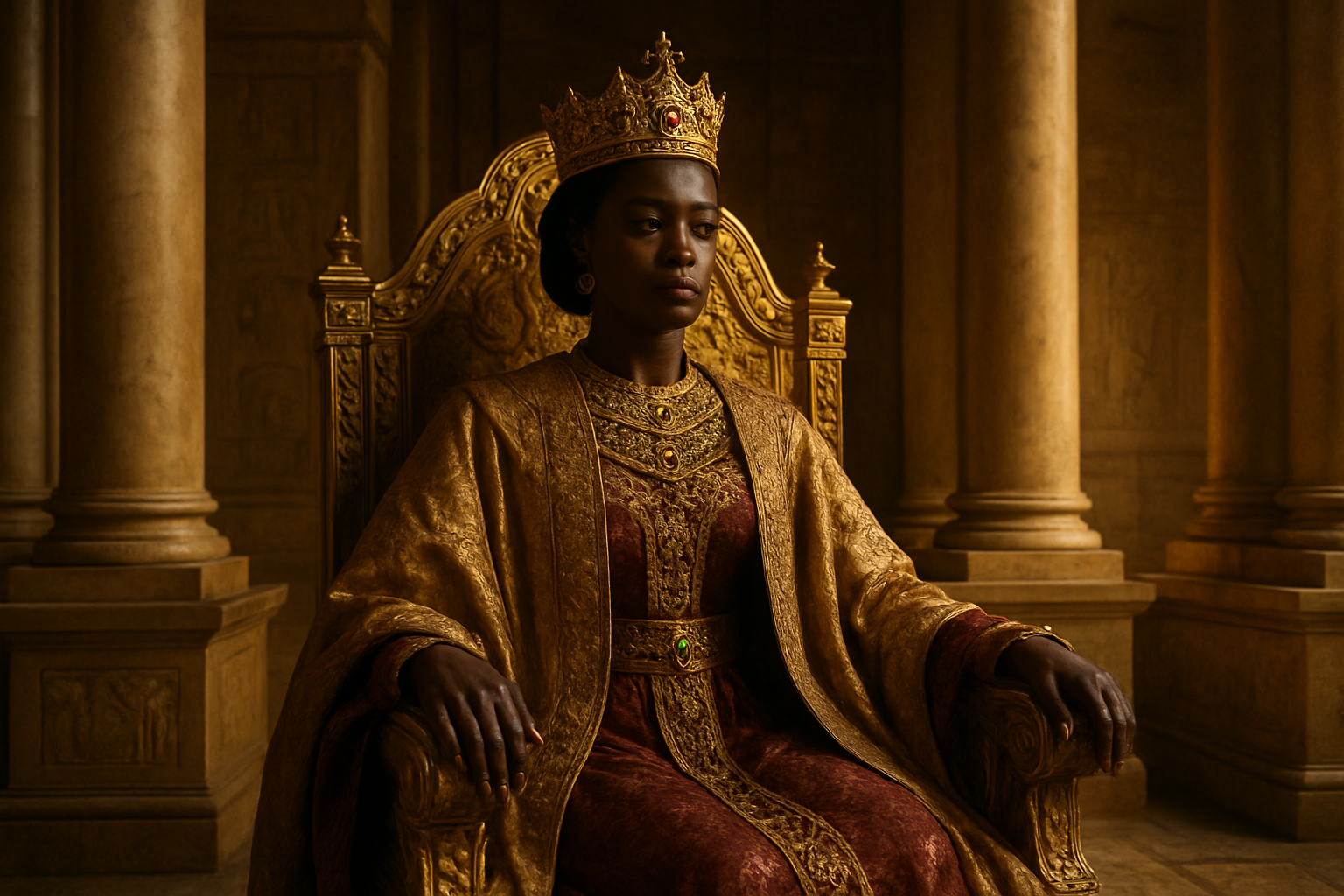
Queen Nzinga of Ndongo and Matamba stands among the most brilliant military strategists in African history. During the 17th century, she transformed traditional warfare to counter Portuguese colonial expansion, proving that innovative tactics could challenge European military superiority.
Her guerrilla warfare techniques revolutionized how African kingdoms fought colonial invaders. Rather than engaging in conventional battles where Portuguese firearms gave clear advantages, Nzinga developed mobile cavalry units that struck quickly and disappeared into familiar terrain. She established fortified camps in mountainous regions, creating supply networks that sustained long-term resistance campaigns.
Nzinga's diplomatic prowess matched her military genius. She forged strategic alliances with neighboring kingdoms and even collaborated with Dutch forces against their mutual Portuguese enemies. This multi-front approach forced colonial forces to divide their attention and resources, weakening their overall effectiveness.
Her most innovative strategy involved transforming refugees and escaped slaves into disciplined fighting forces. She welcomed displaced populations into her territories, training them as soldiers while building a diverse coalition united against colonial oppression. These forces became the backbone of her resistance movement, fighting with personal stakes in the outcome.
The queen's legacy influenced later anti-colonial movements across Africa. Her combination of military innovation, diplomatic skill, and inclusive leadership created a template for successful resistance that echoed through centuries of liberation struggles.
Queen Nefertiti's Revolutionary Religious and Political Reforms
Queen Nefertiti co-ruled Egypt during one of history's most dramatic religious transformations. Alongside Pharaoh Akhenaten, she spearheaded radical reforms that challenged millennia-old traditions and reshaped Egyptian civilization.
The royal couple introduced monotheistic worship of Aten, the sun god, abandoning Egypt's complex pantheon of deities. This religious revolution wasn't merely spiritual—it represented a complete restructuring of Egyptian society. Nefertiti played a crucial role in promoting this new faith, appearing in temple reliefs performing religious ceremonies typically reserved for pharaohs.
Her political influence extended far beyond ceremonial duties. Archaeological evidence suggests Nefertiti wielded unprecedented power for an Egyptian queen, possibly even ruling independently after Akhenaten's death. She challenged traditional gender roles in Egyptian monarchy, demonstrating that women could exercise supreme authority in both religious and political spheres.
The couple established a new capital city, Amarna, designed around their revolutionary beliefs. Nefertiti supervised the construction of temples, palaces, and administrative buildings that reflected their vision of a transformed Egypt. This new city became a center of artistic and cultural innovation, fostering realistic art styles that broke from rigid traditional forms.
While the Amarna period ended after their reign, Nefertiti's influence on Egyptian royal traditions persisted. Her model of queenly power paved the way for later influential female pharaohs like Hatshepsut and Cleopatra.
Kandakes of Kush Who Defended Against Roman Expansion
The Kandakes (Candaces) of Kush created one of history's most successful female-led resistance movements against Roman imperialism. These Nubian warrior queens ruled the Kingdom of Kush for over three centuries, proving that black women leaders could successfully challenge the world's most powerful empire.
Queen Amanirenas led the most famous campaign against Roman expansion around 25 BCE. When Roman forces attempted to impose tribute demands on Kush, she launched bold counter-attacks that penetrated deep into Roman-controlled Egypt. Her forces captured several Roman cities and even toppled statues of Emperor Augustus, burying his bronze head beneath temple steps as a symbolic act of defiance.
These queens developed sophisticated military strategies combining traditional Nubian archery skills with imported weapons technology. They maintained professional armies equipped with iron weapons while preserving cultural traditions that emphasized warrior prowess among nobility. Their forces included war elephants, cavalry units, and elite archer battalions that gave Roman legions serious tactical challenges.
The Kandakes established diplomatic relationships with other regional powers, creating networks that isolated Roman influence in Northeast Africa. They maintained trade relationships with India, Arabia, and Mediterranean civilizations while resisting political domination.
Their resistance campaigns ultimately forced Rome to negotiate rather than conquer. The resulting treaties recognized Kushite sovereignty and established trade agreements that benefited both empires. This diplomatic success demonstrated how skilled leadership could transform military resistance into lasting political advantage.
Queen Yaa Asantewaa's Leadership in Anti-Colonial Resistance
Queen Yaa Asantewaa became the last great African ruler to lead armed resistance against British colonial expansion. Her 1900 uprising against British forces in present-day Ghana represents a pinnacle of anti-colonial leadership that inspired independence movements across Africa.
When British colonial authorities demanded surrender of the Golden Stool—the sacred symbol of Ashanti sovereignty—Yaa Asantewaa rallied her people for what became known as the War of the Golden Stool. At age 60, she personally led military campaigns, demonstrating that age and gender couldn't limit effective leadership against colonial oppression.
Her military strategy combined traditional Ashanti warfare with guerrilla tactics adapted for fighting British forces. She organized community-based resistance networks where entire villages supported mobile fighting units. Women played crucial roles in these networks, providing intelligence, supplies, and medical care while maintaining agricultural production.
Yaa Asantewaa's leadership style emphasized collective decision-making and community involvement. She held regular councils with chiefs and community leaders, ensuring broad support for resistance efforts. Her speeches and public appearances boosted morale during difficult campaign periods, proving that inspirational leadership could sustain long-term resistance movements.
Although eventually defeated and exiled, her uprising significantly influenced later independence movements. Ghanaian leaders like Kwame Nkrumah cited her example as inspiration for their own anti-colonial campaigns, establishing her legacy as a foundational figure in African liberation history.
Scientific and Medical Pioneers Who Advanced Human Knowledge
Katherine Johnson's Mathematical Calculations for Space Exploration
Katherine Johnson transformed NASA's early space missions through her extraordinary mathematical precision and computational genius. Born in 1918, this brilliant mathematician joined NASA's predecessor organization in 1953, where she became known as one of the "human computers" who performed complex calculations by hand before electronic computers became reliable.
Johnson's most famous contribution came during the Mercury missions when astronaut John Glenn specifically requested that she verify the computer calculations for his orbital flight. Glenn refused to fly until Johnson had personally checked the numbers, declaring "If she says they're good, then I'm ready to go." Her calculations proved flawless, ensuring Glenn's safe return to Earth and marking a pivotal moment in American space exploration.
Beyond the Mercury program, Johnson calculated trajectories for the Apollo moon missions, including the historic Apollo 11 landing. Her work on backup navigation charts helped ensure astronauts could return safely if their electronic systems failed. She also contributed to the Space Shuttle program and early plans for Mars missions.
Johnson's mathematical expertise extended to wind tunnels, flight test programs, and satellite missions. She authored or co-authored 26 research reports during her 33-year career at NASA. Despite facing racial and gender discrimination, she persevered and earned recognition as one of the most influential black women scientists in history.
Dr. Patricia Bath's Revolutionary Laser Cataract Surgery
Dr. Patricia Bath revolutionized ophthalmology by inventing the Laserphaco Probe, a groundbreaking device that uses laser technology to remove cataracts with unprecedented precision. This invention has restored sight to millions of people worldwide and established Bath as a pioneering figure among African American women pioneers in medicine.
Bath graduated from Howard University College of Medicine in 1968 and became the first African American to complete an ophthalmology residency at New York University. She moved to UCLA in 1974, where she became the first African American woman professor in the Department of Ophthalmology.
Her most significant achievement came in 1981 when she conceptualized the Laserphaco Probe. The device uses a laser to create a tiny opening in the eye, then employs irrigation and suction to remove cataracts painlessly. This method proved safer and more effective than traditional surgical techniques, reducing recovery time and improving outcomes for patients.
Bath held four patents for her laser cataract surgery innovations and traveled internationally to provide free treatments in underserved communities. She performed surgeries in countries across Africa, Asia, and Europe, demonstrating her commitment to global eye health equity.
Throughout her career, Bath advocated for preventive ophthalmology and co-founded the American Institute for the Prevention of Blindness. Her motto "eyesight is a basic human right" drove her lifelong mission to eliminate preventable blindness worldwide.
Marie Maynard Daly's Groundbreaking Biochemistry Research
Marie Maynard Daly broke significant barriers in biochemistry, becoming the first African American woman to earn a PhD in chemistry in the United States when she graduated from Columbia University in 1947. Her research fundamentally changed our understanding of how nutrition affects cardiovascular health and laid important groundwork for modern heart disease prevention.
Daly's most influential work focused on the relationship between cholesterol and heart disease. She investigated how high cholesterol levels contribute to clogged arteries and heart attacks, research that became foundational to current dietary guidelines and medical treatments. Her studies on the effects of aging on arteries and the role of sugars in arterial health helped establish the connection between diet and cardiovascular disease.
Working at Howard University, Daly also conducted pioneering research on protein synthesis and the effects of cigarette smoking on the lungs. She studied how environmental toxins damage lung tissue and impact respiratory health, contributing valuable insights to public health understanding of smoking-related diseases.
Daly's research extended to investigating how hormones affect heart health, particularly examining gender differences in cardiovascular disease risk. Her work helped explain why heart disease patterns differ between men and women, influencing how doctors approach treatment and prevention strategies.
Beyond her research contributions, Daly mentored numerous students and advocated for increasing minority representation in sciences. She established a scholarship fund at Queens College to support African American chemistry and physics students, ensuring her legacy would continue inspiring future generations of black women scientists.
Artists and Writers Who Transformed Cultural Expression
Maya Angelou's Literary Impact on Civil Rights Movement
Maya Angelou's powerful voice resonated far beyond the pages of her books, becoming a cornerstone of the Civil Rights Movement through her unflinching exploration of racism, identity, and resilience. Her autobiography "I Know Why the Caged Bird Sings" broke new ground in 1970 by candidly addressing childhood trauma, sexual abuse, and the harsh realities of growing up Black in the American South. This groundbreaking work didn't just tell a personal story—it gave voice to countless African American women pioneers whose experiences had been silenced or overlooked.
Angelou's poetry and prose became rallying cries for justice. Her piece "On the Pulse of Morning," delivered at President Clinton's inauguration in 1993, reached millions and cemented her role as America's poet laureate of human rights. Her friendship with Dr. Martin Luther King Jr. and Malcolm X positioned her at the heart of the movement, where she used her literary talents to organize, inspire, and document the struggle for equality.
The ripple effects of her work continue today. Teachers use her writings to discuss difficult topics like racism and sexual violence, while her quotes inspire social media movements and political campaigns. Angelou proved that black women artists and writers could wield words as weapons against injustice, creating literature that serves as both mirror and lamp for society's conscience.
Augusta Savage's Influence on Harlem Renaissance Sculpture
Augusta Savage transformed American sculpture during the Harlem Renaissance, but her greatest legacy lies in how she nurtured an entire generation of artists while fighting racial barriers in the art world. Born in Florida in 1892, Savage moved to New York in the 1920s where she quickly established herself as one of the most talented sculptors of her era. Her busts and figurative works captured the dignity and strength of African American subjects with remarkable skill and sensitivity.
Savage's battle against discrimination became legendary when she was rejected from a Paris art program in 1923 solely because of her race. Rather than retreat, she used the rejection as fuel, establishing the Savage Studio of Arts and Crafts in Harlem. This became a haven where young black women artists and writers and their male counterparts could learn, create, and support each other away from the prejudice of mainstream art institutions.
Her most famous work, "The Harp," was created for the 1939 New York World's Fair and featured children's faces as the strings of a harp, celebrating African American musical heritage. Though the original was destroyed, photographs preserve this masterpiece that perfectly embodied the Harlem Renaissance spirit.
Savage's teaching philosophy emphasized technical excellence while encouraging students to draw from their cultural experiences. Among her students were Jacob Lawrence and Norman Lewis, who went on to become major figures in American art. Her Harlem Community Art Center served over 1,500 students, proving that influential black women leaders could build institutions that lasting impact.
Phillis Wheatley's Poetic Contributions to American Literature
Phillis Wheatley shattered every assumption about African Americans' intellectual capabilities when she became the first published Black poet in America in 1773. Born in West Africa around 1753 and enslaved as a child, Wheatley taught herself to read and write English, Latin, and Greek with remarkable speed. Her owners, the Wheatley family of Boston, recognized her exceptional abilities and provided her with an education typically reserved for upper-class white children.
Wheatley's poetry combined neoclassical forms with Christian themes, addressing subjects ranging from morality to current events. Her poem "On Being Brought from Pagan Land" sparked controversy then and now for its complex treatment of slavery and Christianity. While some critics argue she was too accommodating to white sensibilities, others recognize the subtle subversion in her work—she consistently portrayed Africans as capable of spiritual and intellectual enlightenment.
Her book "Poems on Various Subjects, Religious and Moral" required authentication by eighteen prominent Boston men who testified that a young African woman could indeed produce such sophisticated verse. This unprecedented validation challenged fundamental beliefs about race and intelligence in colonial America.
Wheatley corresponded with George Washington, who praised her work and invited her to visit him. Her international recognition—she traveled to London where she was celebrated by literary society—proved that African American women pioneers could achieve excellence in any field when given the opportunity. Her success opened doors for future generations of Black writers and established literature as a powerful tool for social change.
Zora Neale Hurston's Anthropological and Literary Achievements
Zora Neale Hurston blazed trails as both an anthropologist and novelist, becoming one of the most important figures of the Harlem Renaissance through her unique approach to capturing African American culture. Born in Alabama in 1891, Hurston grew up in Eatonville, Florida, one of the first all-Black incorporated towns in America. This experience shaped her perspective on Black life as rich, complex, and worthy of serious study rather than just sympathy or protest.
Hurston's anthropological work broke new ground by treating African American folk culture as legitimate academic subject matter. She studied at Barnard College under Franz Boas, the father of modern anthropology, and conducted fieldwork throughout the South and Caribbean. Her collection "Mules and Men" preserved folktales, songs, and customs that might otherwise have been lost, presenting them with scholarly rigor while maintaining their authentic voice and humor.
Her novel "Their Eyes Were Watching God," published in 1937, revolutionized American literature by centering a Black woman's quest for independence and fulfillment. The book's use of vernacular speech and focus on intraracial relationships rather than white oppression was controversial among her contemporaries but is now recognized as groundbreaking. Hurston created Janie Crawford, a protagonist who defied every stereotype about Black women, showing them as complex individuals capable of growth, desire, and agency.
Hurston's dual identity as scientist and artist allowed her to document African American women's contributions to society while creating art that celebrated Black culture's beauty and complexity. Her work influenced countless writers, from Alice Walker to Toni Morrison, who recognized her as a literary ancestor who refused to be limited by others' expectations of what black women artists and writers should create.
Political Leaders Who Championed Human Rights
Shirley Chisholm's Trailblazing Congressional Career
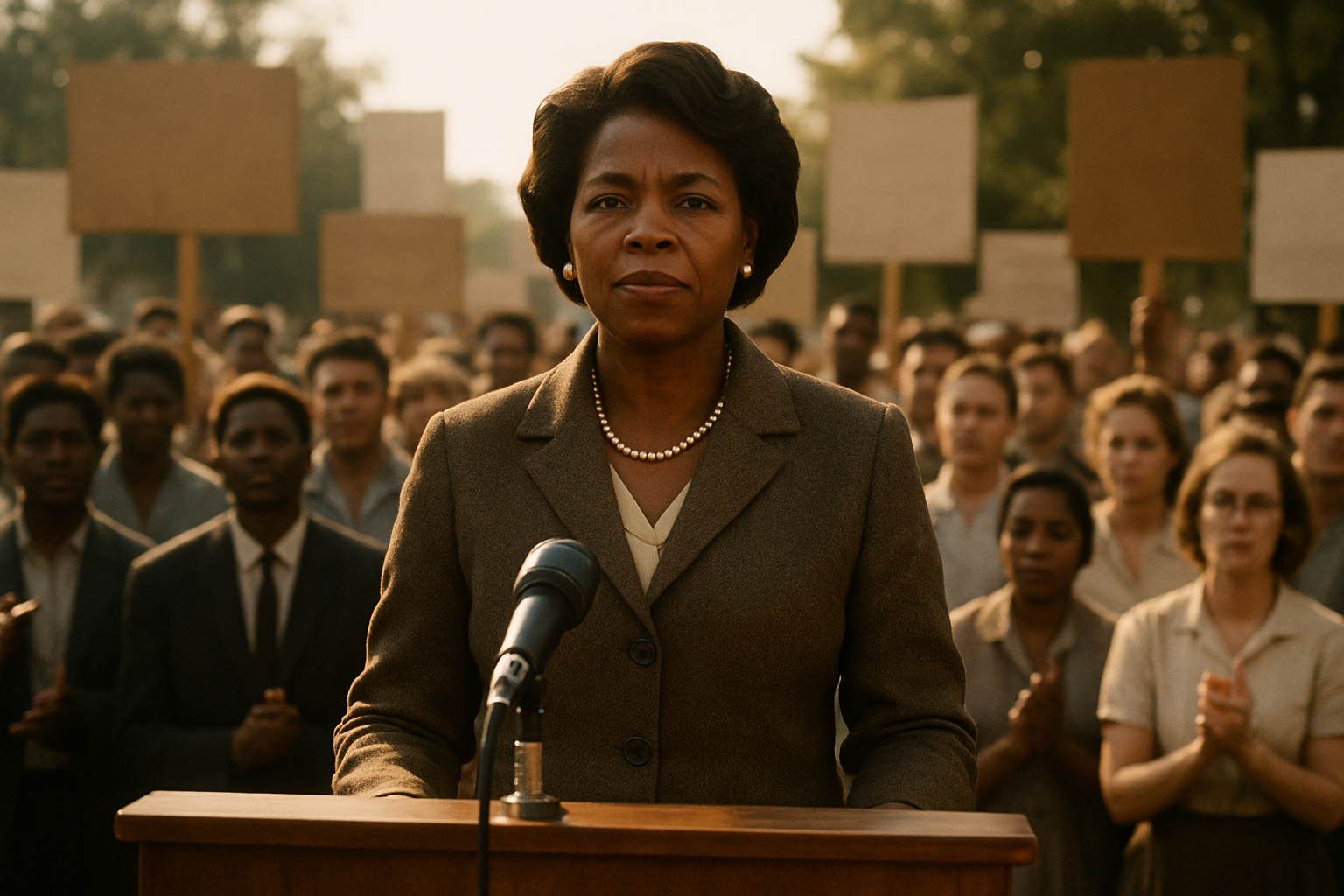
Shirley Chisholm broke barriers that seemed impossible to crack when she became the first African American woman elected to Congress in 1968. Representing New York's 12th Congressional District, she didn't just make history - she rewrote the playbook for political leadership. Her campaign slogan "Unbought and Unbossed" captured her fierce independence and commitment to representing the voices others ignored.
During her seven terms in the House of Representatives, Chisholm championed causes that directly impacted marginalized communities. She fought tirelessly for education funding, women's rights, and social justice. Her work on the Education and Labor Committee led to expanded access to education and job training programs that opened doors for countless Americans.
The historic presidential campaign of 1972 showcased her courage even more. Chisholm became the first African American to seek the Democratic Party's nomination for president, declaring "I am not the candidate of black America, although I am black and proud. I am not the candidate of the women's movement of this country, although I am a woman and equally proud of that." Her candidacy inspired generations of black women civil rights leaders and proved that barriers exist only until someone brave enough comes along to smash them.
Wangari Maathai's Environmental and Democratic Activism
Wangari Maathai transformed environmental activism and democratic reform across Africa through her groundbreaking Green Belt Movement. Starting in 1977, she organized rural women in Kenya to plant trees, combat deforestation, and restore their local environment. What began as an environmental initiative evolved into a powerful movement for women's rights and democratic governance.
Maathai understood that environmental degradation and political oppression went hand in hand. Her tree-planting campaigns empowered women economically while challenging government policies that harmed both the environment and local communities. The movement planted over 51 million trees across Kenya, creating jobs for thousands of women and restoring degraded landscapes.
Her activism came at great personal cost. The Kenyan government arrested her multiple times, beat her during protests, and tried to silence her voice. She refused to back down, continuing to speak out against corruption, land grabbing, and environmental destruction. Her persistence paid off when she became the first African woman to win the Nobel Peace Prize in 2004, recognized for her contributions to sustainable development, democracy, and peace.
Ellen Johnson Sirleaf's Presidential Leadership in Liberia
Ellen Johnson Sirleaf stepped into leadership when Liberia needed healing most. After devastating civil wars that killed over 250,000 people and destroyed the country's infrastructure, she became Africa's first elected female head of state in 2005. Her presidency marked a turning point for both Liberia and women's political leadership across the continent.
Sirleaf inherited a nation in ruins - no electricity, running water, or functioning government services. She focused on rebuilding institutions, attracting international investment, and establishing rule of law. Her administration successfully negotiated debt forgiveness totaling $4.9 billion and attracted significant foreign investment to restart the economy.
Her commitment to women's rights and education created lasting change. She appointed women to key government positions, including half of her cabinet, and prioritized girls' education. The establishment of free primary education and improvements in healthcare showed her dedication to human development. When she shared the Nobel Peace Prize in 2011 with fellow influential black women leaders Leymah Gbowee and Tawakkol Karman, the recognition highlighted how women's leadership could transform societies recovering from conflict.
Entrepreneurs and Business Innovators Who Built Economic Empires

Madam C.J. Walker's Beauty Industry Revolution
Sarah Breedlove, better known as Madam C.J. Walker, transformed from a washerwoman earning $1.50 a day into America's first self-made female millionaire. Born to formerly enslaved parents in Louisiana in 1867, Walker experienced hair loss due to stress and poor nutrition, which sparked her entrepreneurial journey into hair care products.
Walker developed a line of cosmetics and hair care products specifically for black women in history, filling a massive gap in the beauty market. Her "Walker System" included a special shampoo, pomade, and hot comb technique that helped African American women care for their hair. By 1910, she had built a factory in Indianapolis, employed over 3,000 sales agents, and established beauty schools across the country.
Her business model was revolutionary for its time. Walker created one of the first direct sales networks, training thousands of black women entrepreneurs to sell her products door-to-door. This approach provided economic opportunities for women who had limited career options, essentially creating an early version of what we now call multi-level marketing.
Beyond business success, Walker used her wealth for philanthropy, donating to educational institutions and civil rights organizations. She purchased a mansion in New York's exclusive Irvington area and became known for her lavish parties that brought together prominent African American leaders, artists, and intellectuals.
Maggie Lena Walker's Banking and Insurance Innovations
Maggie Lena Walker broke barriers in the male-dominated financial sector, becoming the first African American woman to charter and serve as president of a bank in the United States. Born in Richmond, Virginia, in 1864 to formerly enslaved parents, Walker started her career as a teacher before transitioning into the insurance business.
Walker transformed the Independent Order of St. Luke, a fraternal organization, into a thriving financial institution. Under her leadership, the organization launched the St. Luke Herald newspaper, opened a department store, and most notably, established the St. Luke Penny Savings Bank in 1903. The bank provided crucial financial services to the African American community during an era when most traditional banks refused to serve black customers.
Her banking innovations included:
-
Small savings programs that encouraged thrift among working-class families
-
Home loans that helped African Americans purchase property
-
Business loans that supported black women entrepreneurs and other minority-owned ventures
-
Financial education programs that taught basic money management skills
Walker's business philosophy centered on economic empowerment through collective action. She believed that African Americans could achieve financial independence by supporting black-owned businesses and institutions. Her famous motto, "Let us put our moneys together; let us use our moneys; let us put our money out at usury among ourselves, and reap the benefit ourselves," became a rallying cry for economic self-determination.
The St. Luke Penny Savings Bank eventually merged with other institutions to become the Consolidated Bank and Trust Company, which continued serving the Richmond community for decades.
Oprah Winfrey's Media Empire and Philanthropic Impact
Oprah Winfrey transformed from a local news anchor in Nashville into one of the most influential black women leaders in modern history. Her media empire spans television, film, publishing, and digital platforms, making her one of the wealthiest self-made women in America.
Winfrey's breakthrough came with "The Oprah Winfrey Show," which aired nationally from 1986 to 2011. The program revolutionized daytime television by tackling serious social issues while maintaining broad appeal. Through her show, Winfrey introduced millions of Americans to diverse authors, particularly highlighting works by African American writers, creating what became known as the "Oprah Effect" in book publishing.
Her business ventures expanded far beyond television:
-
Harpo Productions: Her production company created numerous successful films and television programs
-
O, The Oprah Magazine: A lifestyle publication that became one of the most successful magazine launches in history
-
Oprah Winfrey Network (OWN): Her cable television network featuring original programming
-
Weight Watchers: Her investment and partnership significantly boosted the company's market value
Winfrey's philanthropic efforts are equally impressive. She has donated hundreds of millions to educational causes, including the Oprah Winfrey Leadership Academy for Girls in South Africa. Her approach to charity focuses on education as a pathway out of poverty, particularly for young women in underserved communities.
Her influence extends into politics and social justice, with her endorsements carrying significant weight in elections and her platform consistently advocating for civil rights and women's empowerment.
Sheila Johnson's Entertainment and Hospitality Ventures
Sheila Johnson co-founded Black Entertainment Television (BET) with her then-husband Robert Johnson, becoming the first African American woman billionaire when they sold the network to Viacom in 2001. Her journey from music teacher to media mogul exemplifies the entrepreneurial spirit of black women trailblazers in business.
Johnson's role at BET went beyond co-ownership; she served as executive vice president for corporate affairs and was instrumental in developing programming that celebrated African American culture. The network provided a platform for black artists, news, and entertainment that mainstream media often overlooked, filling a crucial gap in television programming.
After selling BET, Johnson diversified her investments into luxury hospitality and sports ownership. She became the first African American woman to own shares in three major professional sports teams: the Washington Capitals (NHL), Washington Wizards (NBA), and Washington Mystics (WNBA). Her involvement in sports ownership helped pave the way for greater diversity in professional athletics leadership.
Her hospitality ventures include:
-
Salamander Hotels & Resorts: A luxury hotel collection focusing on distinctive destinations
-
Innisbrook Resort: A premier golf and spa destination in Florida
-
Salamander Middleburg: An equestrian-focused luxury resort in Virginia
Johnson's business philosophy emphasizes creating authentic experiences while supporting local communities. Her hotels often feature local artisans, source from regional suppliers, and preserve historical elements of their locations. She also established the Sheila C. Johnson Design Studio, which focuses on interior design for luxury hospitality properties.
Through her various ventures, Johnson has consistently advocated for diversity in corporate boardrooms and has mentored other women seeking to break into male-dominated industries.
Educational Reformers Who Expanded Learning Opportunities

Mary McLeod Bethune's Educational Institution Building
Mary McLeod Bethune transformed American education by creating opportunities where none existed. Born to formerly enslaved parents in 1875, she understood that education was the key to breaking cycles of poverty and discrimination. Her most significant achievement was founding what would become Bethune-Cookman University in Daytona Beach, Florida, in 1904.
Starting with just $1.50, five students, and a rented cottage, Bethune built her school from scratch. She personally sold sweet potato pies and ice cream to raise funds, demonstrating the entrepreneurial spirit that would define her legacy. The Daytona Educational and Industrial Training School for Negro Girls grew rapidly under her leadership, eventually merging with Cookman Institute to form a coeducational college.
Key Achievements:
-
Founded Bethune-Cookman University, now serving thousands of students
-
Served as advisor to four U.S. presidents
-
Founded the National Council of Negro Women in 1935
-
Established the Bethune Foundation to provide scholarships
Bethune's vision extended beyond her own institution. She worked tirelessly to improve educational opportunities for all African Americans, influencing policy at the highest levels of government. Her legacy as one of the most influential black women leaders in education continues to inspire educators and students today.
Marva Collins's Revolutionary Teaching Methods
Marva Collins proved that all children could learn when given the right environment and expectations. After becoming frustrated with the Chicago public school system's approach to educating underprivileged students, she left her position in 1975 to start Westside Preparatory School in her own home.
Collins developed innovative teaching methods that challenged conventional wisdom about how children from low-income communities could perform academically. She demanded excellence from every student, regardless of their background or previous academic struggles. Her students, many labeled as "learning disabled" by previous schools, began reading classical literature and mastering advanced mathematics.
Revolutionary Teaching Principles:
-
High expectations for every student without exception
-
Classical literature as core curriculum, even for elementary students
-
Personal relationships and individual attention for each child
-
Positive reinforcement combined with academic rigor
-
Parental involvement as a cornerstone of success
Her success attracted national attention, including offers from politicians to head major urban school districts. Collins consistently chose to remain in the classroom, believing that real change happened through direct teaching rather than administrative positions. Her methods influenced educational practices across the country, showing that zip code shouldn't determine a child's academic potential.
Dr. Johnetta Cole's Leadership in Higher Education
Dr. Johnetta Cole broke barriers as the first African American woman to serve as president of Spelman College, one of the nation's most prestigious historically black colleges. During her tenure from 1987 to 1997, she elevated Spelman's national profile and secured its position among America's top liberal arts colleges.
Cole brought impressive credentials to her leadership role, including a Ph.D. in anthropology from Northwestern University and extensive international experience. She understood that black women in education needed institutions that would nurture their intellectual growth while addressing the unique challenges they faced in society.
Under her leadership, Spelman experienced unprecedented growth:
| Achievement | Impact |
|---|---|
| Fundraising | Raised over $113 million, including largest donation to HBCU at that time |
| Academic Programs | Expanded curriculum with new majors and study abroad opportunities |
| Faculty Development | Recruited distinguished scholars and increased faculty diversity |
| Campus Infrastructure | Major renovations and new building construction |
Cole's influence extended beyond Spelman's campus. She served on corporate boards, advised foundations, and later became director of the National Museum of African Art at the Smithsonian Institution. Her leadership style emphasized collaboration, academic excellence, and social responsibility, creating a model for women of color in leadership positions throughout higher education.
Her work demonstrated how black women trailblazers could transform institutions while staying true to their mission of empowering future generations. Cole's legacy lives on through the thousands of graduates who benefited from her vision of excellence in education.
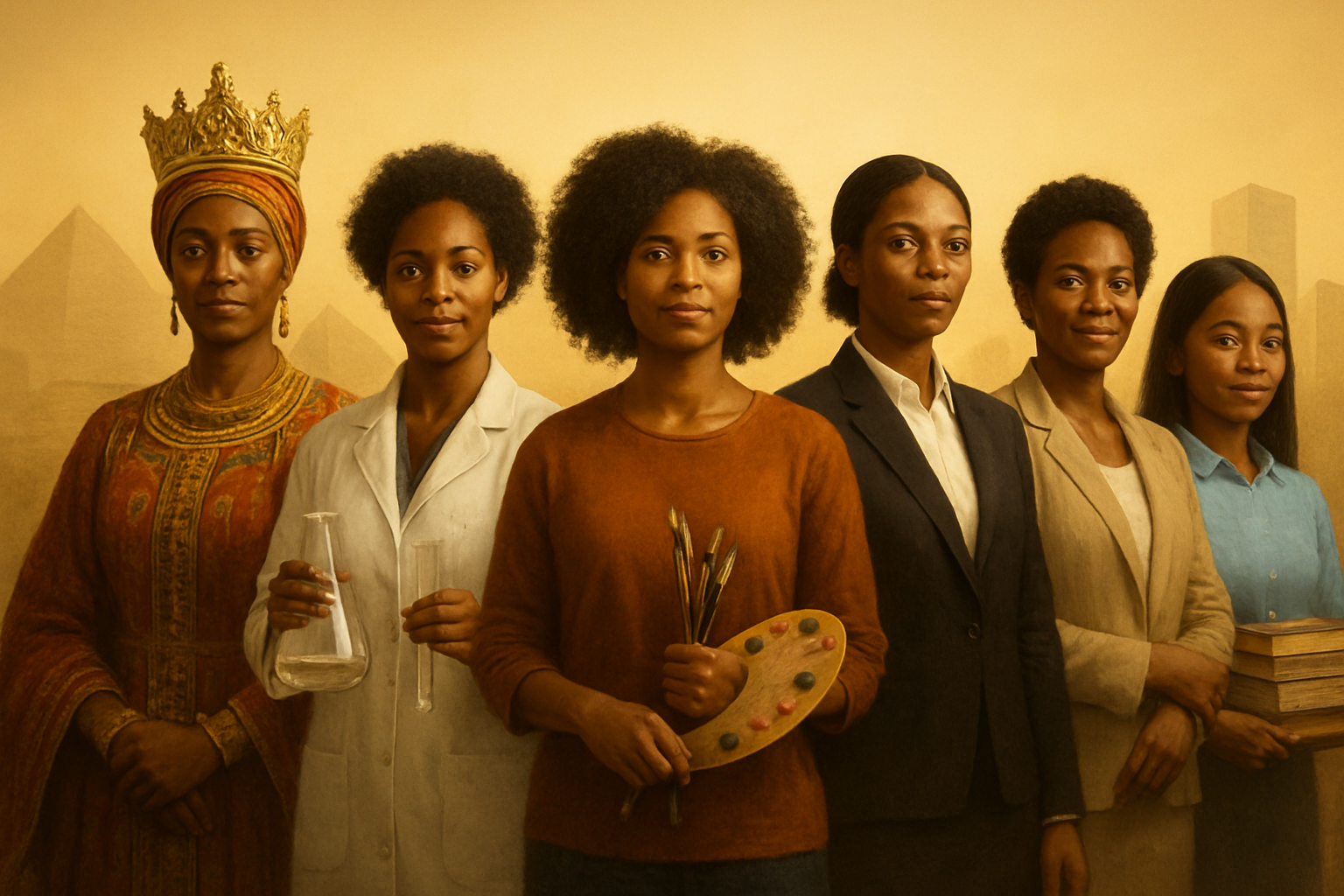
Black women have left an undeniable mark on every corner of human civilization, from the ancient queens who built empires to the modern entrepreneurs who revolutionized industries. Their contributions span science, medicine, arts, politics, education, and business, often achieved despite facing double discrimination based on both race and gender. These trailblazers didn't just break barriers – they rebuilt entire systems and opened doors for generations to come.
The stories of these remarkable women remind us that history is incomplete without acknowledging all its heroes. Take time to learn about the black women who shaped your field of interest, share their stories with others, and support the incredible black women making history today. Their legacy lives on not just in textbooks, but in every opportunity that exists because they dared to dream bigger and fight harder for a more inclusive world.
.png)


Comments
Post a Comment