Educating and Uplifting the Girl Child
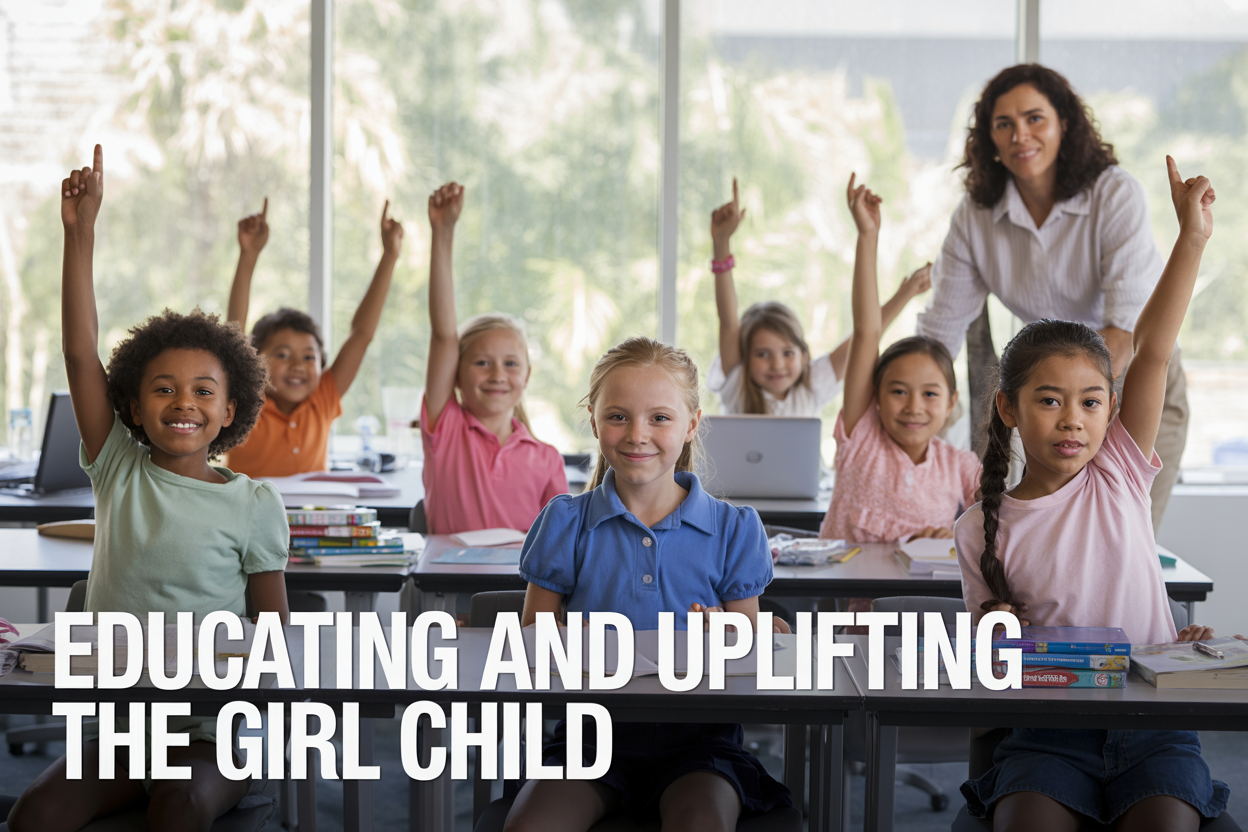
Educating and Uplifting the Girl Child: A Path to Global Transformation
Every girl deserves access to quality education, yet millions worldwide still face barriers that prevent them from reaching their full potential. This guide is for educators, parents, policymakers, and advocates who want to understand how breaking educational barriers for girls creates ripple effects that transform entire communities.
Girl child education isn't just about getting girls into classrooms—it's about empowering girls through education to become tomorrow's leaders, innovators, and change-makers. When we invest in girls education, we're investing in economic growth, healthier families, and more equitable societies.
We'll explore how to build strong educational foundations that give girls the tools they need to succeed. You'll discover strategies for supporting girls through secondary and higher education, where dropout rates often spike. We'll also cover developing life skills and leadership capabilities that prepare girls for real-world challenges, plus creating sustainable support systems that ensure long-term success.
The evidence is clear: educating girls is one of the most powerful ways to break cycles of poverty and drive social progress. Let's dive into the practical steps that make this vision a reality.
Breaking Down Educational Barriers for Girls

Addressing poverty-related obstacles to school attendance
Economic hardship remains one of the biggest roadblocks preventing girls from accessing quality education worldwide. Families struggling to make ends meet often face impossible choices between sending their daughters to school or having them contribute to household income through work or domestic responsibilities. The hidden costs of education - uniforms, books, transportation, and fees - can quickly add up to amounts that exceed a family's monthly budget.
Direct financial barriers include:
-
School fees and enrollment costs
-
Uniform and textbook expenses
-
Transportation costs to and from school
-
Lost income when girls can't work or help with family businesses
-
Opportunity costs of keeping girls in school versus early marriage
Breaking educational barriers for girls requires targeted financial interventions. Successful programs often combine cash transfers with school meal programs, providing immediate relief to families while ensuring girls receive proper nutrition. Scholarship programs specifically designed for female students have shown remarkable success rates, with some initiatives reporting 85% completion rates when financial obstacles are removed.
Community-based savings groups and microfinance programs help families build economic stability, making long-term educational investments more feasible. When mothers have access to income-generating opportunities, they're significantly more likely to prioritize their daughters' schooling over immediate economic gains.
Overcoming cultural and traditional resistance to girls' education
Deep-rooted cultural beliefs about gender roles continue to limit educational opportunities for millions of girls globally. Traditional views that prioritize domestic skills over academic achievement create invisible barriers that are often harder to overcome than financial constraints. Many communities still view investing in girls' education as unnecessary, believing that marriage and motherhood are their primary life purposes.
Common cultural obstacles include:
-
Beliefs that education makes girls "unmarriageable"
-
Expectations that girls should focus on domestic skills
-
Religious or traditional interpretations that limit women's roles
-
Community pressure to conform to gender stereotypes
-
Fear that educated girls will abandon family values
Girl child education initiatives must work closely with community leaders, religious figures, and influential family members to shift these perspectives. Successful programs showcase local role models - educated women who've maintained strong family relationships while contributing professionally to their communities. When communities see tangible benefits from girls' education, such as increased family income and improved health outcomes, resistance typically decreases.
Engaging fathers and male community leaders proves especially effective. Programs that educate men about the economic and social benefits of female education often see dramatic increases in school enrollment rates. Creating dialogue spaces where families can discuss concerns and share success stories helps normalize the idea of educated daughters.
Eliminating gender-based discrimination in educational institutions
Schools themselves can become barriers to girls' education when institutional practices, policies, or cultures discriminate against female students. Gender bias in classroom interactions, curriculum content, and disciplinary measures creates hostile learning environments that push girls away from academic achievement.
Institutional discrimination manifests through:
-
Unequal attention and encouragement from teachers
-
Curriculum that lacks female role models and perspectives
-
Inadequate sanitation facilities for girls
-
Tolerance of sexual harassment or gender-based violence
-
Lower expectations for girls in mathematics and sciences
-
Punishment policies that disproportionately affect girls
Transforming educational institutions requires comprehensive teacher training programs that address unconscious bias and promote inclusive teaching methods. Empowering girls through education starts with ensuring classroom environments celebrate female contributions and potential across all subjects. Schools need clear policies protecting girls from harassment, with consistent enforcement and support systems for reporting incidents.
Physical infrastructure improvements matter too. Separate, clean toilet facilities with proper menstrual hygiene management allow girls to attend school consistently throughout the month. Many girls drop out simply because schools lack basic facilities that address their biological needs with dignity and privacy.
Providing safe transportation and school environments
Safety concerns significantly impact girls' educational opportunities, particularly in regions where schools are far from home or located in unsafe areas. Parents often withdraw daughters from school due to legitimate fears about their physical safety during commutes or while on school premises. These safety barriers become more pronounced as girls reach adolescence, when concerns about sexual harassment and assault intensify.
Transportation and safety challenges include:
-
Long, dangerous walks to school through isolated areas
-
Lack of reliable public transportation options
-
Risk of harassment or assault during travel
-
Unsafe school buildings and inadequate security measures
-
Poor lighting along school routes
-
Lack of emergency communication systems
Girls education initiatives have found creative solutions to transportation barriers. Some programs provide bicycles to female students, dramatically reducing travel time while increasing independence. Community escort systems, where trusted adults accompany groups of girls to school, have proven effective in high-risk areas. School bus programs specifically for girls, though resource-intensive, show excellent results in increasing enrollment and completion rates.
Creating safe school environments requires multi-layered approaches. Installing proper lighting, securing school perimeters, and establishing clear safety protocols help protect students during school hours. Training teachers and staff to recognize and respond to safety threats ensures quick intervention when problems arise. Many successful programs also establish community watch groups that monitor school areas and report suspicious activities to authorities.
Technology solutions like GPS tracking on school transportation and emergency communication systems give parents peace of mind while providing girls with immediate access to help if needed. These safety measures don't just protect students - they also reassure families that investing in girls' education won't put their daughters at risk.
Building Strong Educational Foundations
Ensuring Access to Quality Primary Education Programs
Getting girls into primary school sounds straightforward, but the reality involves tackling complex challenges that keep millions out of classrooms worldwide. Quality primary education programs for girls require strategic planning that goes beyond simply building schools.
Distance often becomes a major hurdle. When schools are too far from home, parents hesitate to send their daughters, especially in areas where safety concerns exist. Mobile schools and community-based learning centers have emerged as innovative solutions, bringing education directly to girls who can't travel long distances.
Cost remains another significant barrier. Even when primary education is officially free, hidden expenses like uniforms, books, and transportation can drain family budgets. Successful girl child education programs address this by providing comprehensive support packages that cover these additional costs.
Teacher training specifically focused on gender-sensitive approaches makes a dramatic difference. When educators understand how to create inclusive environments where girls feel confident to participate, academic outcomes improve significantly. This includes training teachers to recognize and address gender biases that might favor boys in classroom interactions.
Flexible scheduling accommodates girls who juggle household responsibilities with their studies. Some programs offer evening classes or adjust school calendars around agricultural seasons when girls are needed at home. These adaptations ensure that cultural expectations don't derail educational progress.
Developing Literacy and Numeracy Skills Through Targeted Interventions
Basic literacy and numeracy form the cornerstone of all future learning, making targeted interventions crucial for girls who start school with educational gaps. These interventions must be designed specifically to address the unique challenges girls face in developing these fundamental skills.
Accelerated learning programs help girls who start school late or have irregular attendance patterns catch up with their peers. These intensive programs compress multiple years of learning into shorter timeframes while maintaining educational quality. The approach works particularly well for girls who missed early schooling due to family obligations or displacement.
Mother tongue instruction in early grades significantly improves comprehension rates among girls. When girls can first grasp concepts in their native language before transitioning to official school languages, they build stronger foundations. This approach also helps maintain cultural connections that families value.
Peer tutoring systems create supportive learning networks where older girls mentor younger ones. These relationships not only improve academic performance but also provide role models that inspire continued education. Girls often relate better to peer tutors who have faced similar challenges and overcame them.
Technology-enhanced learning tools are revolutionizing literacy and numeracy education in many regions. Educational apps and digital content make learning more engaging while providing personalized pacing that accommodates different learning styles. Solar-powered tablets loaded with educational content have proven particularly effective in areas with limited electricity.
Creating Girl-Friendly Learning Environments and Curricula
The physical and social environment of schools dramatically impacts whether girls succeed academically. Girl-friendly learning environments address both infrastructure needs and cultural sensitivities that affect female students.
Safe and private sanitation facilities rank among the most critical infrastructure requirements. Girls often drop out of school when they reach puberty if adequate toilet facilities aren't available. Modern girl-friendly schools include separate toilets for girls, handwashing stations, and private spaces for managing menstrual hygiene. Some schools also provide free sanitary products to ensure that menstruation never becomes a barrier to education.
Curriculum design matters just as much as infrastructure. Gender-responsive curricula eliminate stereotypical portrayals of women and men while including examples and case studies that resonate with girls' experiences. This means featuring female scientists, mathematicians, and leaders in textbooks while ensuring that examples and word problems don't unconsciously reinforce gender limitations.
Classroom layouts and teaching methods can either encourage or discourage girl participation. Circular seating arrangements promote discussion and collaboration, while traditional rows might favor students who are naturally more assertive. Interactive teaching methods that include group work, hands-on experiments, and creative projects often engage girls more effectively than lecture-based approaches.
School policies around safety, harassment, and discipline must explicitly protect girls' rights to learn without fear. Clear codes of conduct that address gender-based violence, along with reliable reporting mechanisms, create environments where girls feel secure enough to focus on their studies.
Female teachers and administrators serve as powerful role models, showing girls that education leads to professional opportunities. Schools with diverse staff demonstrate that women can excel in all subjects, including traditionally male-dominated fields like science and mathematics.
Empowering Girls Through Secondary and Higher Education
Preventing Early Marriage and Teenage Pregnancy Disruptions
Secondary education represents a critical crossroads for girls worldwide, where societal pressures often force them to choose between continuing their education and fulfilling traditional expectations. Girls who remain in school past primary age are significantly less likely to marry young or experience teenage pregnancy, creating a powerful protective effect that extends far beyond the classroom.
Cultural norms in many communities still view marriage as the primary path for girls, especially once they reach adolescence. Schools can counter these narratives by working directly with families and community leaders to demonstrate how educated daughters contribute more effectively to household income and community development. When parents see tangible benefits from their daughters' education, they become powerful advocates for keeping girls in school.
Comprehensive sex education programs within secondary schools provide girls with essential knowledge about reproductive health, helping them make informed decisions about their futures. These programs work best when combined with accessible healthcare services and counseling support that addresses the unique challenges girls face during adolescence.
Schools that implement stay-in-school policies for pregnant teenagers and young mothers create second chances that can transform entire family trajectories. Flexible scheduling, childcare support, and academic accommodations ensure that pregnancy doesn't become a permanent barrier to educational achievement.
Providing Scholarships and Financial Support Systems
Financial barriers remain the most significant obstacle preventing girls from accessing quality secondary and higher education. Even when primary education is free, hidden costs like uniforms, textbooks, transportation, and examination fees can quickly overwhelm family budgets, making girls' education seem like an unaffordable luxury.
Targeted scholarship programs specifically designed for girls create direct pathways to educational opportunities that might otherwise remain out of reach. These programs work most effectively when they address both direct educational costs and indirect expenses that families face when girls attend school instead of contributing to household income or care responsibilities.
Merit-based scholarships recognize academic excellence while need-based programs ensure that economic circumstances don't determine educational outcomes. The most successful initiatives combine both approaches, creating comprehensive support systems that sustain girls throughout their educational journey from secondary school through university graduation.
Community-funded scholarship programs build local investment in girls' education while reducing dependence on external donors. When local businesses, religious organizations, and community groups contribute to educational funds, they create sustainable support networks that understand and respond to specific regional challenges.
Offering Career Guidance and Mentorship Programs
Career guidance programs specifically designed for girls address the unique challenges they face in navigating educational and professional pathways. Many girls lack role models in their immediate environment who can demonstrate the possibilities that education creates, making mentorship connections essential for expanding their vision of what's possible.
Professional women serving as mentors provide real-world insights into career development while offering emotional support and practical advice. These relationships often extend beyond academic guidance to include life skills training, networking opportunities, and ongoing professional development support.
Girls education initiatives that connect students with successful women in various fields create powerful examples of achievement while providing concrete roadmaps for career development. When girls see women thriving as doctors, engineers, entrepreneurs, and leaders, these examples become tangible goals rather than abstract possibilities.
Group mentorship programs complement individual relationships by creating peer support networks where girls can share experiences, challenges, and aspirations. These programs often evolve into lasting professional networks that continue supporting participants long after formal mentorship periods end.
Promoting STEM Education Opportunities for Girls
Science, technology, engineering, and mathematics education opens doors to some of the fastest-growing and highest-paying career fields, yet girls remain significantly underrepresented in these areas. Early intervention during secondary education proves crucial for building confidence and competence in STEM subjects before societal messaging convinces girls that these fields aren't suitable for them.
Schools that actively promote gender equality in education create classroom environments where girls feel encouraged to pursue challenging STEM coursework. This includes addressing unconscious bias among teachers, providing hands-on learning opportunities, and celebrating girls' achievements in traditionally male-dominated subjects.
After-school STEM programs, science clubs, and technology workshops specifically designed for girls provide safe spaces where they can explore these subjects without competing directly with male peers who may have received more encouragement in these areas from an early age.
Partnerships between schools and local STEM employers create internship opportunities, job shadowing experiences, and direct exposure to STEM careers. When girls see women working in laboratories, engineering firms, and technology companies, these career paths become realistic aspirations rather than distant possibilities.
Female education programs that emphasize practical applications of STEM knowledge help girls understand how science and technology directly impact their daily lives and communities, making these subjects more relevant and engaging while building problem-solving skills that benefit all areas of their lives.
Developing Life Skills and Leadership Capabilities
Teaching financial literacy and entrepreneurship skills
Money management skills often get overlooked in traditional education, but they're absolutely critical for girls to gain independence and break cycles of poverty. Financial literacy programs designed for the girl child education focus need to start early and build practical skills girls can use immediately.
Basic budgeting, saving techniques, and understanding how banks work form the foundation. Girls learn to track expenses, set financial goals, and make informed spending decisions. Many programs use interactive games and real-world scenarios to make these concepts stick.
Entrepreneurship training takes things further by encouraging girls to identify problems in their communities and develop business solutions. This approach builds both business acumen and problem-solving abilities. Girls learn to write simple business plans, understand profit and loss, and develop marketing strategies for their ideas.
Microfinance programs specifically targeting young women provide seed funding for small ventures. These initiatives often include mentorship from successful female entrepreneurs who share practical advice and ongoing support. The combination of financial education and access to capital creates powerful opportunities for economic empowerment.
Digital financial literacy has become increasingly important as mobile banking and online transactions grow. Teaching girls to navigate digital payment systems, online banking, and e-commerce platforms prepares them for the modern economy while keeping them safe from fraud.
Building confidence through public speaking and leadership training
Public speaking terrifies many people, but girls face additional cultural barriers that discourage them from speaking up. Breaking down these barriers starts with creating safe spaces where girls can practice expressing their thoughts without judgment.
Leadership development programs work best when they combine structured activities with real-world opportunities. Girls participate in debates, present projects to audiences, and take turns leading group activities. These experiences build confidence gradually while developing essential communication skills.
Student government programs and peer mentoring opportunities give girls hands-on leadership experience. They learn to organize events, resolve conflicts, and advocate for causes they care about. These roles teach decision-making skills and show girls they can influence positive change.
Role models play a huge part in inspiring girls to step into leadership positions. When girls see women in leadership roles across different fields, they start believing these positions are achievable. Guest speakers, mentorship programs, and career shadowing opportunities expose girls to diverse leadership styles and career paths.
Team-building exercises and collaborative projects help girls develop emotional intelligence and learn to work effectively with others. They practice giving and receiving feedback, delegating tasks, and motivating team members. These soft skills prove invaluable in any leadership context.
Providing health education and reproductive awareness programs
Age-appropriate health education gives girls the knowledge they need to make informed decisions about their bodies and futures. Many girls lack basic understanding of reproductive health, which can lead to early marriage, teenage pregnancy, and health complications.
Comprehensive programs cover puberty, menstrual health, nutrition, and personal hygiene. When girls understand these natural processes, they feel less confused and more confident about their changing bodies. Access to menstrual products and private facilities helps girls stay in school during their periods.
Reproductive awareness education includes information about family planning, sexually transmitted infections, and the importance of consent. These programs emphasize that girls have the right to make choices about their own bodies and futures. Teaching about healthy relationships helps girls recognize and avoid harmful situations.
Mental health awareness has become increasingly important as girls face unique pressures and challenges. Programs address stress management, self-esteem building, and recognizing signs of depression or anxiety. Teaching coping strategies and connecting girls with support resources creates stronger, more resilient individuals.
Life skills training extends beyond health to include practical abilities like cooking nutritious meals, basic first aid, and household management. These skills build independence and prepare girls for adult responsibilities while challenging traditional gender expectations about what girls should or shouldn't learn.
Creating Sustainable Support Systems
Engaging families and communities in girl child education advocacy
Getting families on board with girl child education starts with addressing their concerns head-on. Many parents worry about safety, cultural expectations, or the costs involved. Smart advocacy programs work directly with mothers, fathers, and extended family members to show how education transforms not just the girl, but the entire household's future earning potential.
Community engagement works best when local leaders champion the cause. Religious leaders, village elders, and respected community members can shift attitudes faster than outside organizations. When these influencers share success stories of educated women from their own communities, skeptical families start paying attention.
Practical support makes advocacy real. This includes organizing safe transportation, flexible school schedules that work around household responsibilities, and educational support systems for girls that address cultural sensitivities. Parent education sessions help families understand how to support their daughters' learning at home.
Partnering with local organizations and government initiatives
Local NGOs already understand the cultural landscape and trust networks within communities. These partnerships bring credibility and sustainable connections that international organizations often struggle to build from scratch. Working with established girls education initiatives means leveraging existing relationships and proven approaches.
Government partnerships unlock policy changes and funding streams that individual programs can't access. Education ministries can adjust curricula, teacher training, and school infrastructure to better serve girls. These partnerships also ensure female education programs align with national education goals and receive official backing.
Successful partnerships require clear role definitions. Local organizations typically handle community outreach and cultural navigation, while government partners focus on policy implementation and large-scale resource allocation. Regular coordination meetings keep everyone aligned on objectives and progress.
Establishing mentorship networks with successful women role models
Girls need to see what's possible. When successful women from their own communities or similar backgrounds share their journeys, it creates powerful inspiration. These role models prove that education leads to real opportunities, not just theoretical benefits.
Mentorship networks work best when they're structured but flexible. Regular meetings, goal-setting sessions, and career exploration activities give girls concrete guidance. Mentors can help navigate challenges like family pressure, academic struggles, or career planning that teachers might not fully understand.
Digital platforms expand mentorship reach. Video calls, messaging apps, and online workshops connect girls with mentors who might be geographically distant but culturally relevant. This approach particularly benefits rural communities where successful role models might be scarce locally.
Implementing long-term monitoring and evaluation programs
Tracking progress goes beyond enrollment numbers. Effective monitoring systems measure learning outcomes, life skills development, and long-term career trajectories. This data shows which girls education advocacy strategies actually work and which need adjustment.
Regular check-ins with girls and their families reveal early warning signs of potential dropouts. When monitoring systems catch problems like attendance issues, family financial stress, or academic struggles early, interventions can prevent girls from leaving school permanently.
Community-based monitoring involves local stakeholders in data collection and analysis. This approach builds ownership and ensures programs remain responsive to changing community needs. Local monitors understand cultural nuances that outside evaluators might miss.
Securing funding through grants and corporate partnerships
Diversified funding streams protect programs from single-source dependency. Corporate partnerships often provide more than money – they offer internships, career guidance, and real-world connections that enhance educational experiences. Companies investing in women empowerment through education create pathways from classroom to career.
Grant applications succeed when they tell compelling stories backed by solid data. Funders want to see clear impact metrics, sustainable plans, and evidence that their investment will create lasting change. Programs that can demonstrate measurable outcomes in girls leadership development attract repeat funding.
Corporate social responsibility budgets increasingly prioritize gender equality initiatives. Companies recognize that educated women drive economic growth and consumer markets. Smart partnerships align corporate goals with girls educational opportunities, creating win-win relationships that benefit everyone involved.
When we remove barriers and create strong foundations for girls' education, we're not just changing individual lives – we're transforming entire communities. Girls who receive quality education become confident leaders, innovative problem-solvers, and powerful advocates for change. They break cycles of poverty, improve health outcomes for their families, and contribute meaningfully to economic growth.
The path forward requires all of us to play our part. Support local organizations that champion girls' education, advocate for policies that protect and promote equal learning opportunities, and challenge outdated beliefs about what girls can achieve. Every girl deserves the chance to learn, lead, and shape her own future. When we invest in educating girls today, we're building a stronger, more equitable world for everyone tomorrow.
.png)


Comments
Post a Comment