Rest, Burnout and the Modern Woman
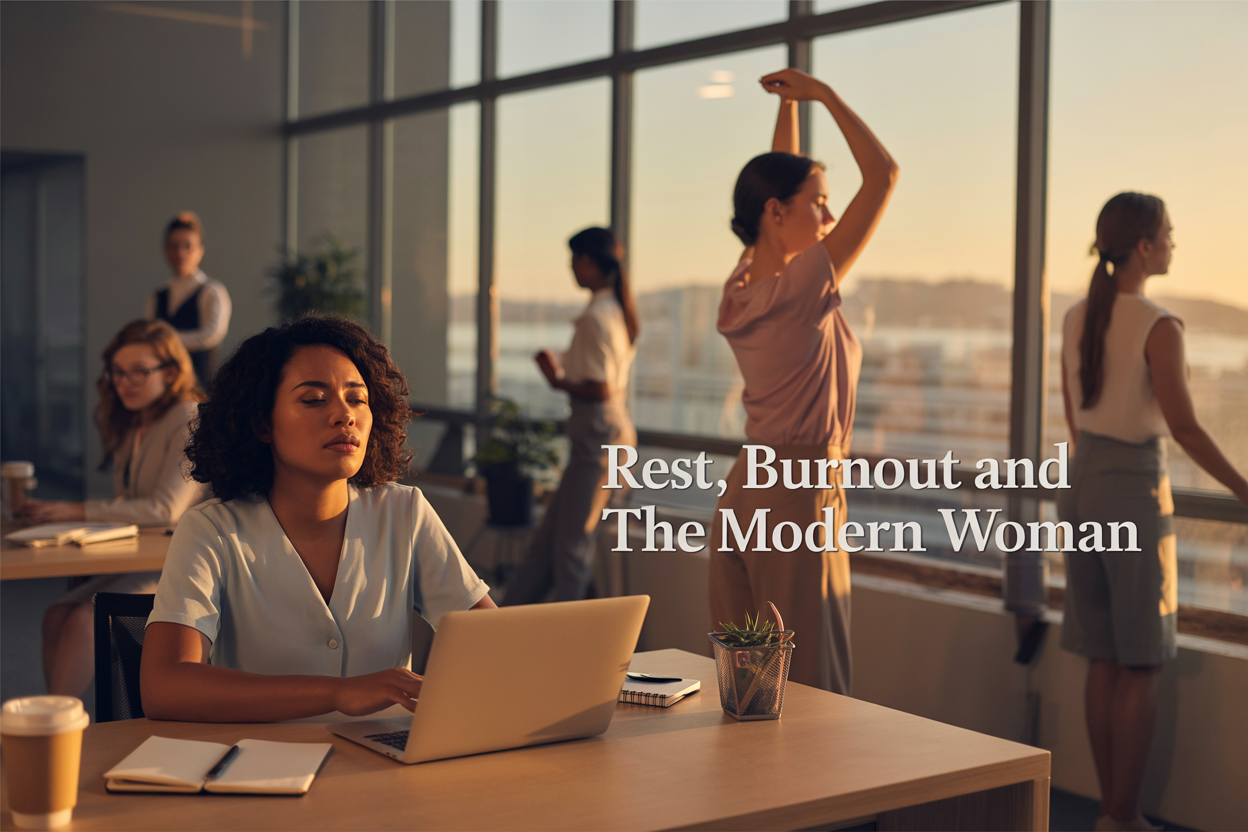
Modern women are burning out at unprecedented rates, juggling careers, families, and endless expectations while neglecting their most basic need: rest. This epidemic of modern woman exhaustion is hitting professional women across all industries, from entry-level employees to C-suite executives who've mastered everything except saying no.
This guide is for ambitious women who: recognize the warning signs of female professional burnout, want to build sustainable work life balance women can actually maintain, and are ready to implement real burnout recovery strategies without sacrificing their career goals.
You'll discover why rest isn't selfish but essential for peak performance, and how neglecting downtime creates a expensive cycle of workplace fatigue and decreased productivity. We'll also explore practical, evidence-based techniques for preventing burnout at work that fit into your already packed schedule. Finally, you'll learn to shift from viewing rest as earned reward to recognizing it as the foundation of sustainable success – because women's mental health workplace initiatives start with individual choices that ripple outward.
The female workforce stress you're experiencing isn't a personal failing. It's a systemic issue that requires both personal boundaries and strategic approaches to rest and productivity balance.
Understanding Burnout in Today's Female Workforce
Recognizing the unique pressures modern women face
Modern women navigate a complex landscape of professional demands that previous generations never encountered. The expectation to excel in traditionally male-dominated fields while maintaining perfectionist standards creates intense pressure. Women often face the double bind of being perceived as either too aggressive or too passive, leading to constant self-monitoring and adjustment of their professional personas.
The gender pay gap adds another layer of stress, with women feeling the need to work twice as hard to prove their worth. This pressure intensifies for women of color, who face additional barriers and biases in the workplace. Many women also carry the financial responsibility of supporting families while dealing with career limitations due to childcare expectations.
Social media amplifies these pressures by creating unrealistic standards of success. The "having it all" narrative suggests women should seamlessly juggle high-powered careers, perfect families, and personal fulfillment without showing signs of struggle. This constant comparison leads to feelings of inadequacy and pushes many toward women burnout prevention strategies out of desperation rather than proactive self-care.
Identifying early warning signs of professional exhaustion
Female workforce stress manifests differently than traditional burnout presentations, often making it harder to recognize. Women frequently experience emotional exhaustion first, feeling drained by interpersonal demands at work. They may find themselves taking on the role of office peacekeeper or emotional labor coordinator, which depletes energy reserves.
Physical symptoms often appear as:
-
Chronic fatigue that rest doesn't alleviate
-
Frequent headaches or tension in neck and shoulders
-
Sleep disturbances or difficulty falling asleep
-
Changes in appetite or stress eating patterns
-
Increased susceptibility to illness
Emotional indicators include:
-
Feeling overwhelmed by routine tasks
-
Loss of enthusiasm for projects once enjoyed
-
Increased irritability with colleagues or family
-
Difficulty concentrating or making decisions
-
Cynicism about work impact or company values
Behavioral changes become evident through procrastination on important tasks, withdrawal from workplace social activities, or overcompensating through perfectionism. Many women ignore these warning signs, attributing them to temporary stress rather than recognizing the need for burnout recovery strategies.
Understanding the mental load and invisible labor burden
The mental load represents the cognitive effort required to manage household and family responsibilities, even when physical tasks are shared. Women typically shoulder the responsibility of remembering appointments, planning meals, tracking children's needs, and coordinating family schedules. This constant background processing creates mental fatigue that carries into professional settings.
At work, women often take on invisible labor through:
-
Organizing team celebrations and social events
-
Mentoring junior colleagues without recognition
-
Taking detailed meeting notes while others participate freely
-
Managing workplace relationships and conflict resolution
-
Handling administrative tasks that support team function
This emotional and organizational labor rarely appears in job descriptions or performance reviews, yet its absence would significantly impact workplace dynamics. Women frequently volunteer for or are assigned these tasks because of gendered expectations about their natural caregiving abilities.
The combination of professional responsibilities and invisible labor creates a work life balance women struggle that extends far beyond traditional time management challenges. The mental energy required to constantly switch between strategic thinking and detail-oriented coordination leaves little capacity for personal rest and recovery.
Examining societal expectations versus personal capacity
Society expects women to maintain high performance across multiple domains simultaneously. The idealized modern woman excels professionally while being an attentive parent, supportive partner, engaged friend, and community contributor. These expectations ignore basic human limitations and the finite nature of energy and attention.
Cultural messaging suggests that struggling to meet these standards indicates personal failure rather than unrealistic expectations. Women internalize these messages, leading to self-blame when they can't sustain superhuman performance levels. The shame associated with modern woman exhaustion prevents many from seeking help or implementing necessary boundaries.
Women's mental health workplace initiatives often focus on individual coping strategies rather than addressing systemic issues that create unsustainable demands. While personal resilience tools are valuable, they can't fully address environments that expect unlimited availability and emotional labor without adequate support or recognition.
The mismatch between societal expectations and human capacity becomes particularly evident during life transitions such as pregnancy, caring for aging parents, or dealing with personal health issues. Women facing these challenges often feel they must choose between professional success and personal well-being, when the real issue is a system that fails to accommodate normal human needs and limitations.
Recognizing this gap between expectations and capacity is the first step toward developing sustainable approaches to preventing burnout at work and creating more realistic standards for personal and professional success.
The Hidden Cost of Neglecting Rest

How chronic fatigue impacts decision-making abilities
When exhaustion becomes your constant companion, your brain essentially switches to survival mode. Think of it like running your phone on 5% battery – everything becomes sluggish and unreliable. Women experiencing chronic fatigue from overwork often find themselves making poor choices they wouldn't normally consider. Simple decisions that once took minutes now feel overwhelming.
Research shows that sleep-deprived and chronically tired individuals experience decreased activity in the prefrontal cortex, the brain's decision-making center. This means that women dealing with modern woman exhaustion struggle with:
-
Impaired judgment: Making hasty decisions without considering consequences
-
Reduced creativity: Losing the ability to think outside the box
-
Poor risk assessment: Either being overly cautious or dangerously reckless
-
Decision paralysis: Becoming unable to choose between even simple options
The ripple effect extends beyond work decisions. Exhausted women often make poor food choices, skip exercise, and say yes to commitments they don't have energy for – creating a cycle that deepens their fatigue.
The relationship between exhaustion and physical health decline
Chronic exhaustion doesn't just make you feel tired; it actively damages your body. When women push through fatigue consistently, their immune systems weaken significantly. You might notice getting sick more often or taking longer to recover from minor illnesses.
Physical symptoms of prolonged exhaustion include:
| Body System | Impact |
|---|---|
| Cardiovascular | Increased blood pressure, irregular heartbeat |
| Digestive | Stomach issues, poor nutrient absorption |
| Hormonal | Disrupted menstrual cycles, decreased fertility |
| Muscular | Chronic pain, tension headaches |
| Neurological | Memory problems, concentration issues |
The stress hormone cortisol plays a major role here. When you're constantly running on empty, cortisol levels remain elevated, leading to inflammation throughout your body. This inflammation contributes to everything from joint pain to increased risk of heart disease. Many women dealing with female workforce stress develop what doctors call "tired but wired" syndrome – feeling exhausted yet unable to truly rest.
Understanding the productivity paradox of overwork
Here's something that might surprise you: working more doesn't actually make you more productive. This productivity paradox is especially relevant for women who often feel pressure to prove themselves in professional settings. When you're operating on fumes, the quality of your work suffers dramatically, even if you're putting in longer hours.
Studies tracking women burnout prevention strategies reveal that employees become significantly less efficient after working more than 50 hours per week. Beyond this threshold, productivity drops so sharply that those extra hours become counterproductive. You might spend three hours on a task that would normally take one hour when you're well-rested.
Signs that overwork is killing your productivity:
-
Taking twice as long to complete routine tasks
-
Making more errors that require time to fix
-
Struggling to focus during meetings
-
Procrastinating on important projects
-
Feeling mentally foggy throughout the day
The cruel irony is that many women respond to decreased productivity by working even longer hours, creating a vicious cycle that leads straight to burnout.
Recognizing when "busy" becomes counterproductive
There's a difference between being productively engaged and being destructively busy. Many women have been conditioned to wear busyness like a badge of honor, but recognizing when this "busy" becomes harmful is crucial for preventing burnout at work.
Warning signs that your busyness has turned toxic:
-
Constant rushing: Always feeling like you're behind schedule
-
Multitasking everything: Never giving full attention to any single task
-
No buffer time: Scheduling back-to-back commitments with no breathing room
-
Saying yes automatically: Agreeing to requests without considering your capacity
-
Guilt during downtime: Feeling anxious when you're not actively working
The shift from productive to counterproductive often happens gradually. You start skipping lunch breaks, checking emails after hours, and sacrificing sleep for work tasks. What initially feels like dedication slowly morphs into a pattern that undermines both your work life balance women seek and your overall effectiveness.
Smart women learn to distinguish between urgent and important tasks. They understand that being selective about commitments isn't lazy – it's strategic. When you're constantly reactive instead of proactive, you lose control over your time and energy, making burnout recovery strategies necessary instead of preventable.
Reclaiming Your Right to Rest

Setting boundaries without guilt or apology
The guilt that comes with setting boundaries runs deep for many women, especially in workplace settings where we've been conditioned to say yes to everything. This guilt isn't a character flaw—it's a learned response that keeps us trapped in cycles that lead to burnout. Breaking free means recognizing that boundaries aren't selfish; they're essential for sustainable performance and women burnout prevention.
Start by identifying your non-negotiables. Maybe it's not checking emails after 7 PM or taking your full lunch break without interruption. Write these down and treat them as seriously as you would any other professional commitment. When someone pushes against these boundaries, resist the urge to over-explain or apologize. A simple "That won't work for me" is complete.
Practice boundary-setting in low-stakes situations first. Decline that optional weekend work call or skip the after-hours team gathering when you're exhausted. Each time you honor your boundaries without catastrophic consequences, you'll build confidence for bigger moments.
Remember that people will test your boundaries—it's human nature. The key is consistency. When you waver, others learn your limits aren't actually limits. Stay firm, and most people will respect your boundaries once they realize you're serious about maintaining them.
Creating sustainable daily restoration practices
Daily restoration isn't about grand gestures or hour-long meditation sessions you can't realistically maintain. It's about weaving small, consistent practices into your existing routine that actually stick. The goal is creating pockets of renewal throughout your day that prevent the accumulation of stress that leads to modern woman exhaustion.
Morning restoration might look like five minutes of deep breathing before checking your phone, or listening to a favorite song while drinking coffee. The key is doing something that feels nourishing rather than just another item on your to-do list.
Midday restoration becomes crucial for preventing afternoon energy crashes. This could be a five-minute walk outside, stretching at your desk, or simply closing your eyes and taking ten deep breaths between meetings. These micro-breaks might seem insignificant, but they compound throughout the day.
Evening restoration helps you transition from work mode to rest mode. This might involve changing clothes immediately when you get home, taking a hot shower to wash the day away, or spending ten minutes journaling about what went well.
The secret to sustainable practices is starting smaller than feels meaningful. If you think you need twenty minutes of meditation, start with three. If you want to journal for pages, start with three sentences. Build the habit first, then expand if it feels natural.
Learning to say no to protect your energy reserves
Your energy is a finite resource, and every yes to one thing is automatically a no to something else. Learning to say no isn't about becoming difficult or unhelpful—it's about being strategic with your most valuable asset. This skill is particularly important for preventing burnout at work and maintaining work life balance women desperately need.
Before automatically saying yes to requests, pause and ask yourself three questions: Does this align with my priorities? Do I have the genuine capacity to do this well? Will saying yes prevent me from taking care of my essential needs? If any answer is no, the request gets a no.
Create a "no" script that feels authentic to you. "I wish I could help, but I'm at capacity right now" works well. So does "That sounds interesting, but I can't commit to doing it justice." Having prepared responses prevents you from saying yes in the moment and regretting it later.
Start saying no to small requests to build your confidence. Decline the optional committee, skip the voluntary training that doesn't serve your goals, or pass on social events when you're genuinely tired. Each successful no builds your muscle for bigger decisions.
Remember that disappointing people sometimes is part of being an adult with boundaries. The people who truly matter will respect your limits and want you to take care of yourself. Those who consistently pressure you to ignore your boundaries aren't acting in your best interest anyway.
Practical Strategies for Preventing Burnout
Building Micro-Recovery Moments Into Your Schedule
The secret to preventing burnout at work lies in the small moments between tasks. These micro-recovery periods don't require hour-long spa sessions or weekend retreats—they're powerful 30-second to 5-minute breaks that reset your nervous system throughout the day.
Start with the 20-20-20 rule: every 20 minutes, look at something 20 feet away for 20 seconds. This simple practice reduces eye strain and mental fatigue. Between meetings, take three deep breaths or do gentle neck rolls. While your coffee brews, stretch your arms overhead or practice gratitude by noting one thing you appreciate about your current moment.
Create transition rituals that signal to your brain it's time to shift gears. Close your laptop, take a sip of water, and set an intention for your next task. These micro-moments compound throughout the day, creating a buffer against workplace fatigue that many women experience when juggling multiple responsibilities.
Consider setting phone reminders for these breaks until they become automatic. The goal isn't perfection—it's consistency in giving your mind and body permission to pause before overwhelm sets in.
Delegating Effectively at Work and Home
Women burnout prevention starts with releasing the myth that doing everything yourself equals excellence. Many women struggle with delegation because they've been conditioned to believe their worth comes from being indispensable. This mindset creates unsustainable pressure that leads directly to exhaustion.
At work, start by identifying tasks that others can handle at 80% of your capability—this is often good enough. Create clear instructions, set expectations, and resist the urge to micromanage. Remember, delegation isn't dumping work on others; it's strategic distribution that allows everyone to grow while protecting your energy for high-impact activities.
Home delegation looks different but equally important. Assign age-appropriate chores to children, share household management with partners, or hire help when possible. Consider services like grocery delivery, meal prep, or house cleaning as investments in your mental health, not luxuries.
The emotional labor of managing family schedules, remembering birthdays, and coordinating social events can also be shared. Create shared calendars, rotate who plans weekend activities, or designate different family members as "experts" for specific household areas.
Developing Healthy Disconnection Habits From Technology
Digital boundaries are essential for work life balance women need to maintain their sanity. The constant ping of notifications creates a state of chronic low-level stress that accumulates into burnout over time.
Establish clear "device-free" zones and times. Keep phones out of the bedroom to protect sleep quality. Create a charging station outside your bedroom where devices sleep overnight. Set specific times for checking emails rather than responding to every notification immediately.
Use your phone's "Do Not Disturb" settings strategically. Schedule automatic quiet hours from 8 PM to 8 AM, allowing only emergency contacts through. Turn off non-essential push notifications—you don't need to know immediately when someone posts on social media or when your favorite store has a sale.
Practice the "phone in another room" rule during meals, conversations, or focused work sessions. Replace mindless scrolling with intentional activities like reading, walking, or calling a friend. When you do use technology, make it purposeful rather than habitual.
Consider a weekly digital sabbath—a few hours or a full day where you disconnect from screens entirely. This practice helps reset your relationship with technology and reminds you what life feels like without constant digital input.
Creating Supportive Networks and Accountability Systems
Isolation amplifies burnout, while community creates resilience. Women's mental health workplace support systems are critical for recognizing early warning signs and maintaining perspective during stressful periods.
Build your professional support network intentionally. Connect with other women in your industry through professional organizations, LinkedIn groups, or local meetups. These relationships provide career advice, job opportunities, and validation that your workplace challenges aren't unique or insurmountable.
Create or join peer accountability groups focused on burnout recovery strategies. Meet monthly with 3-4 other women to check in on goals, share challenges, and celebrate wins. These groups provide external perspective when you're too close to your situation to see clearly.
Establish mentoring relationships in both directions—find mentors who've navigated similar challenges and mentor others who are earlier in their journey. Teaching others what you've learned reinforces your own knowledge while creating meaningful connections.
Don't underestimate the power of informal support networks. Cultivate friendships with people who understand your professional pressures but can also help you laugh, relax, and remember your identity beyond work achievements.
Establishing Non-Negotiable Self-Care Routines
Self-care isn't selfish—it's strategic. Modern woman exhaustion often stems from treating self-care as optional rather than essential maintenance for sustained performance.
Identify your non-negotiables: the minimum activities required for you to function at your best. This might include 7 hours of sleep, 20 minutes of movement, one nutritious meal, or 10 minutes of quiet reflection. These aren't luxuries; they're the foundation that makes everything else possible.
Create morning and evening routines that anchor your day. A consistent morning routine sets a positive tone, while an evening routine helps you decompress and transition into rest mode. Keep these routines simple enough to maintain during busy periods.
Schedule self-care like important meetings. Put it in your calendar and treat these appointments with yourself as seriously as client meetings. Start small—a 15-minute walk is better than a cancelled gym session.
Develop a menu of self-care options for different time constraints and energy levels. Quick options: deep breathing, stretching, calling a friend. Medium options: bath, nature walk, cooking a favorite meal. Longer options: massage, day trip, hobby time.
Track your energy levels and mood to identify which self-care activities actually restore you versus which ones you think should help but don't. This self-awareness helps you invest your limited time in activities that genuinely support your wellbeing.
Transforming Your Relationship with Productivity
Redefining Success Beyond Constant Achievement
Success doesn't have to mean burning yourself out. For too many women in today's workforce, achievement has become synonymous with exhaustion. We've been conditioned to believe that worth equals output, that value comes from saying yes to everything, and that rest is something we earn only after crossing every item off an impossible to-do list.
Real success looks different. It's about creating sustainable excellence rather than sprinting toward burnout. When you redefine success to include your mental health, relationships, and personal fulfillment, you're not settling for less—you're choosing more. The most successful women aren't the ones who collapse at their desks; they're the ones who maintain their energy, creativity, and joy while achieving their goals.
Start by questioning the metrics you use to measure your worth. Are you counting hours worked or results achieved? Are you celebrating completed projects or the quality of your life? True success includes having energy for the people and activities you love, maintaining your health, and feeling genuinely satisfied with your work.
Embracing Rest as a Strategic Advantage
Rest isn't the enemy of productivity—it's its secret weapon. When you view rest and productivity balance as complementary forces rather than competing ones, everything changes. Your brain needs downtime to process information, form new connections, and generate creative solutions. Athletes understand this principle; they know that recovery days make them stronger, not weaker.
The most innovative ideas often come during moments of rest, not during the tenth hour of grinding at your desk. When you're well-rested, you make better decisions, communicate more effectively, and solve problems with greater clarity. You're also more resilient when challenges arise, rather than crumbling under pressure.
Companies with the healthiest bottom lines often have employees who take their vacation days, maintain reasonable work hours, and prioritize their well-being. This isn't coincidence—it's cause and effect. Rested employees are more engaged, creative, and loyal. They take fewer sick days and produce higher-quality work.
Make rest a non-negotiable part of your professional strategy. Schedule it like you would an important meeting. Protect it like you would a critical deadline. Your future self will thank you, and your career will benefit.
Measuring Progress Through Well-being Metrics
Traditional success metrics tell only part of the story. While career advancement and financial goals matter, they don't capture the full picture of a thriving life. Start tracking metrics that actually indicate whether you're building something sustainable or heading toward women burnout prevention territory.
Physical Well-being Indicators:
-
Energy levels throughout the day
-
Sleep quality and duration
-
Exercise consistency
-
Stress-related symptoms
Emotional Health Markers:
-
Enthusiasm for your work
-
Satisfaction in relationships
-
Ability to handle setbacks
-
Overall mood stability
Professional Satisfaction Metrics:
-
Skill development and learning
-
Work relationships quality
-
Alignment with personal values
-
Sense of purpose and impact
When your well-being metrics are strong, your traditional success metrics often follow naturally. You perform better when you feel better. You're more creative when you're not constantly stressed. You build stronger professional relationships when you're not running on empty.
Track these indicators weekly or monthly. Notice patterns and connections between your well-being and your work performance. This data will help you make informed decisions about how to structure your life for both success and satisfaction.
Creating Work-Life Integration That Actually Works
Work life balance women seek isn't about perfect equilibrium—it's about intentional integration. Some days work will demand more; other days, personal priorities take precedence. The key is being deliberate about these choices rather than letting them happen by default.
Start by identifying your non-negotiables in both work and life. Maybe it's never missing your child's bedtime story, maintaining your morning workout routine, or protecting Friday afternoons for strategic planning. Whatever matters most to you, build your schedule around these anchor points.
Technology can be your ally or your enemy in this process. Set boundaries around email and messaging. Create systems that allow you to be present wherever you are. Use tools that streamline your work so you can be more efficient during work hours and more present during personal time.
Practical Integration Strategies:
| Work Hours | Personal Time | Transition Rituals |
|---|---|---|
| Deep work blocks | Protected family time | End-of-day shutdown routine |
| Meeting-free zones | Personal development | Morning preparation ritual |
| Email boundaries | Exercise/self-care | Weekend work limits |
| Priority-focused days | Social connections | Vacation protection |
Remember that integration looks different for everyone. A working mother's approach will differ from a single professional's strategy. The goal isn't to copy someone else's system but to create one that honors your unique circumstances, values, and goals while preventing modern woman exhaustion from taking over your life.

Modern women face a perfect storm of workplace demands, family responsibilities, and societal expectations that make burnout almost inevitable. The pressure to excel in every area of life while constantly pushing forward has created a generation of exhausted women who have forgotten that rest isn't a luxury—it's a necessity. When we skip rest, we pay the price through decreased creativity, strained relationships, and physical exhaustion that impacts every aspect of our lives.
Breaking free from this cycle starts with changing how we view productivity and success. Real strength comes from knowing when to pause, setting boundaries that protect your energy, and recognizing that saying no to some things means saying yes to your well-being. Start small today: block out 15 minutes for yourself, practice one boundary-setting conversation, or simply acknowledge that your worth isn't measured by your output. Your future self will thank you for making rest a priority instead of an afterthought.
.png)


Comments
Post a Comment