Women of Influence in World History
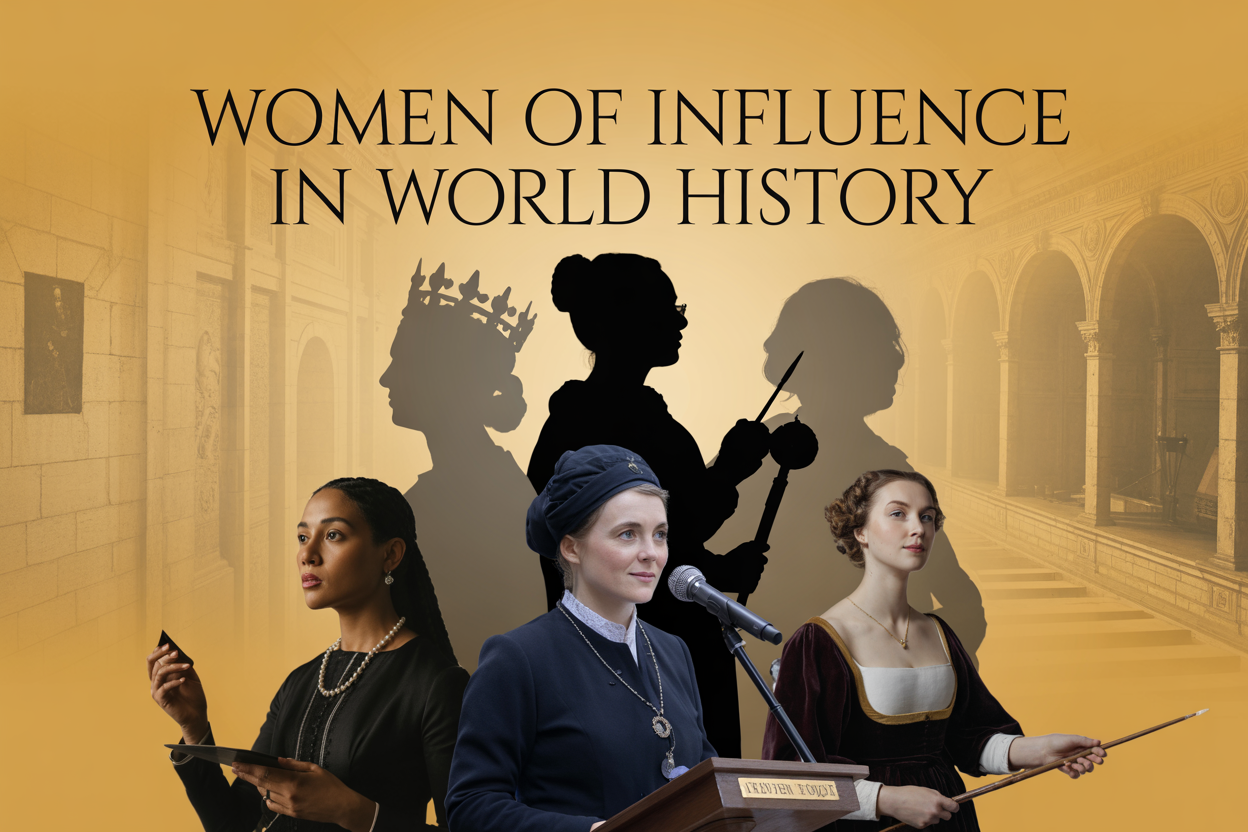
Throughout history, women of influence have shaped civilizations, challenged empires, and sparked revolutions that changed the world forever. This guide is for students, educators, history enthusiasts, and anyone curious about the powerful women leaders in history who broke barriers and left lasting legacies.
From ancient Egypt's pharaohs to modern-day presidents, influential women throughout history have proven that leadership, innovation, and courage know no gender boundaries. These famous women in world history didn't just participate in major events—they created them.
We'll explore how women in ancient civilizations like Cleopatra and Hatshepsut wielded unprecedented power in male-dominated societies. You'll discover influential queens in history who transformed entire nations through strategic marriages, military conquests, and political reforms. We'll also examine the female revolutionaries in history and historical female pioneers who sparked scientific breakthroughs, social movements, and cultural shifts that continue to impact our world today.
Get ready to meet the women who changed the world and learn how their stories demonstrate women's impact on world history in ways that textbooks often overlook.
Ancient Civilizations and Their Female Pioneers
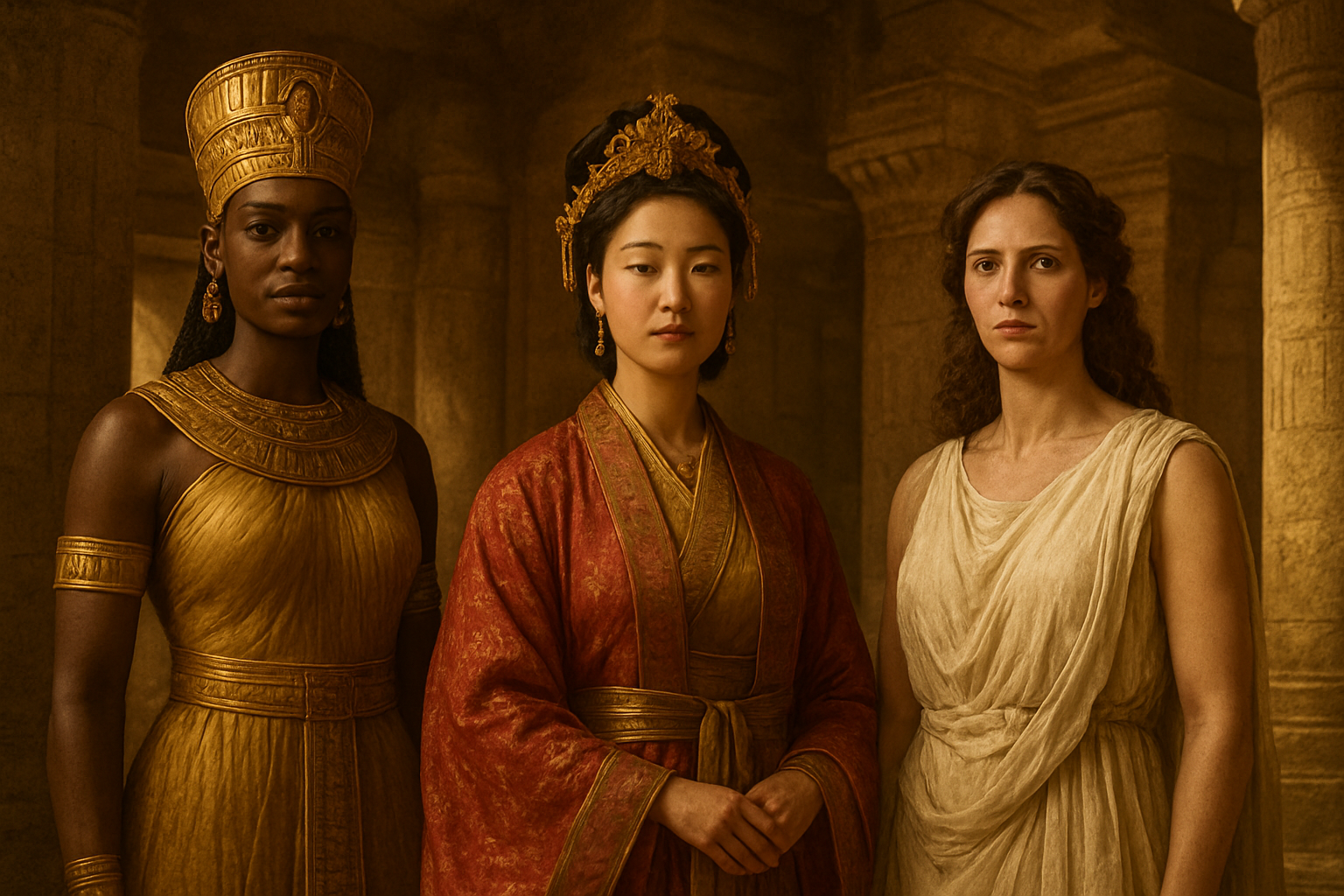
Cleopatra's Strategic Leadership That Shaped Egypt's Destiny
Cleopatra VII stands as one of history's most brilliant political strategists, wielding her intellect and charisma to preserve Egyptian independence for nearly two decades. Far from the seductive stereotype popularized in Hollywood, this influential woman throughout history was a polyglot who spoke nine languages and possessed an exceptional understanding of economics, mathematics, and philosophy.
Her reign from 51 to 30 BCE showcased masterful diplomacy during Rome's expansion across the Mediterranean. When Julius Caesar arrived in Alexandria, Cleopatra transformed what could have been Egypt's subjugation into a strategic alliance. She didn't just charm the Roman leader—she presented herself as an equal partner, discussing trade routes, agricultural innovations, and military tactics. Their relationship produced a son and secured Egypt's autonomy while Rome conquered neighboring territories.
After Caesar's assassination, Cleopatra quickly pivoted to Mark Antony, recognizing the shifting power dynamics in Rome. She funded his military campaigns and provided naval support, understanding that Egypt's survival depended on backing the right Roman faction. Her famous entrance to meet Antony—arriving on a golden barge dressed as Aphrodite—wasn't mere theater but calculated political messaging that established her divine authority.
Cleopatra's economic policies transformed Egypt into the wealthiest region in the Mediterranean. She expanded trade networks reaching India and Arabia, introduced new agricultural techniques, and established Alexandria as the intellectual capital of the ancient world. Even today, her strategic brilliance serves as a blueprint for women leaders in history who balanced diplomacy, economics, and cultural influence.
Hatshepsut's Revolutionary Reign as Pharaoh
Breaking every convention of ancient Egyptian society, Hatshepsut declared herself pharaoh around 1478 BCE and ruled for twenty-two prosperous years. This powerful woman leader in history didn't seize power through violence or political intrigue—she earned it through demonstrated competence as regent for her young stepson, Thutmose III.
Hatshepsut's reign marked one of Egypt's most peaceful and prosperous periods. She prioritized trade expeditions over military conquests, sending ships to the mysterious land of Punt (modern-day Somalia/Ethiopia) and returning with exotic animals, incense trees, and gold. These peaceful missions strengthened Egypt's economy and expanded its cultural horizons without the massive costs of warfare.
Her architectural achievements still astound visitors today. The mortuary temple at Deir el-Bahri, carved directly into limestone cliffs, represents revolutionary design that influenced Egyptian architecture for centuries. She commissioned hundreds of construction projects throughout Egypt, providing employment and demonstrating the kingdom's prosperity to neighboring nations.
To legitimize her unprecedented position, Hatshepsut adopted traditional pharaonic symbols, including the false beard and royal regalia typically worn by male rulers. Ancient depictions show her transformation from feminine dress in early reliefs to fully masculine pharaonic representation later in her reign. This visual evolution wasn't about hiding her gender—it was about claiming the divine authority that Egyptians believed belonged exclusively to male pharaohs.
Sappho's Literary Genius That Influenced Poetry Forever
On the Greek island of Lesbos around 630 BCE, Sappho created poetry so revolutionary that fragments of her work still inspire writers 2,600 years later. This female pioneer elevated personal emotion and intimate relationships to the level of epic themes traditionally reserved for gods and heroes.
Sappho ran what scholars believe was an academy for young women, teaching music, poetry, and dance. Her students came from wealthy families across the Greek world, making her school a cultural center that rivaled Athens in intellectual influence. She created new poetic meters—the Sapphic stanza remains a challenging and beloved form among contemporary poets.
Her poetry broke from Homer's grand narratives of war and adventure, focusing instead on the subtle emotions of daily life: jealousy, desire, friendship, and loss. Lines like "He seems to me equal to gods" capture psychological complexity that wouldn't reappear in literature for centuries. She wrote about women's experiences with unprecedented honesty, describing the physical sensations of attraction and the emotional devastation of separation.
Ancient critics called her the "tenth Muse," placing her among the divine inspirations of artistic creation. Plato referenced her work, and Roman poets like Catullus translated her verses. Though only one complete poem survives today, her influence shaped Greek lyric poetry and established the template for personal, emotional verse that defines much of modern poetry. Her impact on women's contribution to world history extends far beyond literature—she proved that women's inner lives deserved artistic expression and serious intellectual consideration.
Medieval Queens Who Transformed Nations
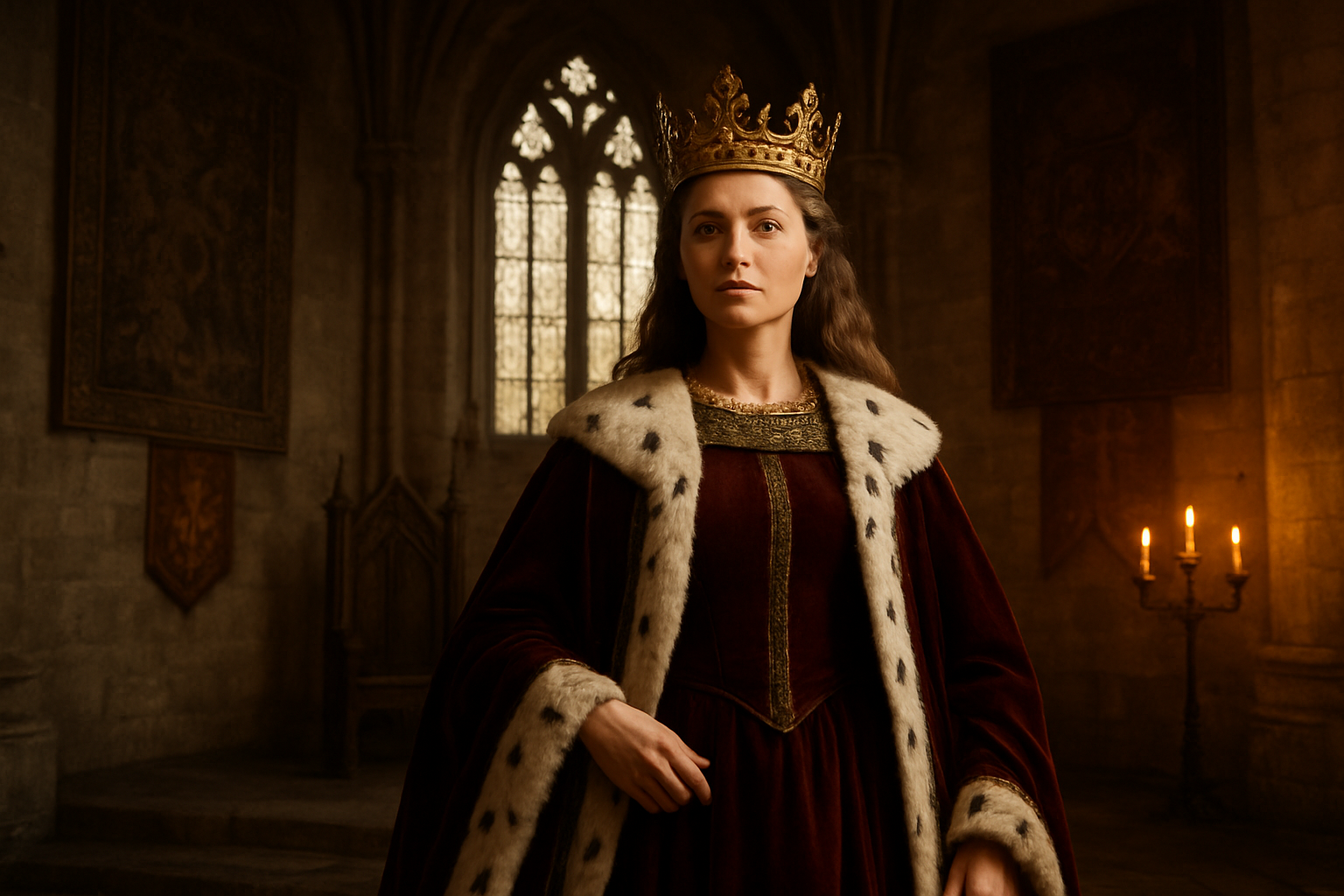
Eleanor of Aquitaine's Political Mastery Across Two Kingdoms
Eleanor of Aquitaine stands as one of the most remarkable influential women throughout history, wielding unprecedented power across medieval Europe. Born around 1122, she inherited the vast Duchy of Aquitaine at just 15, making her one of the wealthiest and most powerful nobles in France. Her political acumen became evident when she married Louis VII of France, transforming from duchess to queen and bringing her extensive territories into the French crown.
Her marriage to Louis VII proved tumultuous, particularly during the Second Crusade where Eleanor demonstrated her independence by bringing her own troops and refusing to conform to traditional queenly expectations. When their marriage was annulled in 1152, Eleanor shocked European nobility by marrying Henry Plantagenet just eight weeks later, becoming Queen of England when he ascended as Henry II.
Eleanor's influence extended far beyond ceremonial duties. She actively governed Aquitaine, established courts of love that celebrated troubadour culture, and played crucial roles in diplomatic negotiations. When Henry II imprisoned her for supporting their sons' rebellion, she spent 16 years in captivity but emerged to rule as regent when Richard the Lionheart became king.
Her political legacy includes:
-
Establishing cultural centers that influenced European literature and music
-
Negotiating Richard I's ransom from Holy Roman Emperor Henry VI
-
Securing John's succession to the English throne
-
Managing territories spanning from Scotland to the Pyrenees
Eleanor's story exemplifies how powerful women leaders in history could navigate complex political landscapes while maintaining their own power base.
Joan of Arc's Military Brilliance That Saved France
Joan of Arc's meteoric rise from peasant girl to military commander represents one of history's most extraordinary transformations. At just 17, she convinced the Dauphin Charles VII that divine visions had instructed her to drive the English from French soil during the Hundred Years' War. Her conviction and charisma persuaded the court to grant her military authority - an unprecedented move for a peasant woman in medieval society.
Joan's military genius became apparent at the Siege of Orléans in 1429. She didn't just inspire troops; she demonstrated tactical understanding that surprised seasoned commanders. She recognized that morale could be as powerful as strategy, leading charges that broke English sieges and turned the tide of battles. Her presence on the battlefield transformed demoralized French forces into a formidable fighting force.
Her strategic accomplishments include:
-
Lifting the Siege of Orléans in just four days
-
Clearing English strongholds along the Loire River
-
Facilitating Charles VII's coronation at Reims Cathedral
-
Pioneering psychological warfare through religious symbolism
Joan understood that medieval warfare wasn't just about military tactics - it was about legitimacy and divine approval. By framing the conflict as a holy war and positioning Charles VII as God's chosen king, she shifted public perception and unified French resistance against English occupation.
Though captured and executed by the English in 1431, Joan's impact resonated long after her death. She became a symbol of French nationalism and proved that women who changed the world could emerge from any social class. Her canonization in 1920 solidified her status as both military hero and saint.
Isabella I's Vision That Funded Global Exploration
Isabella I of Castile transformed Spain from a collection of fractured kingdoms into a unified global power through her strategic vision and decisive leadership. When she married Ferdinand of Aragon in 1469, their union created the foundation for Spanish unification, but Isabella's individual contributions extended far beyond this political alliance.
Her most world-changing decision came in 1492 when she chose to fund Christopher Columbus's westward voyage after other European monarchs had rejected his proposal. While Ferdinand remained skeptical, Isabella recognized the potential for establishing new trade routes and spreading Christianity. She famously pawned her jewelry to finance the expedition, demonstrating personal commitment to her vision of Spanish expansion.
Isabella's domestic policies laid the groundwork for Spain's golden age:
-
Established the Spanish Inquisition to create religious unity
-
Completed the Reconquista by conquering Granada in 1492
-
Standardized currency and legal systems across her territories
-
Promoted educational reforms and supported scholars
Her support for exploration extended beyond Columbus. She funded subsequent voyages that established Spanish colonies throughout the Americas, creating the foundation for the first truly global empire. The wealth flowing from these colonies would make Spain Europe's dominant power for the next two centuries.
Isabella also championed women's education and appointed female scholars to important positions. Her own daughters received extensive educations in languages, philosophy, and statecraft, setting new standards for royal women across Europe. Her legacy demonstrates how influential queens in history could shape not just their own kingdoms but the entire trajectory of world civilization.
Wu Zetian's Unprecedented Rise to Chinese Emperor
Wu Zetian achieved what no other woman in Chinese history accomplished - she ruled as emperor in her own right, not as regent or consort. Rising from humble origins as a low-ranking concubine, she demonstrated political brilliance that would make her one of the most powerful women leaders in history and the only female emperor in China's 4,000-year imperial history.
Her ascent began in Emperor Taizong's court, where her intelligence caught attention. After Taizong's death, she became concubine to his son, Emperor Gaozong. When Gaozong suffered a stroke in 660, Wu Zetian gradually assumed control of the empire, initially ruling behind the scenes before openly claiming power.
In 690, Wu Zetian took the unprecedented step of declaring herself emperor, not empress, establishing the Zhou Dynasty and taking the name Emperor Zetian. Her reign brought significant achievements:
-
Expanded the civil service examination system, promoting merit over birth
-
Implemented agricultural reforms that increased crop yields
-
Extended Chinese territory through successful military campaigns
-
Promoted religious tolerance and supported Buddhist monasteries
-
Created a network of informants that maintained internal stability
Wu Zetian proved exceptionally skilled at court politics, eliminating rivals through strategic alliances and, when necessary, ruthless action. She understood that maintaining power required both competent governance and careful management of threats. Her policies strengthened the Tang Dynasty's foundations, contributing to its later prosperity.
Her 15-year reign as emperor demonstrated effective leadership during a critical period in Chinese history. Despite facing constant challenges to her legitimacy, she maintained stability and expanded Chinese influence. Modern historians increasingly recognize her as a capable ruler whose gender overshadowed her accomplishments for centuries, making her a prime example of women's impact on world history.
Renaissance and Enlightenment Trailblazers
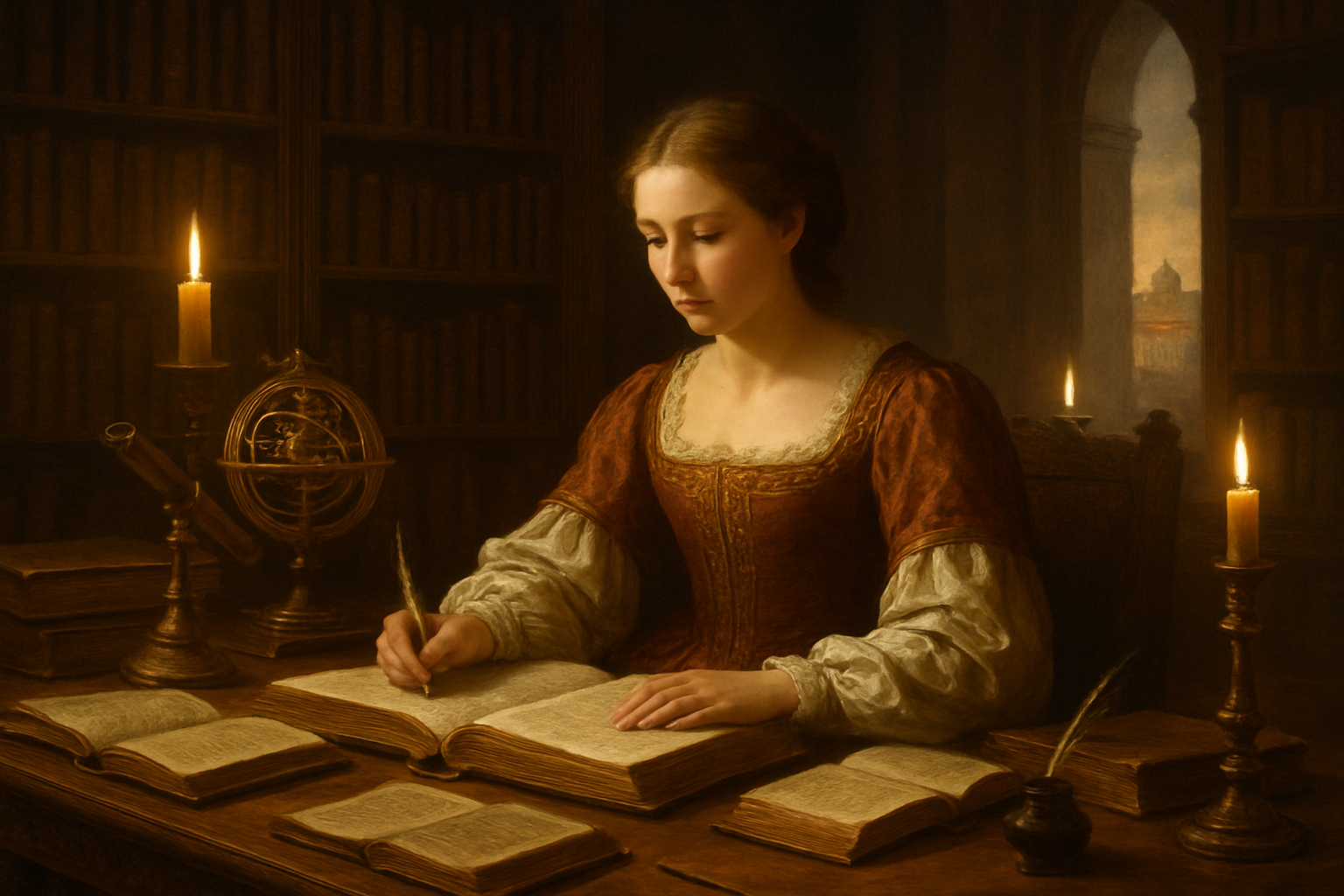
Catherine de Medici's Political Influence on European Affairs
Catherine de Medici wielded extraordinary power behind the French throne for over three decades, shaping European politics through strategic marriages, diplomatic alliances, and ruthless pragmatism. Born into the powerful Medici banking family of Florence, she brought Italian political sophistication to France when she married the future Henry II in 1533.
After her husband's death in 1559, Catherine became regent for her young sons, transforming from a seemingly powerless foreign queen into one of Europe's most influential women throughout history. She masterfully navigated the treacherous waters of French religious wars between Catholics and Protestants, often switching allegiances to preserve royal authority and prevent civil war from tearing France apart.
Her diplomatic network extended across Europe, arranging marriages that secured political alliances and prevented foreign invasions. Catherine's daughters married into Spanish, Portuguese, and other royal houses, creating a web of influence that affected European politics for generations. She pioneered the use of female courtiers as informal ambassadors, gathering intelligence and negotiating delicate agreements that formal diplomats couldn't handle.
The infamous St. Bartholomew's Day Massacre of 1572, while controversial, demonstrated Catherine's willingness to make brutal calculations to maintain stability. Her political maneuvering kept France unified during one of its most turbulent periods, proving that powerful women leaders in history could match any male counterpart in strategic thinking and political survival.
Elizabeth I's Golden Age Leadership Strategies
Elizabeth I transformed England from a politically unstable, economically struggling nation into a major European power through brilliant leadership strategies that combined pragmatic governance with masterful public relations. Her 45-year reign created what historians call the Elizabethan Golden Age, establishing her as one of the most famous women in world history.
The Virgin Queen's greatest strategic masterstroke was turning her unmarried status from a perceived weakness into a diplomatic weapon. She dangled the possibility of marriage before European princes for decades, securing military alliances and trade agreements without ever surrendering her independence. This marriage diplomacy kept potential enemies guessing while allowing England to play major powers against each other.
Elizabeth cultivated a carefully crafted public image that connected directly with her subjects. She spoke multiple languages, wrote poetry, and made dramatic public appearances that reinforced her authority. Her famous speech before the Spanish Armada - "I have the heart and stomach of a king" - became legendary for its ability to inspire national unity during England's greatest military crisis.
Her economic policies encouraged exploration, trade, and privateering against Spanish treasure fleets. By supporting adventurers like Francis Drake and establishing trading companies, Elizabeth built England's maritime empire while filling royal coffers. She also promoted religious tolerance within limits, creating stability after the religious turmoil of previous reigns.
| Leadership Strategy | Impact |
|---|---|
| Marriage Diplomacy | Secured alliances without surrendering power |
| Naval Investment | Defeated Spanish Armada, established maritime dominance |
| Religious Moderation | Reduced internal conflicts |
| Economic Innovation | Expanded trade, increased national wealth |
Catherine the Great's Expansion of Russian Empire
Catherine the Great transformed Russia from a backward European nation into a major continental empire through aggressive territorial expansion, domestic reforms, and cultural modernization. Her 34-year reign added over 200,000 square miles to Russian territory, making her one of the most successful military leaders and women who changed the world.
Born Sophie Friederike Auguste von Anhalt-Zerbst-Dornburg in Prussia, Catherine seized power in a coup against her ineffective husband Peter III in 1762. She immediately began implementing Enlightenment principles while pursuing an ambitious foreign policy that pushed Russian borders south and west. Her wars against the Ottoman Empire secured access to the Black Sea and established Russia as a major naval power.
The conquest of Crimea in 1783 represented Catherine's greatest strategic achievement, giving Russia year-round warm-water ports and control over crucial trade routes. She founded new cities like Odessa and Sevastopol that became major commercial and military centers. Her southern expansion opened vast agricultural lands that made Russia a grain exporter to Europe.
Catherine's domestic policies were equally transformative. She reorganized provincial administration, established a legal code based on Enlightenment principles, and founded Russia's first state-sponsored schools for women. The Hermitage collection she assembled became one of the world's greatest art museums, while her correspondence with Voltaire and other philosophes brought European intellectual culture to Russian courts.
Her territorial gains included:
-
Crimean Peninsula - Strategic Black Sea access
-
Northern Black Sea Coast - Agricultural and commercial expansion
-
Parts of Poland - Western territorial buffer
-
Alaska - North American fur trading posts
Catherine proved that historical female pioneers could match any emperor in military conquest while simultaneously modernizing their nations through progressive domestic policies.
Scientific and Intellectual Revolutionaries
Marie Curie's Groundbreaking Research That Changed Physics
Marie Curie stands as one of the most remarkable women who changed the world through her revolutionary scientific discoveries. Born Maria Skłodowska in Poland in 1867, she broke countless barriers in physics and chemistry, becoming the first woman to win a Nobel Prize and the only person to win Nobel Prizes in two different scientific fields.
Her research on radioactivity—a term she coined—transformed our understanding of atomic physics. Working alongside her husband Pierre in a makeshift laboratory, Curie discovered two new elements: polonium and radium. She painstakingly processed tons of pitchblende ore, stirring massive vats with an iron rod to isolate these elements. Her dedication was extraordinary; she would often work late into the night, mesmerized by the ethereal glow of radium samples.
Curie's work laid the foundation for modern atomic theory and opened doors to medical applications of radioactivity. Her research methods became the gold standard for scientific investigation, and her discovery of radium led to breakthrough cancer treatments. Despite facing constant discrimination in the male-dominated scientific community, she persisted with unwavering determination.
Her legacy extends beyond her scientific achievements. She established the Radium Institute in Paris and Warsaw, training the next generation of researchers. During World War I, she developed mobile X-ray units, personally driving them to the front lines to help wounded soldiers.
Rosalind Franklin's DNA Discoveries That Transformed Biology
Rosalind Franklin's precise X-ray crystallography work provided crucial evidence for understanding DNA's structure, making her one of the most significant female revolutionaries in history in the field of molecular biology. Her famous "Photo 51" captured the helical structure of DNA with unprecedented clarity, revealing key measurements that proved essential to solving the DNA puzzle.
Working at King's College London in the early 1950s, Franklin used advanced X-ray diffraction techniques to study DNA fibers. Her meticulous approach and mathematical precision produced images that showed DNA's double-helix structure, the spacing between base pairs, and the location of phosphate groups on the outside of the molecule.
Franklin's research methodology was groundbreaking. She developed new techniques for preparing DNA samples and created an improved camera system for X-ray photography. Her work revealed that DNA exists in two forms—the A form and B form—depending on humidity levels. This discovery was critical because it showed that DNA's structure could change based on environmental conditions.
Despite her fundamental contributions, Franklin faced significant challenges as a woman in science. Her colleagues often dismissed her ideas or failed to give her proper credit. The competitive atmosphere at King's College made collaboration difficult, and crucial data was shared without her knowledge or consent.
Her work extended beyond DNA to include important research on RNA and virus structures. Franklin's studies of the tobacco mosaic virus and polio virus provided insights that advanced our understanding of viral diseases and potential treatments.
Hypatia's Mathematical Contributions to Ancient Learning
Hypatia of Alexandria, one of the earliest documented women of influence in history, revolutionized mathematics and astronomy in the 4th century CE. As the daughter of mathematician Theon of Alexandria, she grew up immersed in scholarly pursuits at the famous Library of Alexandria, eventually surpassing her father's reputation as a teacher and researcher.
Her mathematical work focused on advanced geometry and algebra. Hypatia wrote commentaries on Apollonius's "Conics," which dealt with geometric curves, and on Diophantus's "Arithmetica," an early work on algebraic equations. These commentaries didn't just explain existing concepts—they expanded on them with original insights and new problem-solving approaches.
| Mathematical Contributions | Impact |
|---|---|
| Commentary on Apollonius's Conics | Advanced understanding of parabolas, ellipses, and hyperbolas |
| Work on Diophantus's Arithmetica | Pioneered algebraic methods still used today |
| Astronomical instruments | Improved astrolabe and planisphere designs |
| Teaching methods | Influenced generations of mathematicians |
Hypatia also made significant contributions to astronomy and mechanical engineering. She designed and built astronomical instruments, including an improved astrolabe for ship navigation and a planisphere for studying star movements. Her mechanical inventions included a refined hydrometer for measuring liquid density.
As a teacher, Hypatia attracted students from across the Mediterranean world. Her lectures drew crowds of eager learners who came to hear her explain complex mathematical concepts with remarkable clarity. She established a teaching method that emphasized critical thinking and logical reasoning rather than rote memorization.
Her influence extended into philosophy, where she championed rational thought and scientific inquiry. Students described her as an inspiring teacher who encouraged questioning and intellectual exploration. This approach to learning helped preserve and advance mathematical knowledge during a time when many classical texts were being lost.
Mary Wollstonecraft's Feminist Philosophy That Sparked Change
Mary Wollstonecraft challenged 18th-century society with her radical ideas about women's rights and education, earning her place among powerful women leaders in history who transformed social thinking. Her groundbreaking work "A Vindication of the Rights of Woman" (1792) became one of the earliest and most influential feminist texts, arguing that women deserved equal educational opportunities and social rights.
Wollstonecraft's philosophy centered on the revolutionary idea that women's perceived intellectual inferiority resulted from lack of education, not natural ability. She argued passionately that society artificially limited women's potential by denying them access to learning and meaningful work. Her writing challenged the prevailing belief that women existed solely for men's pleasure and domestic service.
Her personal experiences shaped her advocacy. Working as a governess and teacher, Wollstonecraft witnessed firsthand how limited educational opportunities trapped women in dependency. She saw brilliant minds wasted because society refused to nurture female intellectual development.
The book presented practical arguments for women's education and economic independence. Wollstonecraft proposed that educated women would become better mothers, more interesting companions, and valuable contributors to society. She criticized the emphasis on teaching women only ornamental skills like music and drawing while neglecting subjects like mathematics, science, and philosophy.
Her ideas sparked intense debate across Europe and America. Critics attacked her moral character and unconventional lifestyle, but progressive thinkers embraced her arguments. Writers like Jane Austen and Mary Shelley (Wollstonecraft's daughter) carried forward her ideas about women's intellectual equality.
Wollstonecraft's influence on women's impact on world history extended far beyond her lifetime. Her work inspired later feminist movements and provided philosophical groundwork for women's suffrage campaigns. Modern feminists continue to reference her arguments about education, economic independence, and social equality.
Modern Political Leaders Who Redefined Power
.png)
Margaret Thatcher's Economic Policies That Reshaped Britain
Margaret Thatcher became Britain's first female Prime Minister in 1979, earning her place among the most powerful women leaders in history through her revolutionary economic approach. Her policies fundamentally transformed Britain's economic landscape, moving away from post-war socialism toward free-market capitalism.
Thatcher's privatization program stands as one of her most defining achievements. She sold off state-owned enterprises including British Telecom, British Gas, and British Airways, believing private ownership would drive efficiency and innovation. This massive shift affected millions of British citizens, turning many into shareholders for the first time and reshaping the nation's relationship with government-controlled industries.
Her tight monetary policy and reduction of government spending aimed to combat the inflation that had plagued Britain throughout the 1970s. While these measures initially caused unemployment to rise dramatically, they eventually helped stabilize the economy and restore international confidence in British markets.
The deregulation of financial services, particularly in London's City district, transformed Britain into a global financial hub. This "Big Bang" approach opened markets to international competition and positioned London as a rival to New York's Wall Street.
Trade union reform represented another cornerstone of Thatcher's agenda. She reduced union power through legislation that required secret ballots for strikes and made unions liable for damages from illegal industrial action. These changes fundamentally altered the balance between labor and management in British industry.
Golda Meir's Leadership During Israel's Critical Years
Golda Meir's tenure as Israel's Prime Minister from 1969 to 1974 coincided with some of the nation's most challenging periods. As one of the women who changed the world, she navigated complex international relations while strengthening Israel's position in the Middle East.
During the War of Attrition with Egypt, Meir demonstrated remarkable resilience in maintaining Israeli morale while seeking diplomatic solutions. She worked closely with the United States to secure military aid and political support, understanding that Israel's survival depended heavily on American backing.
The 1972 Munich Olympics massacre tested Meir's resolve and decision-making abilities. Her authorization of Operation Wrath of God, targeting those responsible for killing Israeli athletes, showed her willingness to take decisive action against terrorism. This controversial program reflected her belief that Israel must respond forcefully to attacks on its citizens.
Meir's leadership during the 1973 Yom Kippur War became her greatest trial. Despite intelligence failures that allowed the surprise attack, she mobilized Israel's resources and maintained crucial relationships with allies. Her late-night phone calls to Henry Kissinger helped secure emergency military supplies that proved vital to Israel's eventual military recovery.
Her diplomatic efforts extended beyond crisis management. Meir worked to build relationships with African nations and sought to present Israel's case to the international community. She understood that Israel needed friends beyond its immediate region to ensure long-term security and economic development.
Indira Gandhi's Impact on India's Development
Indira Gandhi's leadership as India's Prime Minister during two separate terms (1966-1977 and 1980-1984) left an indelible mark on the world's largest democracy. Among influential women throughout history, she stands out for her complex legacy of both progressive reforms and controversial decisions.
The Green Revolution under Gandhi's leadership transformed India from a food-deficit nation into one capable of feeding its growing population. She promoted new agricultural technologies, high-yield crop varieties, and modern farming techniques that dramatically increased food production. This agricultural transformation helped prevent the famines that had historically plagued the subcontinent.
Gandhi's bank nationalization policy in 1969 aimed to democratize credit and extend banking services to rural areas. She believed government control would ensure that banks served development goals rather than just profit motives. This move brought banking services to previously underserved populations and supported agricultural and small-scale industrial development.
Her foreign policy maintained India's non-aligned status while building strategic relationships. Gandhi strengthened ties with the Soviet Union while maintaining connections with Western nations, allowing India to benefit from both sides during the Cold War era. Her support for Bangladesh's independence in 1971 demonstrated her willingness to take bold international stances.
The Emergency period from 1975-1977 represents the most controversial aspect of Gandhi's legacy. Her suspension of civil liberties and imprisonment of political opponents showed the dangers of concentrated power, even when wielded by one of the most famous women in world history.
Eleanor Roosevelt's Human Rights Advocacy on Global Stage
Eleanor Roosevelt transformed the traditionally ceremonial role of First Lady into a platform for social justice and human rights advocacy. After Franklin D. Roosevelt's death, she emerged as one of the most influential women throughout history in her own right, reshaping international human rights discourse.
Her appointment as chair of the United Nations Commission on Human Rights in 1946 marked the beginning of her most significant contribution to world history. Roosevelt led the drafting of the Universal Declaration of Human Rights, adopted by the UN General Assembly in 1948. This document established fundamental human rights principles that continue to guide international law and policy.
Roosevelt's approach to human rights advocacy combined practical diplomacy with moral conviction. She worked tirelessly to build consensus among nations with vastly different political systems and cultural backgrounds. Her ability to find common ground between Western democracies and Soviet bloc countries proved essential to the Declaration's adoption.
Her commitment to civil rights within the United States paralleled her international work. Roosevelt resigned from the Daughters of the American Revolution when they refused to allow Marian Anderson to perform at Constitution Hall, arranging instead for the acclaimed singer to perform at the Lincoln Memorial. This public stand against racial discrimination demonstrated her willingness to sacrifice social standing for principle.
Roosevelt's advocacy extended to women's rights, workers' rights, and economic justice. She understood that true human rights required not just political freedoms but also economic opportunities and social equality. Her speeches and writings consistently connected individual dignity with broader social conditions.
Through her newspaper column "My Day" and extensive public speaking, Roosevelt educated Americans about international affairs and human rights issues. She made complex diplomatic concepts accessible to ordinary citizens, building public support for international cooperation and human rights advocacy.
Cultural and Social Movement Champions
Rosa Parks' Courageous Stand That Ignited Civil Rights
Rosa Parks became one of the most influential women throughout history when she refused to give up her bus seat on December 1, 1955, in Montgomery, Alabama. Her simple yet profound act of defiance sparked the Montgomery Bus Boycott and catalyzed the American Civil Rights Movement.
Parks wasn't just a tired seamstress, as often portrayed. She was an experienced activist who had been fighting racial injustice for years with the NAACP. Her arrest for violating segregation laws triggered a 381-day bus boycott that demonstrated the economic power of organized resistance. The boycott, led by a young Martin Luther King Jr., successfully challenged the city's segregation policies.
Key impacts of Parks' activism:
-
Launched the modern Civil Rights Movement
-
Demonstrated the power of nonviolent resistance
-
Inspired similar protests across the South
-
Helped establish Martin Luther King Jr. as a civil rights leader
Parks continued her activism throughout her life, working with Congressman John Conyers and supporting various civil rights causes. She received numerous honors, including the Presidential Medal of Freedom and the Congressional Gold Medal, becoming known as the "Mother of the Civil Rights Movement."
Frida Kahlo's Artistic Expression That Challenged Conventions
Frida Kahlo transformed personal pain into powerful art that challenged societal norms and redefined how women who changed the world could express themselves through creative mediums. Born in Mexico in 1907, Kahlo's life was marked by physical suffering from polio and a devastating bus accident, yet she channeled her experiences into revolutionary artistic expression.
Her self-portraits went beyond traditional art to explore themes of identity, postcolonialism, gender, class, and race in Mexican society. Kahlo's unapologetic depiction of female experience, including miscarriages, physical pain, and sexuality, broke artistic taboos of her era. She painted her reality without romanticization, creating visceral works that spoke to universal human experiences.
Kahlo's revolutionary contributions:
-
Pioneered feminist artistic expression
-
Challenged beauty standards and gender roles
-
Elevated Mexican indigenous culture in art
-
Influenced surrealist and contemporary movements
Her turbulent relationship with fellow artist Diego Rivera became legendary, but Kahlo maintained her artistic independence and political voice. She was the first 20th-century Mexican artist to have work acquired by the Louvre. Today, her image has become iconic, representing artistic authenticity and female empowerment across cultures.
Malala Yousafzai's Education Advocacy That Inspired Millions
Malala Yousafzai emerged as one of the most powerful women leaders in history when she began advocating for girls' education at just 11 years old in Pakistan's Swat Valley. Her blog for BBC Urdu, written under a pseudonym, documented life under Taliban rule and their ban on girls attending school.
The Taliban's attempt to silence her through an assassination attempt in 2012 backfired spectacularly. Shot in the head while riding the school bus, Malala survived and became a global symbol of resistance against oppression. Her recovery and continued advocacy amplified her message worldwide, transforming a local struggle into an international movement.
Malala's global achievements:
-
Youngest Nobel Prize laureate at age 17
-
Founded the Malala Fund supporting girls' education
-
Addressed the United Nations on her 16th birthday
-
Inspired education initiatives in multiple countries
-
Authored bestselling memoirs reaching millions
Her advocacy has directly contributed to policy changes and increased funding for girls' education globally. Through the Malala Fund, she continues working to ensure 12 years of free, safe, quality education for every girl. Her story demonstrates how young female revolutionaries in history can create lasting change through courage, determination, and unwavering commitment to justice.
Throughout history, women have consistently broken barriers and reshaped the world around them, from ancient Egypt's Hatshepsut ruling as pharaoh to modern leaders like Angela Merkel steering nations through global crises. These remarkable women didn't just participate in history – they actively wrote it, challenging societal norms and paving the way for future generations. From Cleopatra's diplomatic genius to Marie Curie's groundbreaking scientific discoveries, from Joan of Arc's military leadership to Rosa Parks' quiet act of defiance, their contributions span every field imaginable.
The stories of these influential women remind us that progress often comes from those brave enough to challenge the status quo. Their legacies continue to inspire and empower people today, proving that determination and vision can overcome even the most entrenched obstacles. Take time to learn about these incredible women and share their stories with others – because the more we celebrate and remember their achievements, the more we honor the path they carved for all of us.
.png)


Comments
Post a Comment