Balancing Marriage and Motherhood
Balancing Marriage and Motherhood: A Guide for Working Moms Juggling Two Full-Time Roles
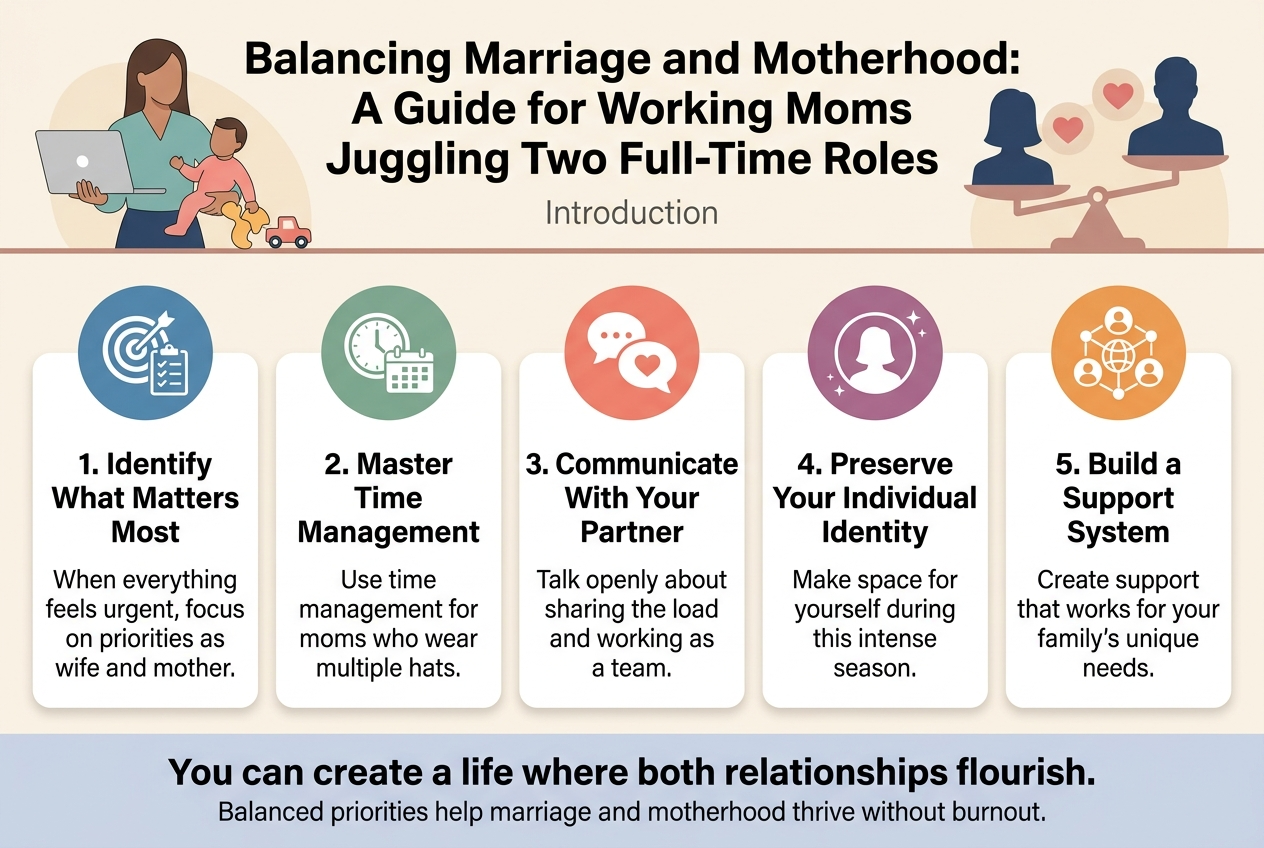
You love your kids deeply and want your marriage to thrive, but some days it feels impossible to give both the attention they deserve. Many working moms struggle with this exact challenge – trying to be an amazing wife while raising children, all while maintaining your own sense of self.
This guide is for busy mothers who want practical strategies for balancing marriage and motherhood without burning out. You'll discover how to identify what matters most when everything feels urgent, master time management for moms who wear multiple hats, and communicate effectively with your partner about sharing the load. We'll also explore how to preserve your individual identity during this intense season and build a support system that actually works for your family's unique needs.
The juggling act between being a devoted wife and dedicated mother doesn't have to leave you feeling stretched too thin. With the right approach to priorities as wife and mother, you can create a life where both relationships flourish.
Identify Your Core Values and Priorities
Define what matters most in your marriage relationship
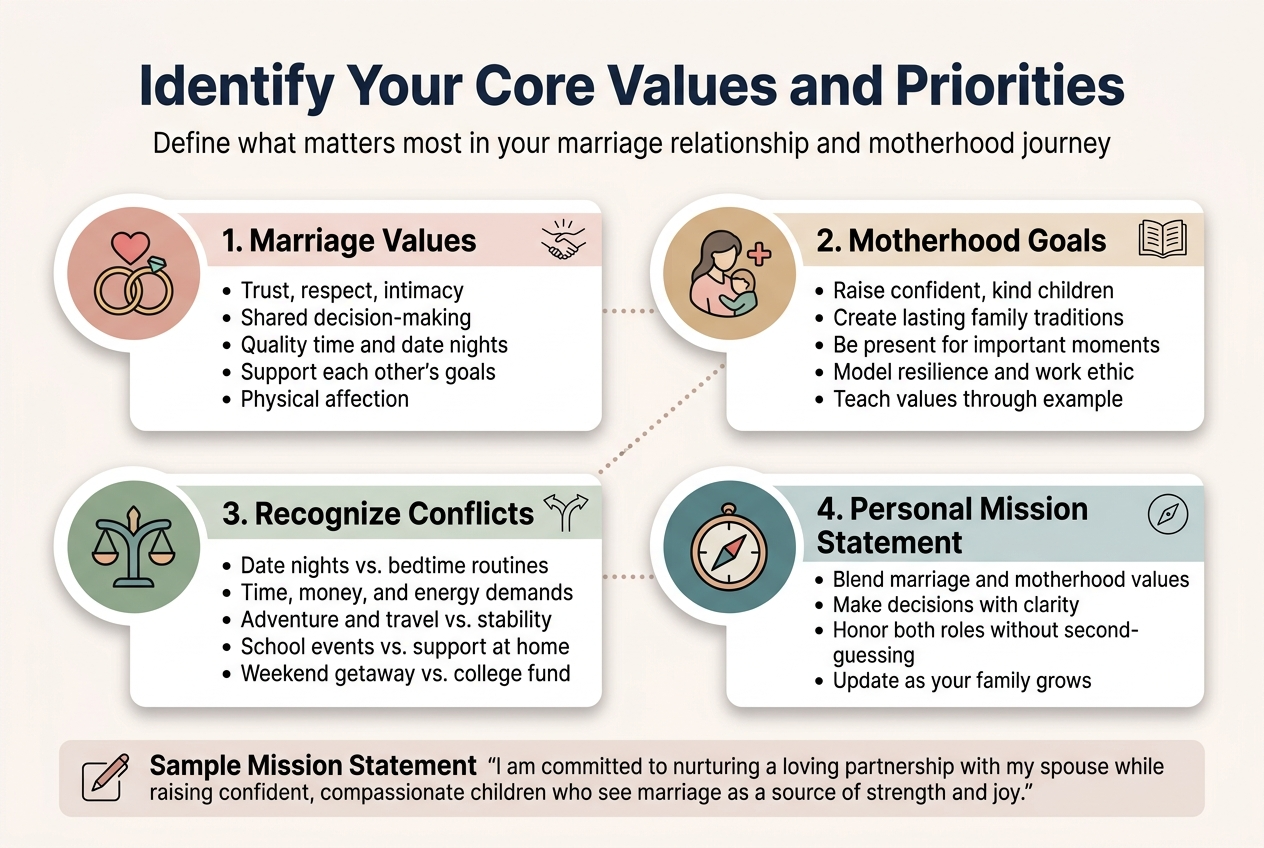
Take a moment to think about what drew you and your partner together in the first place. Was it shared laughter, deep conversations, or perhaps the way they supported your dreams? Understanding these foundational elements helps you maintain your connection even when motherhood demands so much of your attention.
Your marriage values might include trust, respect, intimacy, shared decision-making, or quality time together. Write down the top five things that make your relationship strong. Maybe it's having date nights, supporting each other's goals, or maintaining physical affection. These become your non-negotiables when balancing marriage and motherhood.
Consider how you want to show love and receive it from your partner. Some couples value acts of service, while others need words of affirmation or quality time. When you're clear about these preferences, you can protect them even during busy parenting seasons.
Clarify your motherhood goals and aspirations
Being intentional about your motherhood journey prevents you from getting lost in the daily chaos of raising children. Think beyond just keeping everyone fed and safe – what kind of mother do you want to be? What values do you want to pass down? How do you want your children to remember their childhood?
Your motherhood aspirations might include raising confident, kind children, creating lasting family traditions, or being present for important moments. Perhaps you want to model a strong work ethic, teach resilience, or show your children what a loving marriage looks like.
Write down specific goals for different areas of parenting. This could include educational choices, discipline approaches, family activities, or the emotional environment you want to create at home. Having clear motherhood goals helps you make decisions that align with your vision rather than just reacting to daily pressures.
Recognize areas where values may conflict
Balancing marriage and motherhood often creates tension between what your relationship needs and what your children require. You might value spontaneous date nights with your partner, but also prioritize being home for your child's bedtime routine. Both are important, yet they sometimes clash.
Common conflicts include time allocation, financial priorities, and energy distribution. Your marriage might thrive on adventure and travel, while your motherhood goals focus on stability and routine. You might want to be the mom who volunteers for every school event, but your partner needs more attention and support at home.
Money decisions often highlight these tensions too. Should you spend on a weekend getaway to reconnect as a couple, or put that money toward your child's college fund? Neither choice is wrong, but recognizing these competing values helps you find creative solutions.
Create a personal mission statement for both roles
A personal mission statement acts like a compass when you're feeling pulled in different directions. It captures your essential beliefs about being both a wife and mother, helping you make decisions that honor both roles without constantly second-guessing yourself.
Start by combining your marriage and motherhood values into a few clear sentences. For example: "I am committed to nurturing a loving partnership with my spouse while raising confident, compassionate children who see marriage as a source of strength and joy."
Your mission statement should reflect your unique situation and priorities as wife and mother. Some women might emphasize creating a peaceful home environment, while others focus on modeling independence and career success. The key is making it authentically yours – something that resonates when you read it during challenging moments.
Review and adjust your mission statement as your family grows and changes. What matters most when you have toddlers might shift when you're parenting teenagers, and that's perfectly normal.
Master Time Management Between Two Demanding Roles
Establish daily routines that serve both marriage and motherhood
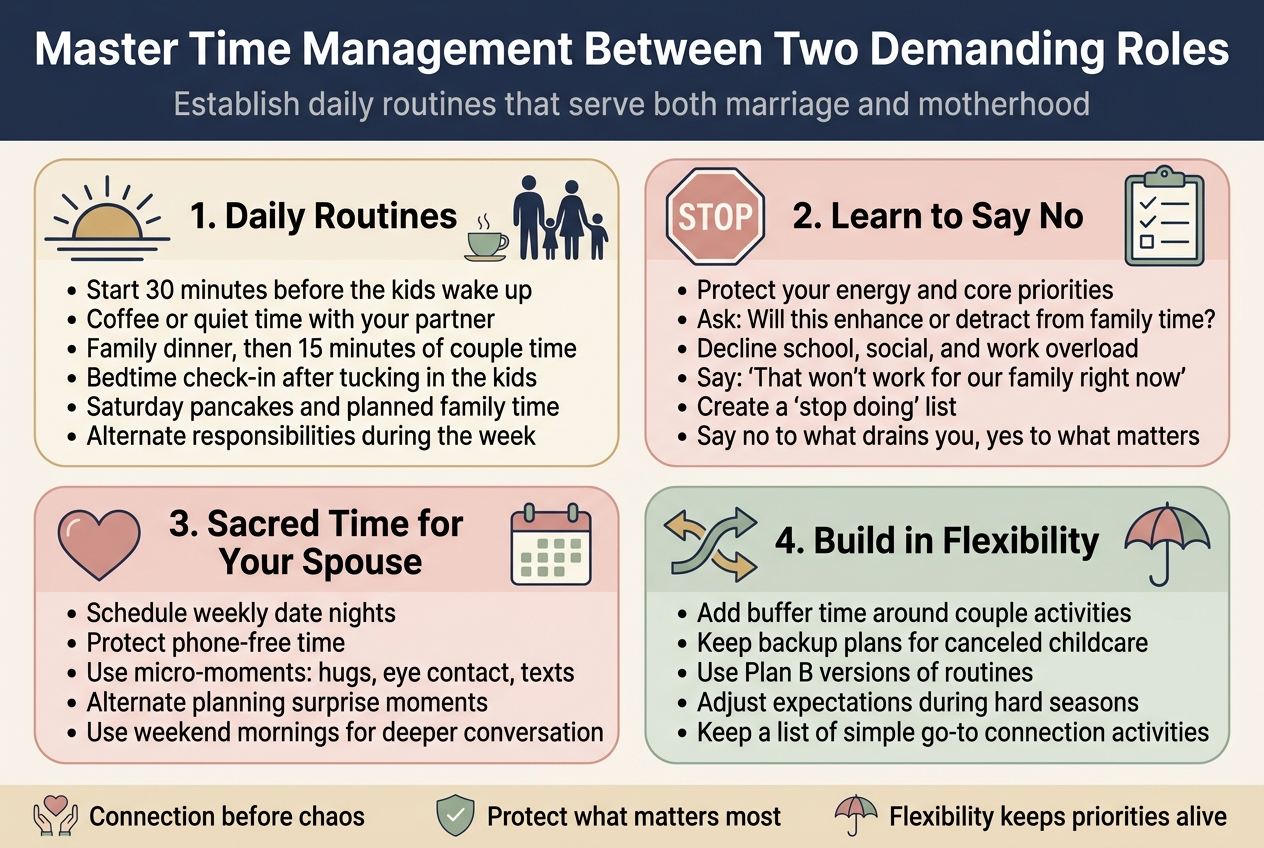
Morning routines can be your secret weapon for balancing marriage and motherhood successfully. Start your day 30 minutes before the kids wake up - use this time for a quick coffee with your partner or simply sit together in peaceful silence. This small window creates connection before the daily chaos begins.
Structure your evenings around family dinner followed by designated couple time. Even 15 minutes of uninterrupted conversation after the children are in bed makes a significant difference. Create a bedtime routine that includes both tucking in the kids together and checking in with each other about the day.
Weekend routines should blend family activities with relationship nurturing. Plan Saturday morning pancakes as a family tradition, then arrange for the kids to have quiet time or visit grandparents while you and your partner reconnect. These predictable patterns give everyone security while ensuring your marriage doesn't get lost in parenting duties.
Consider alternating responsibilities throughout the week. Monday might be mom's turn for bedtime stories while dad handles dishes, switching roles on Tuesday. This approach prevents resentment and keeps both parents engaged in all aspects of family life.
Learn to say no to commitments that drain your energy
Protecting your energy becomes crucial when managing both marriage and motherhood effectively. Every "yes" to one thing means saying "no" to something else, often your relationship or family time. Start evaluating requests through the lens of your core priorities.
School volunteer opportunities, social gatherings, and work commitments can quickly overwhelm your schedule. Before accepting any new responsibility, ask yourself: "Will this enhance or detract from my ability to be present for my family and partner?" If the answer isn't clearly positive, decline gracefully.
Practice saying no without elaborate explanations. Simple responses like "That won't work for our family right now" or "I'm not available for that commitment" are perfectly acceptable. You don't owe anyone a detailed justification for protecting your family time.
Create a "stop doing" list alongside your to-do list. Include activities that seemed important but actually drain energy without adding meaningful value to your relationships. This might include certain social obligations, perfectionist tendencies around housekeeping, or volunteer commitments that no longer align with your season of life.
Remember that saying no to others means saying yes to what matters most - nurturing both your children and your marriage during this demanding but precious time.
Create sacred time blocks for your spouse
Dedicated time with your partner requires intentional planning and fierce protection. Schedule weekly date nights, even if they're 30-minute coffee dates after bedtime or early morning walks before the house wakes up. Put these appointments in your calendar and treat them as non-negotiable commitments.
Technology-free zones become essential for meaningful connection. Designate certain times when phones are put away and focus remains entirely on each other. This might be during dinner prep while kids play nearby, or those precious moments right before sleep when you can actually talk without distractions.
Create micro-moments throughout busy days. Quick hugs in the kitchen, meaningful eye contact during chaotic breakfast routines, or sending encouraging texts during particularly challenging parenting moments all contribute to maintaining your bond. These small gestures accumulate into significant relationship capital.
Consider alternating who plans surprise elements for your sacred time. One week, you might arrange for a favorite takeout dinner after kids' bedtime. The next week, your partner might set up a backyard picnic during naptime. This shared responsibility keeps romance alive while distributing the mental load.
Weekend mornings often provide the best opportunities for extended connection. While children watch cartoons or play independently, use this time for deeper conversations about dreams, concerns, and plans beyond daily logistics.
Build in flexibility for unexpected parenting moments
Rigid schedules rarely survive the reality of motherhood, so building flexibility into your time management approach prevents constant frustration. Plan for interruptions by building buffer time around important couple activities. If you're planning a 7 PM conversation time, start gathering kids for bed at 6 PM rather than 6:45 PM.
Develop backup plans for when parenting emergencies arise. Have a list of alternative date night ideas that work when babysitters cancel or children get sick. Indoor picnics, puzzle time after bedtime, or watching a favorite movie together can replace planned outings without losing connection opportunities.
Create "Plan B" versions of your routines. When the morning coffee together gets derailed by a cranky toddler, shift that connection time to afternoon naptime or evening bath time. Flexibility doesn't mean giving up on priorities - it means finding creative ways to maintain them despite obstacles.
Communicate with your partner about adjusting expectations during particularly challenging phases. Newborn periods, illness, or developmental leaps might require temporarily modified approaches to couple time. Acknowledge these seasons as temporary while maintaining commitment to reconnecting when circumstances improve.
Keep a running list of simple activities that require minimal planning but still nurture your relationship. These become your go-to options when elaborate plans fall through but you still want to prioritize time together despite parenting curveballs.
Communicate Effectively with Your Partner About Shared Responsibilities
Discuss parenting duties and divide tasks fairly
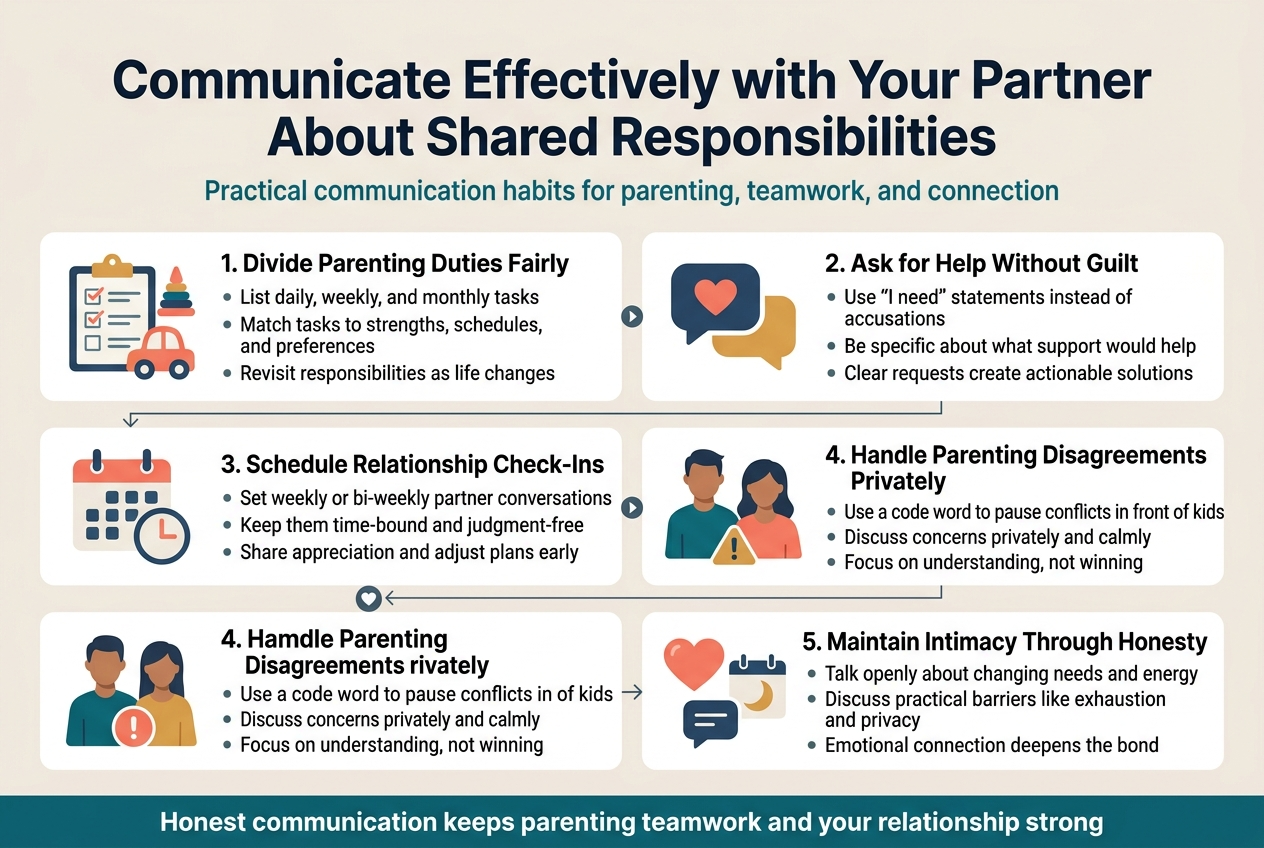
Creating a fair division of parenting responsibilities starts with honest conversations about each partner's strengths, schedules, and preferences. Sit down together and list all the daily, weekly, and monthly tasks involved in raising your children - from diaper changes and bedtime routines to school pickups and doctor appointments.
Rather than defaulting to traditional gender roles, consider who has more flexibility in their work schedule, who's naturally better at certain tasks, or who genuinely enjoys specific activities. Maybe one parent excels at homework help while the other is a bedtime story champion. The goal isn't perfect equality in every task, but rather an equitable distribution that feels fair to both partners.
Write down your agreed-upon responsibilities and revisit them regularly. Life changes, work schedules shift, and children's needs evolve. What worked when your baby was six months old might not work when they're a toddler demanding more attention and energy.
Express your needs without guilt or resentment
Many mothers struggle with asking for help, fearing they'll appear incapable or ungrateful. This mindset creates a dangerous cycle where resentment builds silently until it explodes in unexpected moments. Marriage communication with kids in the picture requires extra vulnerability and clarity.
Start conversations with "I need" statements rather than "You never" accusations. Instead of saying "You never help with morning routines," try "I need support with getting the kids ready so I'm not rushing and stressed every morning." This approach opens dialogue rather than triggering defensiveness.
Be specific about your requests. Vague complaints like "I need more help" leave your partner guessing. Clear requests like "Can you take over bath time three nights a week?" create actionable solutions. Remember, your partner isn't a mind reader - they need explicit information about what would actually help you feel supported.
Schedule regular check-ins about relationship health
Maintaining marriage with children requires intentional effort that won't happen spontaneously. Schedule weekly or bi-weekly conversations dedicated solely to your relationship - not logistics, not kid schedules, but how you're connecting as partners.
During these check-ins, discuss what's working well and what needs adjustment. Share appreciation for each other's efforts, address small issues before they become big problems, and plan for upcoming challenges. Maybe you know a particularly busy work week is approaching, or your child has a school event that will require extra coordination.
Keep these conversations time-bound - perhaps 20-30 minutes - and rotate who leads the discussion. Create a judgment-free zone where both partners can express concerns without fear of criticism. These regular touchpoints prevent the common pattern where couples only discuss their relationship during crisis moments.
Navigate disagreements about parenting decisions
Parenting disagreements are inevitable, but how you handle them shapes both your marriage and your children's sense of security. When you disagree about discipline approaches, screen time limits, or educational choices, avoid arguing in front of the kids whenever possible.
Create a system for handling these moments: agree on a code word that signals "let's discuss this privately later" when disagreements arise in real-time. This prevents undermining each other's authority while ensuring important conversations still happen.
During private discussions, focus on understanding each other's underlying concerns rather than winning the argument. Maybe one parent is worried about safety while the other prioritizes independence. Finding the root of your different perspectives often leads to creative solutions that address both concerns.
Maintain intimacy through honest conversations
Physical and emotional intimacy often takes a backseat when balancing marriage and motherhood, but honest communication can help preserve this crucial connection. Talk openly about how parenthood has changed your needs, desires, and energy levels.
Discuss practical barriers to intimacy - exhaustion, interrupted sleep, lack of privacy - and brainstorm solutions together. Maybe intimacy looks different now, happening during naptime rather than late at night, or focusing more on emotional connection when physical energy is low.
Share your feelings about body changes, shifting priorities, and evolving identity without expecting your partner to fix everything. Sometimes just being heard and understood creates the emotional intimacy that strengthens your bond. These conversations require courage but ultimately deepen your connection as you navigate this transformative life stage together.
Preserve Your Individual Identity While Fulfilling Both Roles
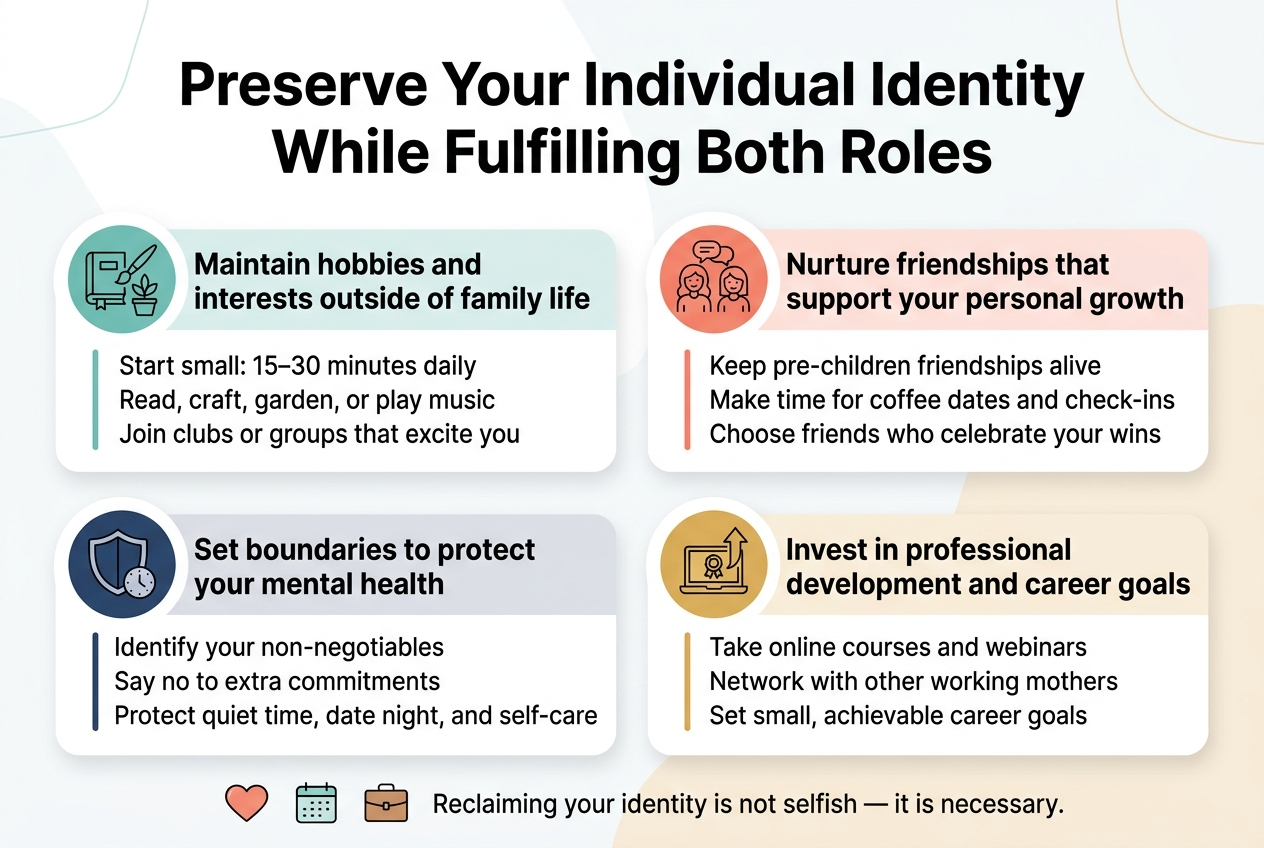
Maintain hobbies and interests outside of family life
The mom identity crisis affects countless women who suddenly find themselves wondering where they went after kids arrived. Your interests, passions, and hobbies didn't disappear when you became a mother – they just got buried under diaper changes and meal prep. Reclaiming these parts of yourself isn't selfish; it's necessary for your mental health and relationship satisfaction.
Start small by carving out just 15-30 minutes daily for something that brings you joy. Whether it's reading, crafting, gardening, or playing an instrument, these moments help you reconnect with who you are beyond your roles as wife and mother. Many working moms find that pursuing creative outlets actually makes them more patient and present with their families.
Consider joining clubs or groups centered around your interests. Book clubs, hiking groups, art classes, or fitness communities provide structured time for your hobbies while creating accountability. The key is choosing activities that genuinely excite you, not what you think you "should" do.
Nurture friendships that support your personal growth
Friendships often take a backseat when balancing marriage and motherhood, but maintaining connections outside your immediate family circle is vital for your identity and emotional well-being. Different friends serve different purposes in your life – some offer parenting advice, others provide career inspiration, and some simply remind you of who you were before kids.
Make intentional efforts to maintain pre-children friendships while being open to new connections with other parents. The mom friends who truly support your growth will celebrate your wins, listen during tough times, and encourage you to pursue your dreams alongside motherhood.
Schedule regular check-ins with friends, even if it's just a quick text exchange or monthly coffee date. Video calls during nap time or evening walks with neighbors can help maintain these crucial relationships without adding stress to your already packed schedule.
Set boundaries to protect your mental health
Boundary setting becomes even more critical when managing the dual demands of marriage and motherhood. Without clear limits, you'll find yourself constantly available to everyone except yourself, leading to resentment and burnout.
Start by identifying your non-negotiables – perhaps it's 30 minutes of morning quiet time, a weekly date night, or Sunday afternoons for personal projects. Communicate these boundaries clearly to your partner and stick to them consistently.
Learn to say no to commitments that don't align with your priorities. This might mean declining extra volunteer opportunities, skipping certain social events, or asking for help with household tasks. Remember that protecting your mental health isn't just good for you – it benefits your entire family.
Create physical boundaries too, like a designated workspace or a locked bathroom door during your self-care routine. These small acts of self-preservation help maintain your sense of individual identity.
Invest in professional development and career goals
Career aspirations don't have to disappear with motherhood, though they might need adjusting. Continuing to grow professionally provides intellectual stimulation, financial independence, and a sense of accomplishment beyond domestic achievements.
Look for flexible learning opportunities like online courses, professional webinars, or industry podcasts you can consume during commutes or while kids play. Many working moms successfully advance their careers by taking advantage of remote learning options that fit around family schedules.
Network strategically by connecting with other working mothers in your field who understand the unique challenges of balancing career ambitions with family responsibilities. These connections often lead to opportunities, mentorship, and valuable advice for navigating workplace challenges.
Consider setting small, achievable professional goals rather than overwhelming yourself with major career changes. This might mean earning a certification, updating your LinkedIn profile, or attending one networking event per quarter. Progress doesn't have to be dramatic to be meaningful.
Build a Strong Support Network for Sustainable Balance
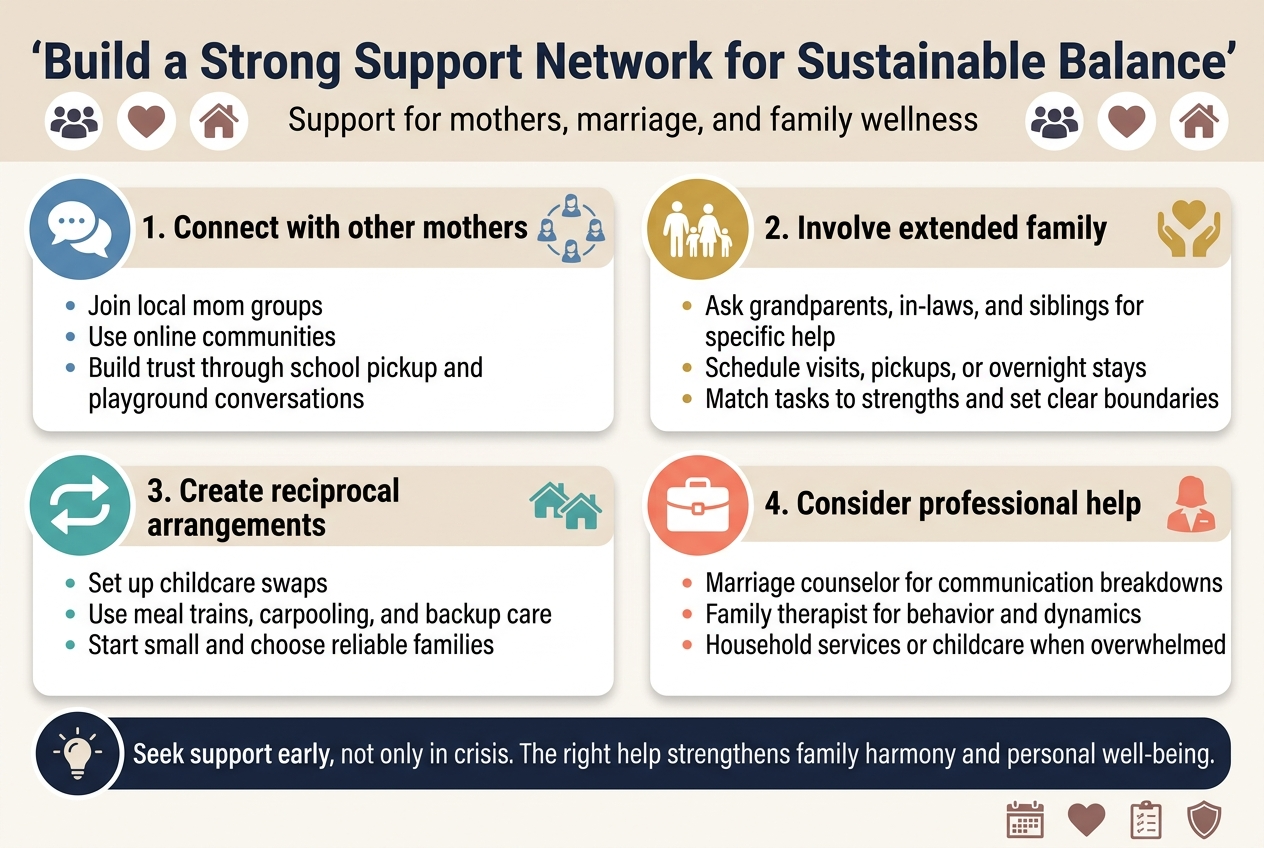
Connect with other mothers facing similar challenges
Finding your tribe of mothers who truly understand what you're going through can be a game-changer for your support system for mothers. These connections offer more than just casual conversation – they provide validation, practical advice, and a safe space to share the real struggles of balancing marriage and motherhood.
Start by joining local mom groups, whether through community centers, places of worship, or neighborhood apps. Online communities can also be incredibly valuable, especially for connecting with mothers who share similar parenting philosophies or face comparable challenges. Look for groups specifically focused on working mom life balance if you're juggling career responsibilities alongside family life.
Don't underestimate the power of playground conversations or school pickup connections. Some of the strongest friendships begin with simple exchanges about sleepless nights or toddler tantrums. These relationships often evolve into trusted partnerships where you can share honest thoughts about marriage after kids without judgment.
Involve extended family in childcare responsibilities
Your parents, in-laws, and siblings can become invaluable allies in managing your dual roles as wife and mother. Extended family members often want to help but may not know how to offer support or may hesitate to interfere.
Create specific opportunities for grandparents to build meaningful relationships with your children while giving you breathing room. This might include regular weekend visits, overnight stays, or having them pick up kids from school once a week. These arrangements benefit everyone – your children develop stronger family bonds, grandparents feel valued and needed, and you gain precious time to focus on your marriage communication with kids or simply recharge.
Be clear about your needs and boundaries when asking for help. Some family members excel at hands-on childcare, while others might prefer helping with meals, errands, or household tasks. Match requests to their strengths and comfort levels for the best results.
Create reciprocal arrangements with trusted friends
Building mutual support systems with other families creates sustainable help that doesn't rely on constant favors. These arrangements work best when both parties benefit equally and maintain clear expectations.
Consider establishing regular childcare swaps where you watch each other's children on alternating weekends or evenings. This gives each family dedicated time for maintaining marriage with children through date nights or couple activities. Meal trains during particularly stressful periods, carpooling arrangements, and emergency backup childcare agreements all fall under this category.
The key to successful reciprocal arrangements lies in choosing families with compatible values and reliable communication. Start small with short-term agreements and gradually build trust before committing to larger responsibilities.
Consider professional help when overwhelmed
Recognizing when professional support is needed shows wisdom, not weakness. Various types of professional help can address different aspects of motherhood and marriage tips and overall family wellness.
Types of Professional Support:
| Service Type | When to Consider | Benefits |
|---|---|---|
| Marriage Counselor | Communication breakdowns, recurring conflicts | Improved relationship skills, neutral perspective |
| Family Therapist | Children's behavioral issues, family dynamics | Better understanding of family patterns |
| Household Services | Feeling overwhelmed by daily tasks | More time for relationships and self-care |
| Childcare Provider | Need regular breaks, work demands | Consistent support, professional care |
Don't wait until you're in crisis mode to seek help. Professional services work best as preventive measures rather than emergency interventions. Even short-term support during particularly challenging seasons can provide tools and strategies that benefit your family long-term.
Remember that investing in professional help often pays dividends in improved family harmony and personal well-being. Whether it's a weekly housekeeper, occasional babysitter, or family counselor, these services can provide the support needed to thrive in both your roles as wife and mother.
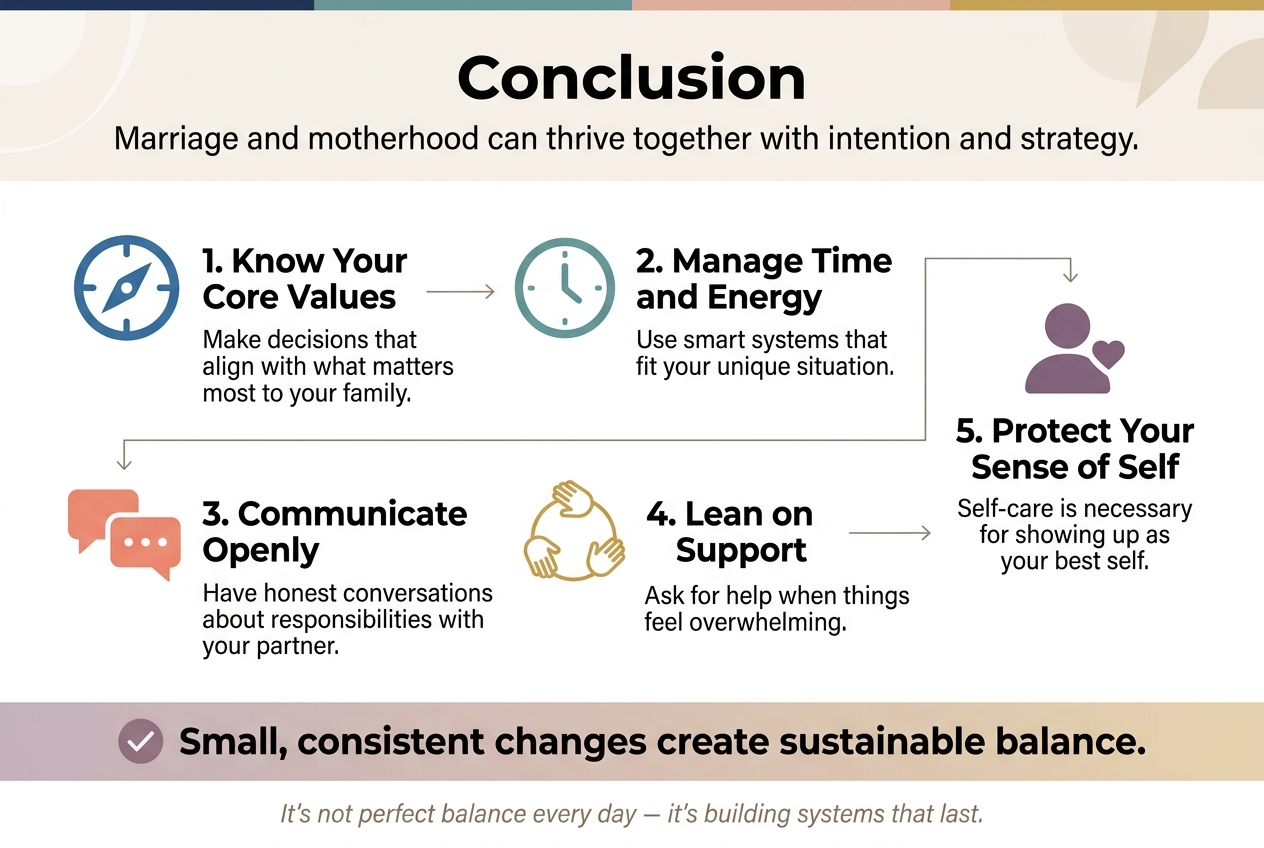
Marriage and motherhood don't have to compete for your attention when you approach them with intention and strategy. Knowing your core values helps you make decisions that align with what truly matters to your family. Smart time management, open communication with your partner, and maintaining your sense of self create a foundation where both roles can thrive together rather than pull you in opposite directions.
The secret isn't achieving perfect balance every single day – it's building systems that work for your unique situation. Start by having an honest conversation with your partner about responsibilities, and don't hesitate to lean on your support network when things get overwhelming. Remember that taking care of yourself isn't selfish; it's necessary for showing up as the best version of yourself in both your marriage and as a mom. Small, consistent changes in how you manage your time and energy can create the sustainable balance you're looking for.
.png)


Comments
Post a Comment