Building a Strong Bond Between Mother and Child
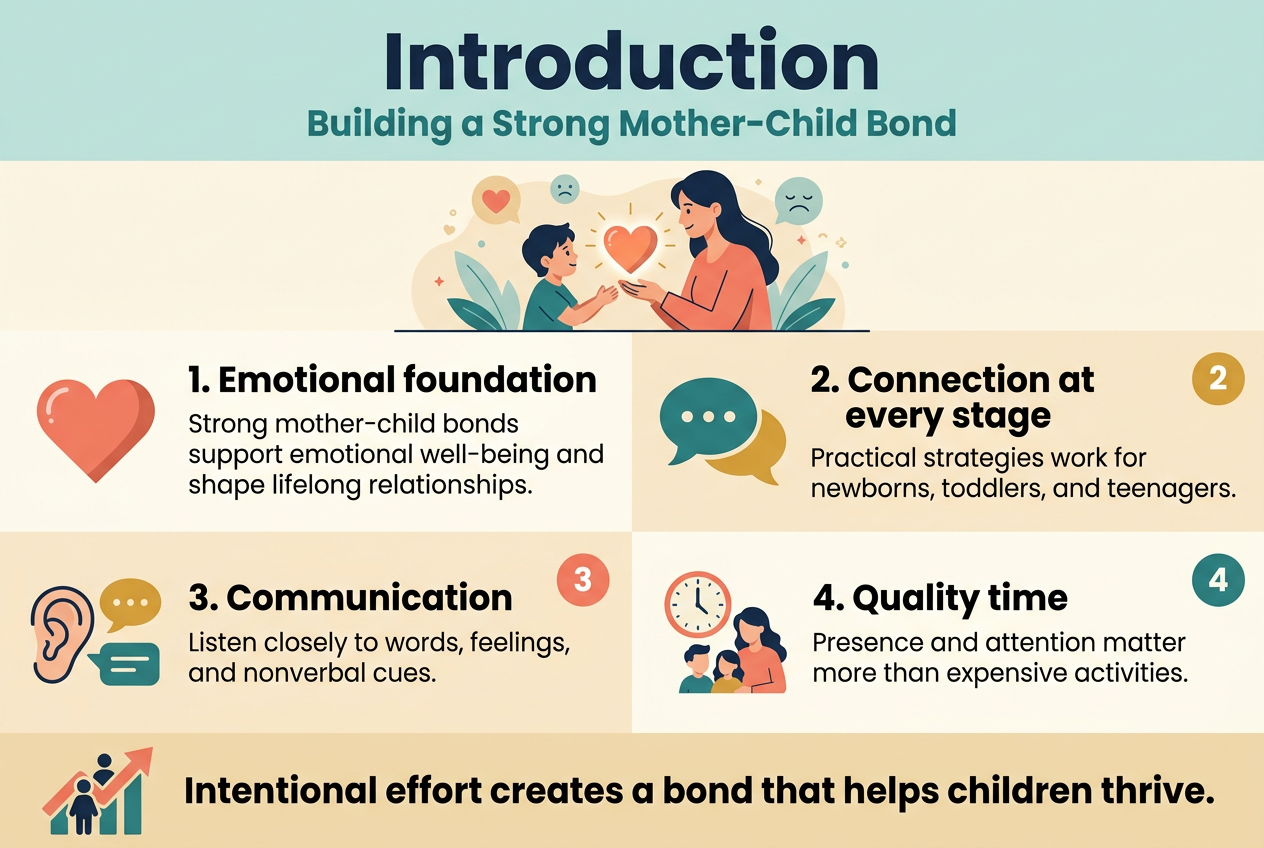
A strong mother child bond forms the foundation of your child's emotional well-being and shapes their relationships for life. Whether you're a new mom navigating those first precious weeks or an experienced parent looking to deepen your connection, building a strong mother child relationship takes intentional effort and understanding.
This guide is designed for mothers at any stage of their parenting journey who want to strengthen their emotional connection with baby or growing child. You'll discover practical strategies that work for busy families and learn how these bonds evolve as your child grows.
We'll explore how to establish that crucial early emotional connection that sets the stage for everything that follows. You'll also learn effective parent child communication techniques that help you really hear what your child is saying - even when they're not using words. Finally, we'll cover how quality time with children doesn't require expensive activities or perfect moments, just your presence and attention.
The best part? These approaches work whether you have a newborn, toddler, or teenager. Let's dive into building the kind of connection that helps your child thrive.
Establish Early Emotional Connection
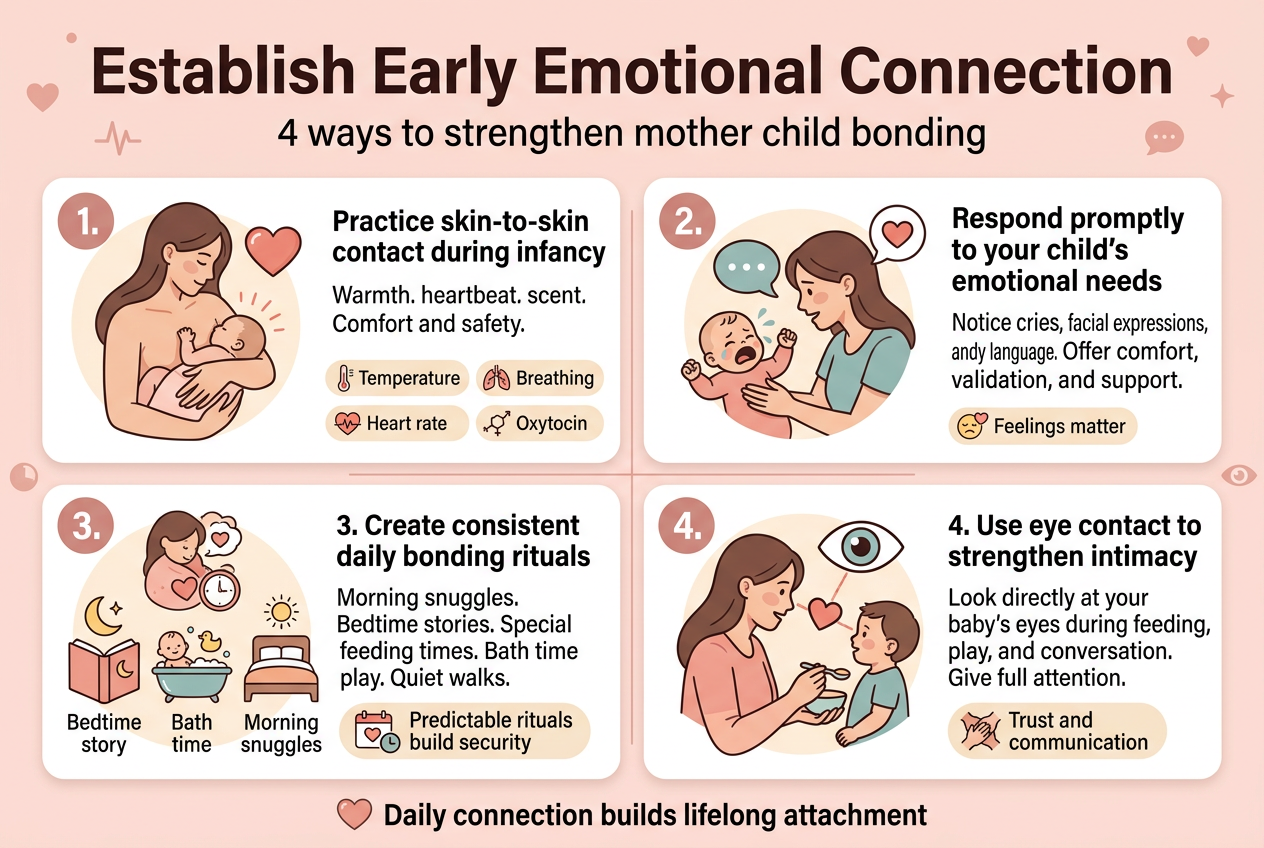
Practice skin-to-skin contact during infancy
Skin-to-skin contact creates the foundation for a strong mother child bond from the very first moments of life. This simple yet powerful practice involves placing your newborn directly on your bare chest, allowing your baby to feel your warmth, hear your heartbeat, and breathe in your familiar scent. The benefits extend far beyond those initial precious moments after birth.
Regular skin-to-skin sessions help regulate your baby's temperature, breathing, and heart rate while boosting your own oxytocin production - often called the "love hormone." This natural chemical reaction strengthens your maternal instincts and creates deeper feelings of attachment. Even fathers and partners can participate in this bonding experience, though the connection between mother and child remains uniquely special due to the nine months of shared physical space during pregnancy.
Make skin-to-skin contact a daily ritual during feeding times, bath preparation, or quiet moments before sleep. Your baby will learn to associate your touch with comfort and safety, laying the groundwork for secure attachment that lasts well beyond infancy.
Respond promptly to your child's emotional needs
Building strong mother child relationship requires tuning into your child's emotional signals and responding with care and understanding. Babies communicate through cries, facial expressions, and body language long before they can speak. When you consistently acknowledge and address these early emotional cues, you teach your child that their feelings matter and that you're a reliable source of comfort.
Quick responses don't mean rushing to solve every minor discomfort, but rather showing up emotionally when your child needs you. A crying baby might need food, a diaper change, or simply the reassurance of being held. As children grow, their emotional needs become more complex - they might need validation after a disappointment, comfort during a scary movie, or celebration when they accomplish something new.
This responsive parenting style helps children develop emotional regulation skills and builds their confidence in expressing feelings. When children know their mother will listen without judgment and offer appropriate support, they're more likely to share both struggles and joys as they grow older.
Create consistent daily bonding rituals
Early emotional connection with baby flourishes through predictable, meaningful activities that become special moments shared between mother and child. These rituals don't need to be elaborate - they just need to be consistent and focused on connection rather than completing tasks.
Consider these simple yet effective bonding activities:
-
Morning snuggles before starting the day
-
Bedtime stories with your full attention
-
Special feeding times without distractions
-
Bath time play with songs and gentle conversation
-
Quiet walks where you narrate what you see together
The key is choosing activities that work with your family's schedule and sticking with them. Your baby will begin to anticipate these special moments, and the predictability creates a sense of security. As your child grows, these rituals can evolve while maintaining their bonding power.
Some mothers find that creating a special song or phrase used only during bonding time helps signal to their child that this is their focused, one-on-one time together. These consistent rituals become the building blocks of lifelong mother child bonding activities.
Use eye contact to strengthen intimacy
Eye contact serves as one of the most powerful tools for creating healthy mother child attachment. When you look directly into your baby's eyes during feeding, diaper changes, or play time, you're engaging in a form of nonverbal communication that builds trust and understanding.
Newborns can focus best on objects about 8-12 inches away - coincidentally, the perfect distance between your face and theirs during breastfeeding or bottle feeding. Take advantage of these natural opportunities to gaze at your baby, smile, and let your face show the love you feel. Your baby will begin to recognize your facial expressions and learn to read your emotions.
As your child grows, maintaining eye contact during conversations shows respect and genuine interest in what they're sharing. Put down your phone, close the laptop, and give your child your full visual attention when they're trying to communicate with you. This practice teaches them that they're worth your complete focus and helps them develop strong communication skills.
Even during disciplinary moments, gentle eye contact can convey love while still addressing behavioral issues. Children learn to trust mothers who can look at them with compassion even during difficult conversations.
Develop Effective Communication Patterns
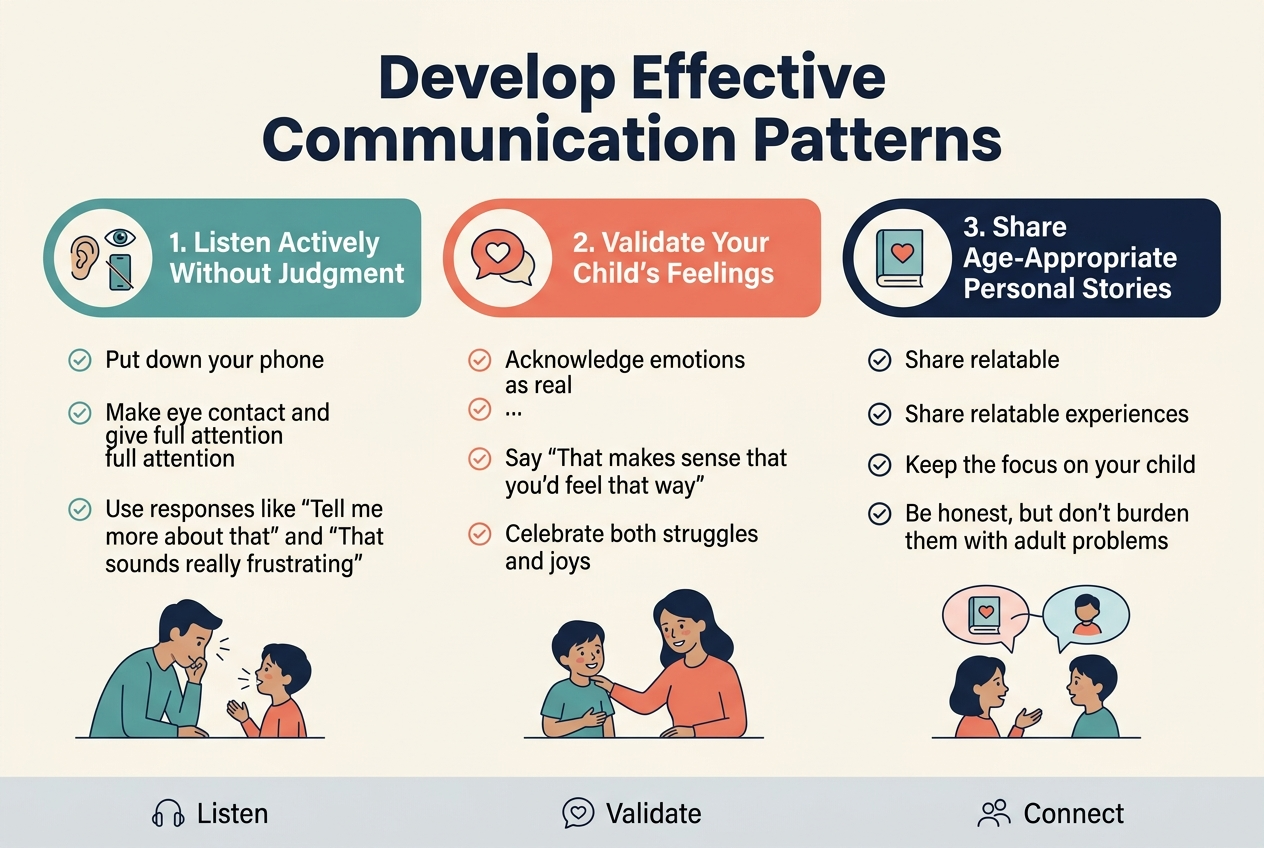
Listen actively without judgment or interruption
Active listening forms the cornerstone of effective parent child communication and strengthens your mother child bond in ways that transform your relationship. When your child speaks, put down your phone, make eye contact, and give them your full attention. This simple act communicates that their thoughts and feelings matter to you.
Resist the urge to jump in with solutions or corrections while they're talking. Children need space to express themselves completely before they can absorb any guidance you might offer. Instead of saying "You shouldn't feel that way" or "That's not a big deal," try responses like "Tell me more about that" or "That sounds really frustrating."
Your facial expressions and body language speak volumes too. Lean in slightly, nod to show you're following along, and mirror their emotions appropriately. If they're excited about something, let that excitement show on your face. When they're upset, your expression should reflect understanding and concern.
Create a judgment-free zone where your child feels safe sharing anything with you. This means avoiding immediate lectures about behavior or choices they mention. Save the teaching moments for after they've finished speaking and felt heard.
Validate your child's feelings and experiences
Validation doesn't mean agreeing with every decision your child makes, but it does mean acknowledging that their emotions are real and understandable. When your daughter says she's devastated about not getting invited to a party, don't minimize her pain with "There will be other parties." Instead, try "That really hurts when you feel left out. I can see why you're upset."
Children's experiences might seem small compared to adult problems, but they're huge in their world. A failed test, friendship drama, or disappointment about a cancelled plan carries real weight for them. When you validate these experiences, you're teaching your child that all emotions are acceptable and that they can come to you with anything.
Use phrases like "That makes sense that you'd feel that way" or "I understand why that would be disappointing." These simple acknowledgments help children feel seen and understood, which builds the foundation for healthy mother child attachment.
Remember that validation works for positive emotions too. When your child shares excitement about a small victory, match their energy level and celebrate with them. This teaches them that sharing joy is just as important as sharing struggles.
Share age-appropriate personal stories and emotions
Opening up about your own experiences creates a two-way street in your relationship and shows your child that you're human too. When your teenager struggles with peer pressure, sharing a story about a time you faced a similar challenge helps them feel less alone and more connected to you.
Choose stories that relate to their current situation without overshadowing their experience. Keep the focus on them while offering your experience as a point of connection. For younger children, this might mean talking about times you felt scared, excited, or disappointed. For older kids, you can share more complex situations involving friendship challenges, academic pressures, or personal growth.
Be genuine about your current emotions too. If you're having a tough day, it's okay to say "I'm feeling a bit stressed about work today, but I always have time to listen to you." This teaches emotional intelligence and shows that feelings are normal parts of life.
Balance vulnerability with stability. Share enough to be relatable without burdening your child with adult problems they can't help solve. Your goal is building connection through shared humanity, not seeking emotional support from your child.
Create Quality Time Together
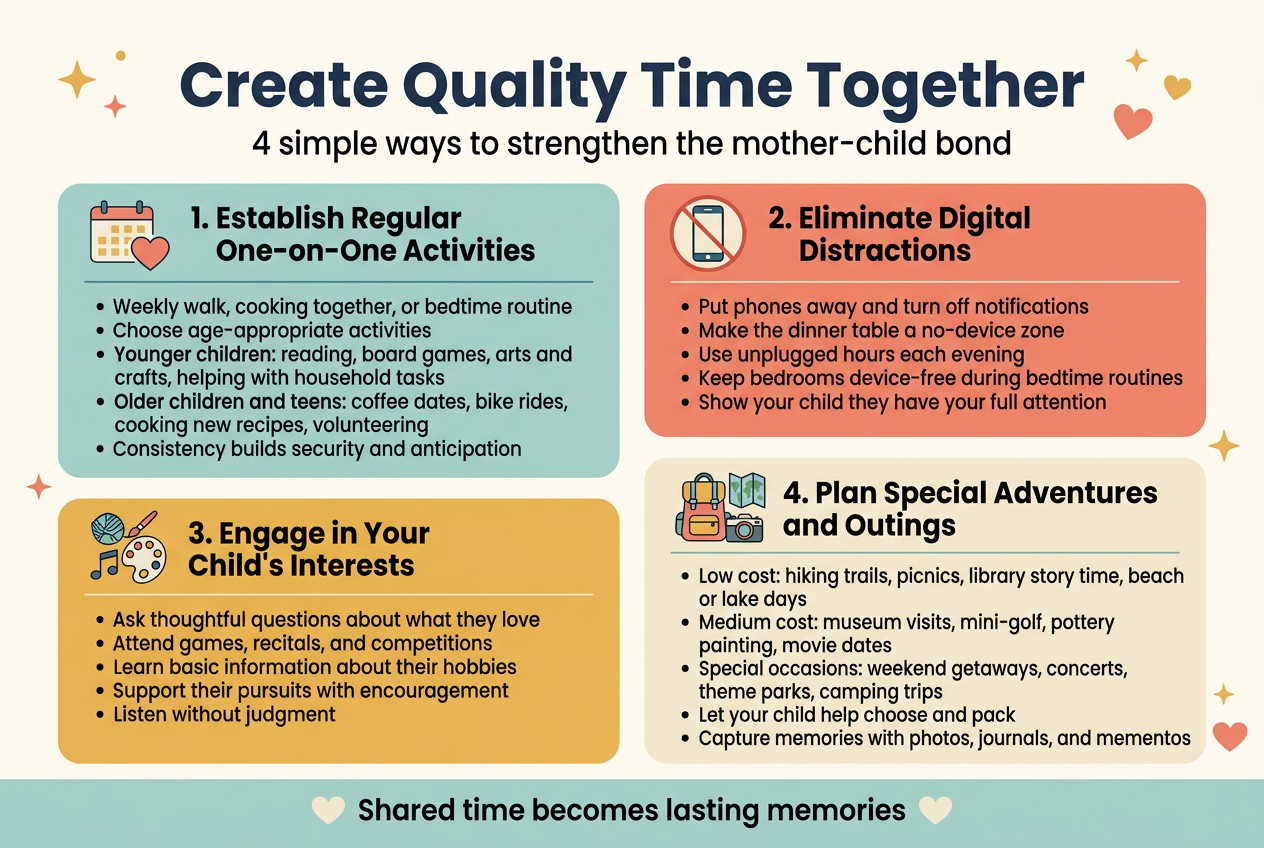
Establish Regular One-on-One Activities
Carving out dedicated time for regular one-on-one activities creates the foundation for quality time with children that strengthens your mother child bond. These activities don't need to be elaborate or expensive - simple traditions like a weekly walk together, cooking dinner side by side, or having a special bedtime routine can become treasured rituals that your child looks forward to.
Consider your child's age and personality when choosing activities. Younger children might enjoy:
-
Reading together before bed
-
Playing board games or puzzles
-
Arts and crafts projects
-
Helping with age-appropriate household tasks
Older children and teens might prefer:
-
Shopping trips or coffee dates
-
Exercise classes or bike rides
-
Cooking new recipes together
-
Volunteering for causes they care about
The key is consistency. Pick activities you can realistically maintain and protect this time fiercely. When children know they have your undivided attention at specific times, it builds security and anticipation that deepens your connection.
Eliminate Digital Distractions During Bonding Moments
Digital devices can create invisible barriers between you and your child, even when you're physically together. Building strong mother child relationship requires your full presence and attention during bonding moments. This means putting phones away, turning off notifications, and resisting the urge to multitask.
Create phone-free zones and times in your home:
-
Designate the dinner table as a no-device area
-
Establish "unplugged hours" each evening
-
Keep bedrooms device-free during bedtime routines
-
Use car rides as opportunities for conversation instead of screen time
Your child notices when you're distracted by your phone, and this can send the message that your device is more important than they are. By modeling healthy boundaries with technology, you're not only strengthening your bond but teaching valuable life skills about digital wellness.
Engage in Your Child's Interests and Hobbies
One of the most powerful ways to connect with your child is to genuinely engage with what they love, even if it's not your cup of tea. Whether they're obsessed with dinosaurs, fascinated by video games, or passionate about dance, showing authentic interest in their world demonstrates that you value what matters to them.
This doesn't mean you have to become an expert or pretend to love everything they do. Instead:
-
Ask thoughtful questions about their interests
-
Attend their games, recitals, or competitions
-
Learn basic information about their hobbies so you can have meaningful conversations
-
Support their pursuits with resources and encouragement
-
Try participating when appropriate, but respect when they want independent space
When children feel heard and validated in their passions, they're more likely to share other aspects of their lives with you. This creates a positive cycle where communication flows naturally because they trust you to listen without judgment.
Plan Special Mother-Child Adventures and Outings
Mother child bonding activities extend beyond daily routines to include special adventures that create lasting memories and stories you'll both cherish. These don't have to be expensive vacations or elaborate plans - the magic lies in the shared experience and your focused attention.
Adventure ideas for different budgets and ages:
| Low Cost | Medium Cost | Special Occasions |
|---|---|---|
| Hiking local trails | Museum visits | Weekend getaways |
| Picnics in the park | Mini-golf or bowling | Concert or show tickets |
| Library story time | Pottery painting | Theme park visits |
| Beach or lake days | Movie theater dates | Camping trips |
The planning process itself can become part of the bonding experience. Let your child help choose destinations, research activities, or even pack snacks. This gives them ownership in the adventure and builds excitement.
Document these experiences together through photos, journals, or collecting mementos. Years later, you'll both treasure looking back at these special times that strengthened your connection and created a foundation of positive shared memories.
Build Trust Through Consistency
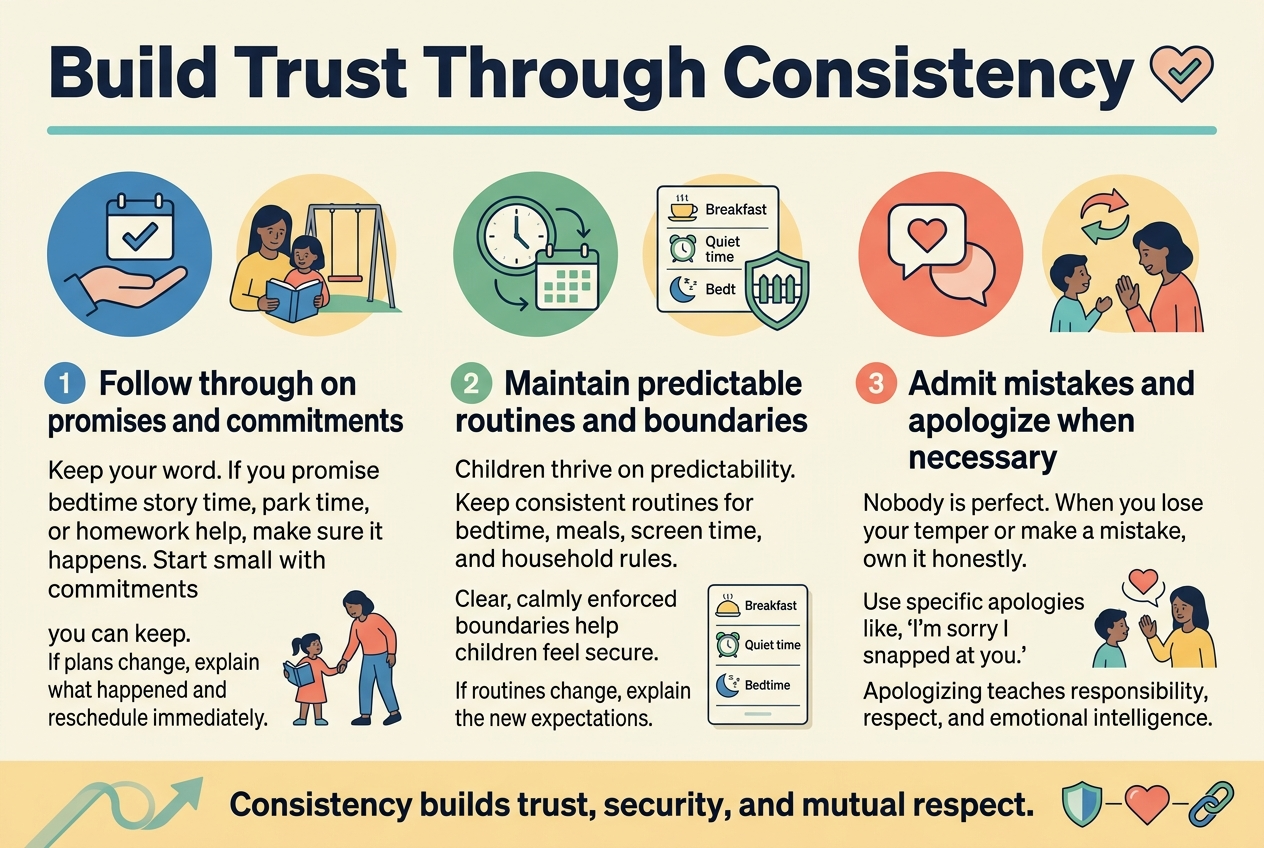
Follow through on promises and commitments
Keeping your word is the foundation of building trust with child relationships. When you tell your child you'll read them a bedtime story after dinner, make sure it happens. If you promise to take them to the park on Saturday, don't let other plans get in the way unless there's a genuine emergency.
Children have incredible memories when it comes to promises. They'll remember that time you said you'd play a game together but got distracted by your phone instead. These moments shape how they view your reliability and whether they can count on you when it matters most.
Start small with commitments you know you can keep. Rather than promising elaborate outings that might fall through, focus on simple daily promises like spending ten minutes helping with homework or having a special snack together. When unexpected situations arise that prevent you from following through, explain what happened and reschedule immediately.
Your consistency in keeping promises teaches your child that relationships are built on trust and mutual respect. They learn to value their own word by watching how seriously you take yours. This creates a positive cycle where both of you become more reliable and trustworthy.
Maintain predictable routines and boundaries
Children thrive on predictability because it helps them feel secure and understand what's expected. Consistent parenting techniques around bedtime, meals, and household rules create a safe framework where your mother child bond can flourish.
Your daily routines don't need to be rigid, but having general patterns helps children know what comes next. Maybe mornings always include breakfast together and evenings wind down with quiet time. These predictable moments become anchors in your child's day where connection naturally happens.
Boundaries work the same way - when rules are clear and consistently enforced, children feel safer because they understand the limits. If screen time ends at 7 PM on school nights, stick to it. If hitting isn't allowed, address it every time with the same calm response. This consistency helps children learn self-regulation while feeling secure in your guidance.
When you need to adjust routines or rules, involve your child in the conversation. Explain why changes are happening and what the new expectations are. This transparency builds trust and helps them adapt more easily.
Admit mistakes and apologize when necessary
Nobody's perfect, and your child needs to see that making mistakes is part of being human. When you mess up - whether it's losing your temper, forgetting something important, or making a wrong decision - own it honestly.
Apologizing to your child shows them that everyone makes errors and that taking responsibility is the mature response. A simple "I'm sorry I raised my voice earlier. I was frustrated about work, but that's not your fault" goes a long way toward repairing any damage to your relationship.
Your apologies teach your child how to handle their own mistakes gracefully. They learn that saying sorry isn't a sign of weakness but rather a sign of strength and respect for others. This modeling helps them develop emotional intelligence and healthy relationship skills.
Be specific when you apologize. Instead of "Sorry for being grumpy," try "I'm sorry I snapped at you when you asked for help. You deserved my patience." This shows you understand the impact of your actions and helps rebuild trust more effectively.
Foster Independence While Staying Connected
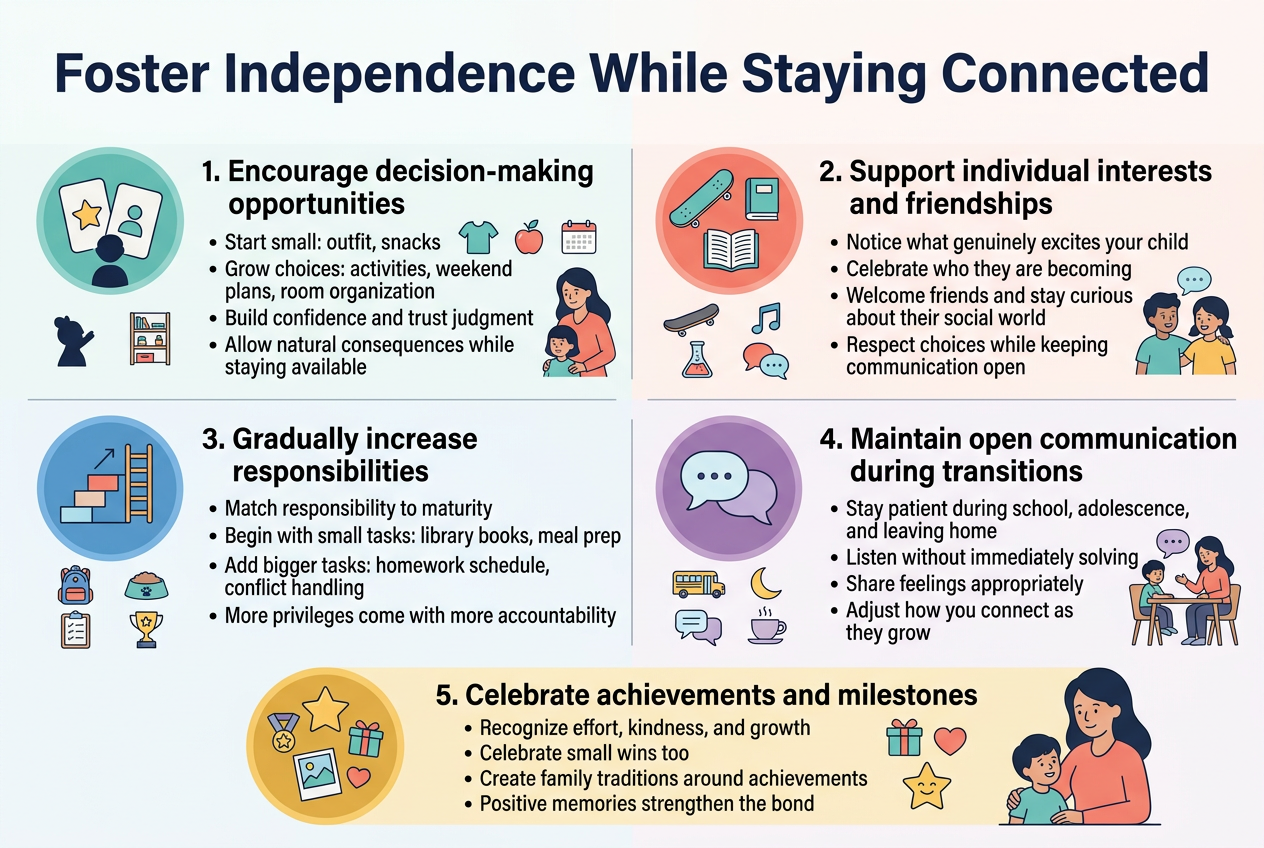
Encourage decision-making opportunities
Give your child choices that match their age and abilities. Start small with decisions like picking their outfit or choosing between two snacks. As they grow, expand these opportunities to include bigger choices about extracurricular activities, weekend plans, or how they organize their room. This approach strengthens the mother child bond while teaching valuable life skills.
When children make their own decisions, they learn to trust their judgment and feel more confident. You're not stepping back from the relationship – you're actually deepening it by showing you believe in their capabilities. Let them experience natural consequences from their choices, whether positive or negative, while staying available for guidance.
Support your child's individual interests and friendships
Pay attention to what genuinely excites your child, even if it's different from what you expected. Maybe they love skateboarding while you prefer reading, or they're drawn to science fiction when you enjoy romance novels. Supporting their unique interests shows unconditional love and helps maintain that strong connection as they develop their own identity.
Building strong mother child relationship means celebrating who your child is becoming, not who you want them to be. Encourage their friendships by creating welcoming spaces for friends to visit and showing interest in the people they choose to spend time with. This doesn't mean you can't set boundaries – it means you respect their social choices while keeping communication open.
Gradually increase responsibilities based on maturity
Watch for signs that your child is ready for more responsibility rather than following a strict timeline. Some children handle pet care beautifully at age eight, while others need more time. Some teenagers manage their own schedules well, while others need more structure and support.
Fostering child independence happens gradually and looks different for every family. Start with small responsibilities like keeping track of their library books or helping with meal preparation. As they show they can handle these tasks consistently, add bigger responsibilities like managing their homework schedule or handling their own conflicts with friends.
Create a system where increased privileges come with increased responsibilities. This teaches them that independence isn't just freedom – it comes with accountability too.
Maintain open communication during transition periods
Transitions are tough for everyone. Whether your child is starting school, entering adolescence, or preparing to leave home, these periods can strain even the strongest relationships. Keep talking, even when conversations feel awkward or your child seems to pull away.
Effective parent child communication during transitions means being patient with mood swings, listening without immediately offering solutions, and sharing your own feelings appropriately. Let them know that growing up doesn't mean growing apart. You might need to adjust how you connect – maybe bedtime stories become late-night conversations or Saturday morning cartoons become coffee shop chats.
Stay curious about their changing world instead of making assumptions based on your own childhood experiences. Their challenges and opportunities are likely very different from what you faced at their age.
Celebrate your child's achievements and milestones
Recognition doesn't always mean throwing a party or buying expensive gifts. Sometimes the most meaningful celebrations are simple acknowledgments of growth and effort. Notice when your child handles disappointment better than last time, when they stick with a difficult task, or when they show kindness to someone having a hard day.
Healthy mother child attachment grows stronger when children feel seen and valued for who they are and what they contribute. Create family traditions around achievements – maybe it's a special dinner, a photo for the memory book, or just dedicated time together doing something they love.
Remember to celebrate the small stuff too. Learning to tie shoes, making a new friend, or figuring out a challenging math problem all deserve recognition. These moments of celebration create positive memories that strengthen your bond and encourage your child to keep growing and trying new things.
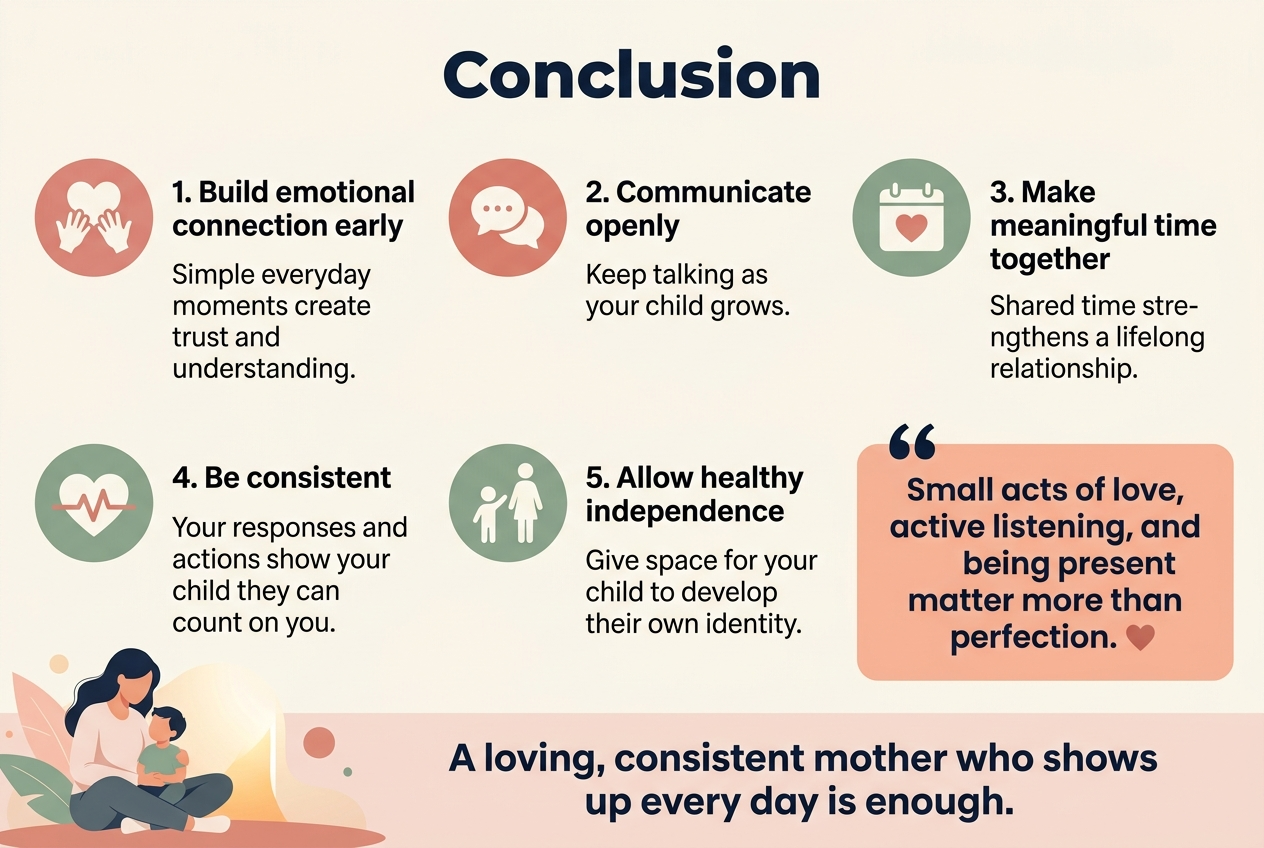
The bond between mother and child grows strongest through simple, everyday moments that build trust and understanding. When you focus on emotional connection from the start, communicate openly as your child grows, and create meaningful time together, you're laying the foundation for a relationship that lasts a lifetime. Consistency in your responses and actions shows your child they can count on you, while giving them space to develop their own identity keeps your connection healthy and balanced.
Remember that building this bond doesn't require perfection or grand gestures. Small acts of love, active listening, and being present during both good times and challenges matter more than anything else. Start where you are today, be patient with yourself and your child, and trust that each positive interaction is strengthening the unique relationship you share. Your child doesn't need a perfect mother – they need a loving, consistent one who shows up for them every day.
.png)


Comments
Post a Comment