Daily Routines That Make Motherhood Easier
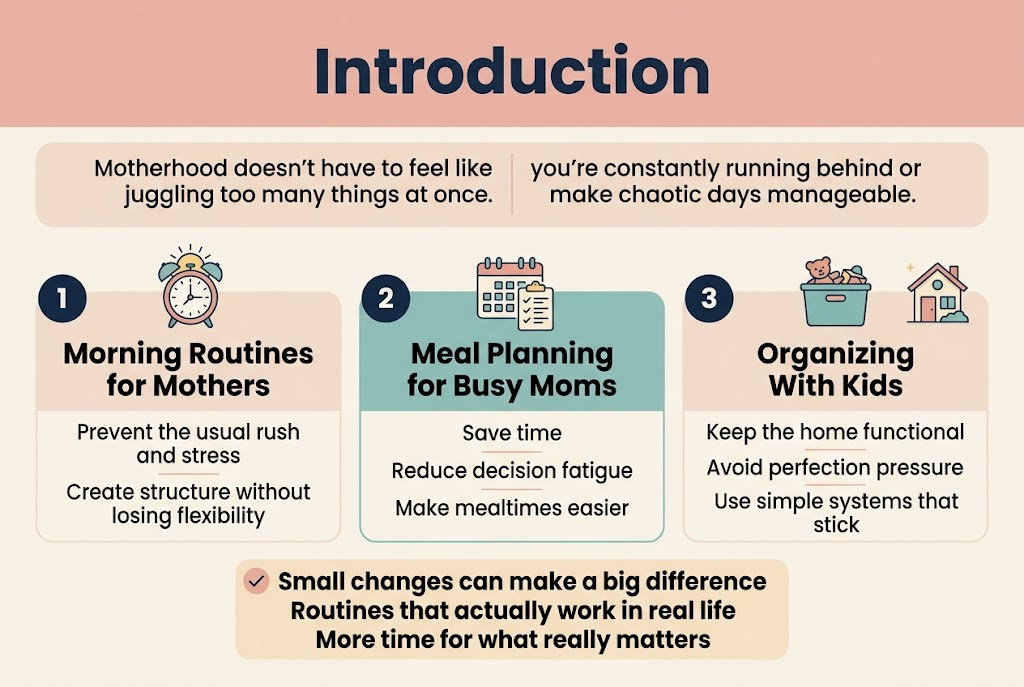
Motherhood doesn't have to feel like you're constantly running behind or juggling too many things at once. The right daily routines for moms can transform chaotic days into manageable ones, giving you more time for what really matters.
This guide is for busy mothers who want practical easy parenting tips that actually work in real life. You'll discover simple ways to create structure without losing flexibility, and learn how small changes can make a big difference in your day-to-day experience.
We'll cover how to establish morning routines for mothers that prevent the usual rush and stress. You'll also learn streamlined approaches to meal planning for busy moms that save time and reduce decision fatigue. Plus, we'll explore organizing with kids strategies that keep your home functional without requiring perfection.
These motherhood routines aren't about adding more to your plate – they're about making everything easier so you can enjoy mom life organization that actually sticks.
Establish Morning Routines That Set You Up for Success
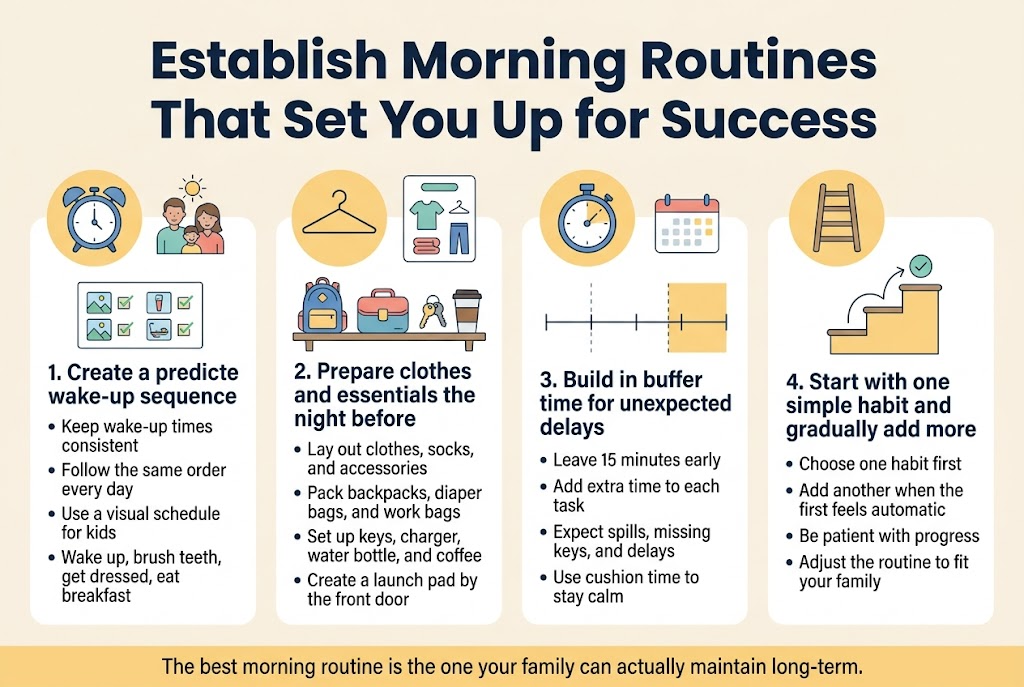
Create a predictable wake-up sequence for yourself and children
Morning routines for mothers work best when they follow the same pattern every day. Your brain craves predictability, and so do your kids. Start by setting consistent wake-up times - even on weekends when possible. This helps regulate everyone's internal clocks and makes those early mornings feel less jarring.
Design a simple sequence that works for your family's needs. Maybe you wake up 30 minutes before the kids to enjoy coffee in silence, or perhaps everyone gets up together and starts with breakfast. The key is choosing what feels sustainable and sticking with it. Write down your ideal sequence and post it somewhere visible until it becomes automatic.
For children, visual schedules work wonders. Create a simple chart with pictures showing each step: wake up, brush teeth, get dressed, eat breakfast. Young kids especially love checking off completed tasks, and it reduces the constant "what's next?" questions that can derail your morning flow.
Prepare clothes and essentials the night before
The Sunday night clothing prep session will become your secret weapon against chaotic mornings. Lay out everyone's clothes, including underwear, socks, and any accessories. Check the weather forecast and make adjustments accordingly. This five-minute investment saves you from frantic searches for matching socks when you're already running late.
Pack backpacks, diaper bags, and work bags the evening before. Double-check that homework is signed, permission slips are included, and lunch boxes are ready to grab from the fridge. Keep a launching pad near your front door - a designated spot for keys, sunglasses, and anything else you'll need on your way out.
Don't forget about your own essentials. Set up the coffee maker, have your water bottle filled, and keep your phone charger in the same spot every night. These small preparations eliminate decision fatigue when your brain is still waking up.
Build in buffer time for unexpected delays
Real life happens, especially with kids involved. Someone spills juice on their shirt, you can't find the car keys, or a diaper blowout derails everything. Smart moms build cushion time into their morning routine for exactly these moments.
If you need to leave by 8:00 AM, aim to be ready by 7:45 AM. That extra 15 minutes acts as your safety net. When everything goes smoothly, you get a few peaceful moments before heading out. When chaos strikes, you're still on schedule instead of stressed and rushing.
Create realistic time estimates for each morning task. Most people underestimate how long things actually take, especially when children are involved. Time yourself for a week to get accurate numbers, then add a few extra minutes to each activity.
Start with one simple habit and gradually add more
The biggest mistake moms make with morning routines is trying to overhaul everything at once. Your brain can only handle so much change before it rebels and you abandon the whole system. Pick one small habit to focus on for the first week or two.
Maybe you start with just preparing clothes the night before, or setting the coffee maker timer. Once that feels automatic and natural, add another element. This approach, called habit stacking, helps new behaviors stick because you're building on existing patterns rather than creating entirely new ones.
Be patient with yourself and your family as everyone adjusts. Some mornings will go perfectly, others will feel like complete disasters. That's completely normal and doesn't mean your system isn't working. Keep tweaking and adjusting until you find the right balance for your unique situation.
Remember that motherhood routines should make your life easier, not add more pressure. If something isn't working after giving it a fair try, change it. The best morning routine is the one your family can actually maintain long-term.
Streamline Meal Planning and Preparation
Batch Cook on Weekends to Save Weekday Stress
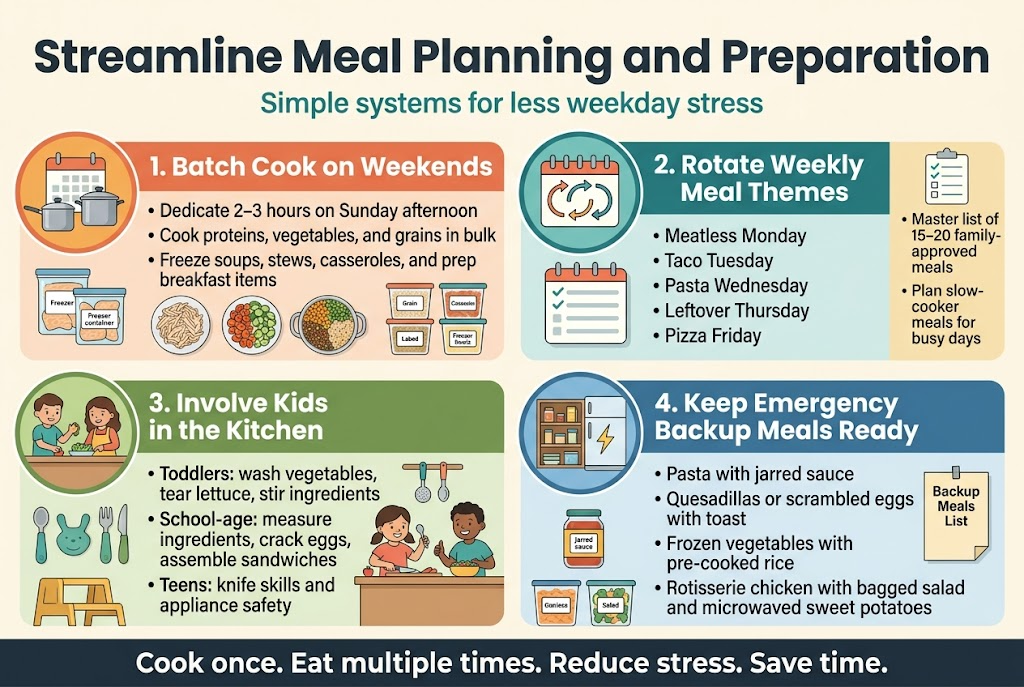
Sunday afternoon becomes your secret weapon when you embrace batch cooking. Dedicate 2-3 hours to preparing proteins, chopping vegetables, and cooking grains in bulk. Cook large portions of versatile proteins like shredded chicken, ground turkey, or roasted vegetables that work across multiple meals throughout the week.
Freeze individual portions of soups, stews, and casseroles in labeled containers. Your future self will thank you when Wednesday rolls around and dinner is just a reheat away. Prep breakfast items too - overnight oats, egg muffins, and pancake batter can all be made ahead.
meal planning for busy moms becomes manageable when you think in systems rather than individual meals. Cook once, eat multiple times by transforming ingredients. That batch of shredded chicken becomes tacos Monday, chicken salad Tuesday, and soup Wednesday.
Create a Rotating Weekly Meal Schedule
Build a flexible framework instead of rigid meal plans. Assign themes to each weeknight: Meatless Monday, Taco Tuesday, Pasta Wednesday, Leftover Thursday, Pizza Friday. This structure eliminates daily decision fatigue while maintaining variety.
Keep a master list of 15-20 family-approved meals categorized by theme. Rotate through these favorites rather than constantly searching for new recipes. Your kids know what to expect, grocery shopping becomes routine, and you avoid the dreaded "What's for dinner?" panic.
Plan meals around your family's schedule. Keep slow-cooker meals for busy days and save elaborate cooking for weekends when you have more time and energy.
Involve Children in Age-Appropriate Food Preparation Tasks
Turn meal prep into family time by giving kids meaningful kitchen responsibilities. Toddlers can wash vegetables, tear lettuce, and stir ingredients. School-age children can measure ingredients, crack eggs, and assemble sandwiches. Teenagers can handle knife skills and operate appliances safely.
Create designated spaces where kids can work comfortably. A sturdy step stool and child-safe tools make participation easier and safer. Teaching these skills now builds independence and reduces your workload as children grow.
daily routines for moms work best when everyone contributes. Kids who help prepare meals are more likely to eat them without complaints, and you're building valuable life skills while lightening your load.
Keep Emergency Backup Meals Ready
Stock your pantry and freezer with reliable backup options for chaotic days. Keep ingredients for simple meals that require minimal prep: pasta with jarred sauce, quesadillas, scrambled eggs with toast, or frozen vegetables with pre-cooked rice.
Frozen meals aren't failures - they're smart planning. Keep a few quality frozen options on hand for genuine emergencies. Rotisserie chicken from the grocery store paired with bagged salad and microwaved sweet potatoes creates a complete meal in minutes.
Build a list of backup meals your family actually enjoys. Post it inside a kitchen cabinet so you can quickly reference options when plans fall apart. Having this safety net reduces stress and prevents expensive takeout orders when life gets overwhelming.
Organize Your Living Spaces for Efficiency
Designate specific homes for frequently used items
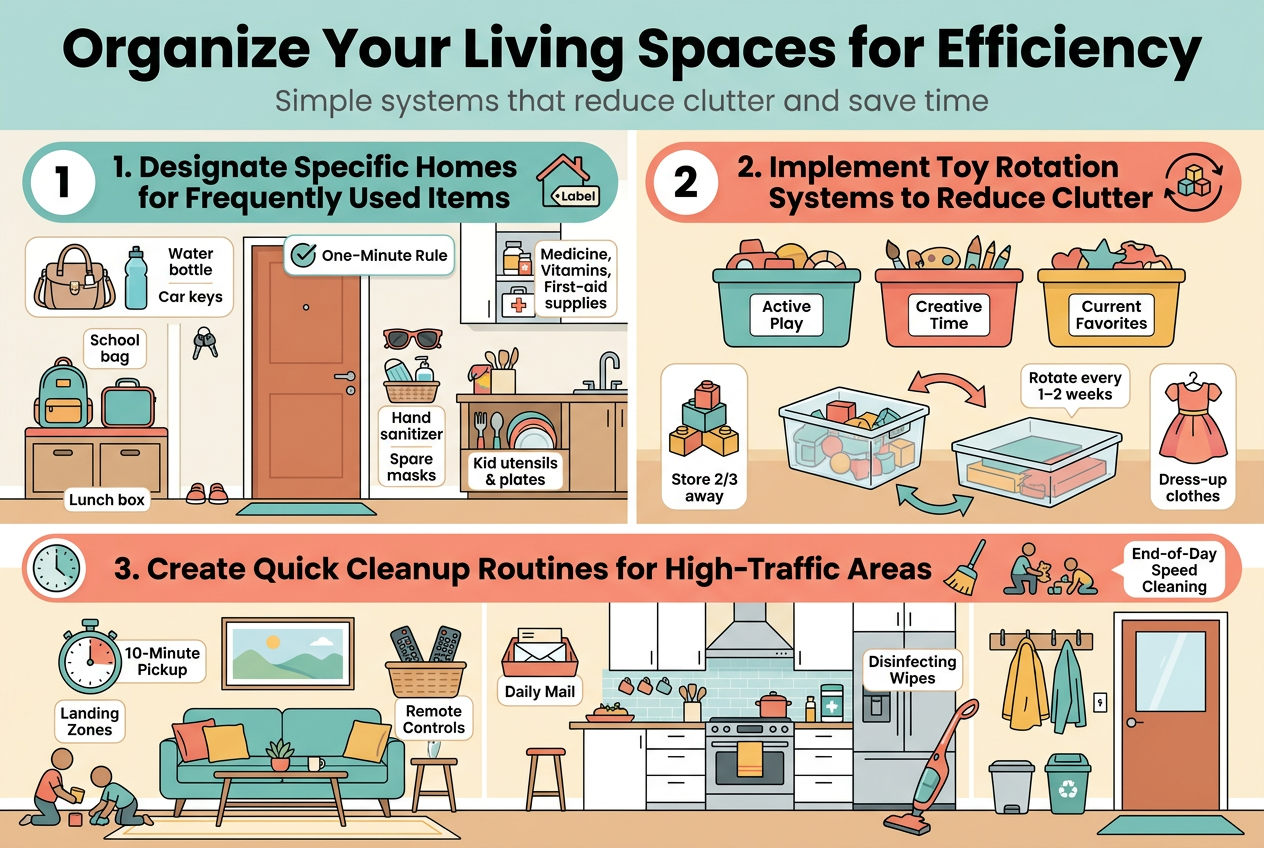
Creating designated spots for everyday essentials transforms chaos into calm, especially when you're juggling mom life organization. Think of it as giving each item its own address – when everything has a place, you're not wasting precious minutes hunting for keys, snacks, or that one toy that always seems to disappear.
Start with the items you reach for most often. Diaper bags, water bottles, and car keys should live near your main exit. School bags and lunch boxes work best in a mudroom or entryway cubby system. Keep a basket by the front door for quick-grab items like sunglasses, hand sanitizer, and spare masks.
In the kitchen, dedicate specific drawers for kid utensils and plates within their reach. This simple daily routine for moms cuts down on constant requests for help and teaches independence. Medicine, vitamins, and first-aid supplies need a consistent home too – preferably high up and clearly labeled.
The "one-minute rule" works wonders here: if something takes less than a minute to put back in its designated spot, do it immediately. This prevents the dreaded avalanche effect where one misplaced item leads to complete disorganization.
Implement toy rotation systems to reduce clutter
Toy rotation isn't just about organizing with kids – it's about preserving your sanity while keeping little ones engaged. The magic happens when you store two-thirds of toys away and rotate them every 1-2 weeks. Children play more creatively with fewer options, and you'll notice longer attention spans when toys feel "new" again.
Sort toys into three bins: active play, creative time, and current favorites. Keep one bin accessible while storing the other two. When rotation day arrives, simply swap them out. The excitement on your child's face when they rediscover forgotten toys makes this easy parenting tip worth every effort.
Storage solutions make this system work smoothly. Clear plastic bins let kids see what's inside, while labels help older children participate in cleanup. Under-bed storage, closet shelves, or garage space work perfectly for storing inactive toy bins.
Create themed rotations to add extra fun: building blocks one week, art supplies the next, followed by dress-up clothes. This approach supports different developmental skills while maintaining that fresh, exciting feeling that keeps children engaged longer.
Create quick cleanup routines for high-traffic areas
High-traffic areas like living rooms, kitchens, and entryways bear the brunt of family life. These spaces need lightning-fast cleanup strategies that actually stick, not complicated systems that fall apart after a week.
The "10-minute pickup" rule works miracles. Set a timer and have everyone grab items that don't belong in the current room. Make it a game – who can collect the most misplaced items before the timer buzzes? Kids love the competition, and you get results fast.
Establish "landing zones" in these busy areas. A small basket for remote controls, a tray for daily mail, and hooks for frequently worn jackets prevent these items from migrating to random surfaces. The key is keeping these zones small and specific – too much storage space just invites more clutter.
End-of-day speed cleaning becomes second nature with the right approach. While dinner cooks, spend five minutes returning living room items to their homes. Before bed, do a quick kitchen counter sweep. These micro-habits prevent overwhelming weekend cleanup sessions that eat into family time.
Strategic placement of cleaning supplies makes maintenance effortless. Keep disinfecting wipes in multiple locations, have a handheld vacuum accessible for quick crumb cleanup, and place small trash bins where they're actually needed. When tools are within arm's reach, maintaining these motherhood routines becomes automatic rather than overwhelming.
Build Effective Communication Systems
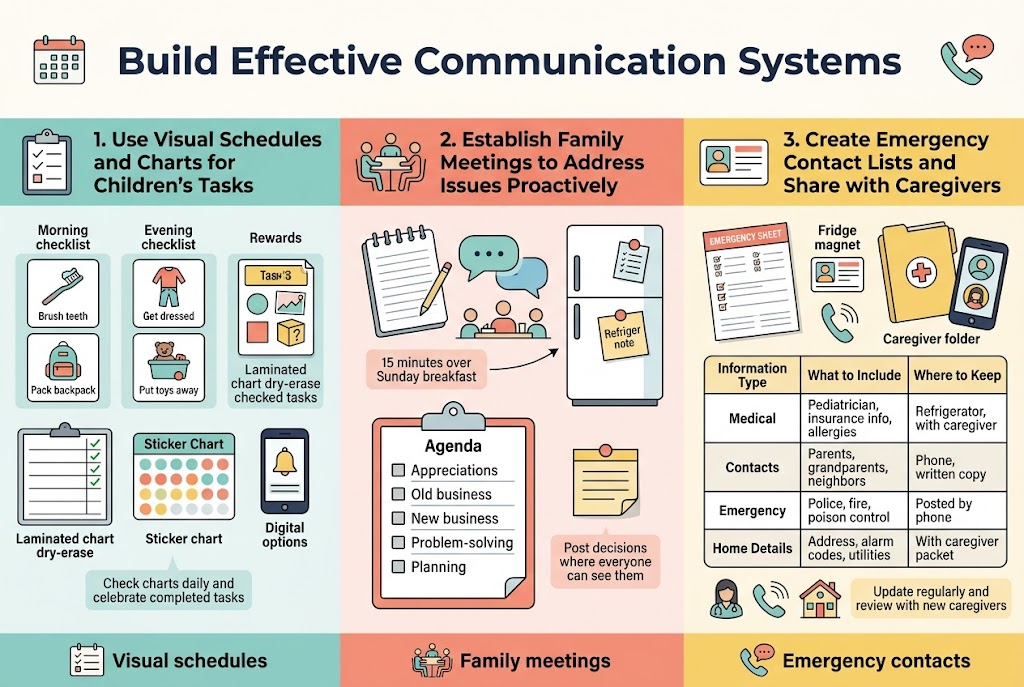
Use Visual Schedules and Charts for Children's Tasks
Visual schedules transform chaotic mornings into smooth operations, especially for busy moms juggling multiple children's needs. Picture charts, task boards, and colorful calendars help kids understand expectations without constant reminders from you. Young children respond particularly well to visual cues because they can see exactly what comes next in their daily routines.
Create morning and evening checklists with pictures for non-readers and written tasks for older kids. Include simple activities like brushing teeth, getting dressed, packing backpacks, and putting toys away. Laminate charts so children can check off completed tasks with dry-erase markers - the satisfaction of marking things complete motivates kids to stay on track.
Digital options work great for tech-savvy families. Apps like Cozi or simple smartphone reminders can send notifications for chores, homework, and activities. However, physical charts often work better because children can see their progress at a glance.
Reward systems paired with visual schedules create positive reinforcement. Sticker charts, token systems, or privilege earning help children stay motivated. The key is consistency - check charts together daily and celebrate completed tasks.
Establish Family Meetings to Address Issues Proactively
Weekly family meetings prevent small problems from becoming major meltdowns. These gatherings don't need to be formal affairs - even 15 minutes over Sunday breakfast works perfectly. The goal is creating space for everyone to share concerns, plan the upcoming week, and solve problems together.
Start meetings with positive highlights from the previous week. Each family member shares something good that happened, creating an upbeat atmosphere before addressing challenges. This approach makes kids more receptive to discussing difficult topics.
Use a simple agenda format:
-
Appreciations: What went well this week
-
Old business: Follow up on previous decisions
-
New business: Upcoming events, schedule changes, concerns
-
Problem-solving: Address conflicts or challenges
-
Planning: Coordinate activities and responsibilities
Keep meetings age-appropriate. Younger children might only participate for part of the discussion, while teenagers can contribute more meaningfully to family decisions. The important thing is that everyone's voice gets heard.
Document decisions and post them where everyone can see. This prevents the "but I didn't know" arguments later. Simple notes on the refrigerator work just fine.
Create Emergency Contact Lists and Share with Caregivers
Comprehensive emergency information gives you peace of mind and keeps your children safe when you're not around. Every caregiver - from babysitters to grandparents - needs immediate access to crucial information that could make the difference in an emergency situation.
Your emergency contact sheet should include:
-
Primary contacts: Both parents' cell phones and work numbers
-
Medical information: Pediatrician contact, urgent care locations, pharmacy details
-
Backup contacts: Close family members or friends who can respond quickly
-
Important details: Children's full names, birthdates, allergies, medications
-
Home information: Your address, security codes, WiFi password
| Information Type | What to Include | Where to Keep |
|---|---|---|
| Medical | Pediatrician, insurance info, allergies | Refrigerator, with caregiver |
| Contacts | Parents, grandparents, neighbors | Phone, written copy |
| Emergency | Police, fire, poison control | Posted by phone |
| Home Details | Address, alarm codes, utilities | With caregiver packet |
Update this information regularly and review it with new caregivers. Show them where you keep first aid supplies, flashlights, and fire extinguishers. Walk through your home's emergency exits and explain any special safety considerations.
Digital copies work well too - store contact information in shared family apps or send photos of written lists to regular caregivers. The easier you make it for others to help your children, the more confident you'll feel when stepping away from your mom life organization duties.
Design Flexible Bedtime Rituals That Actually Work
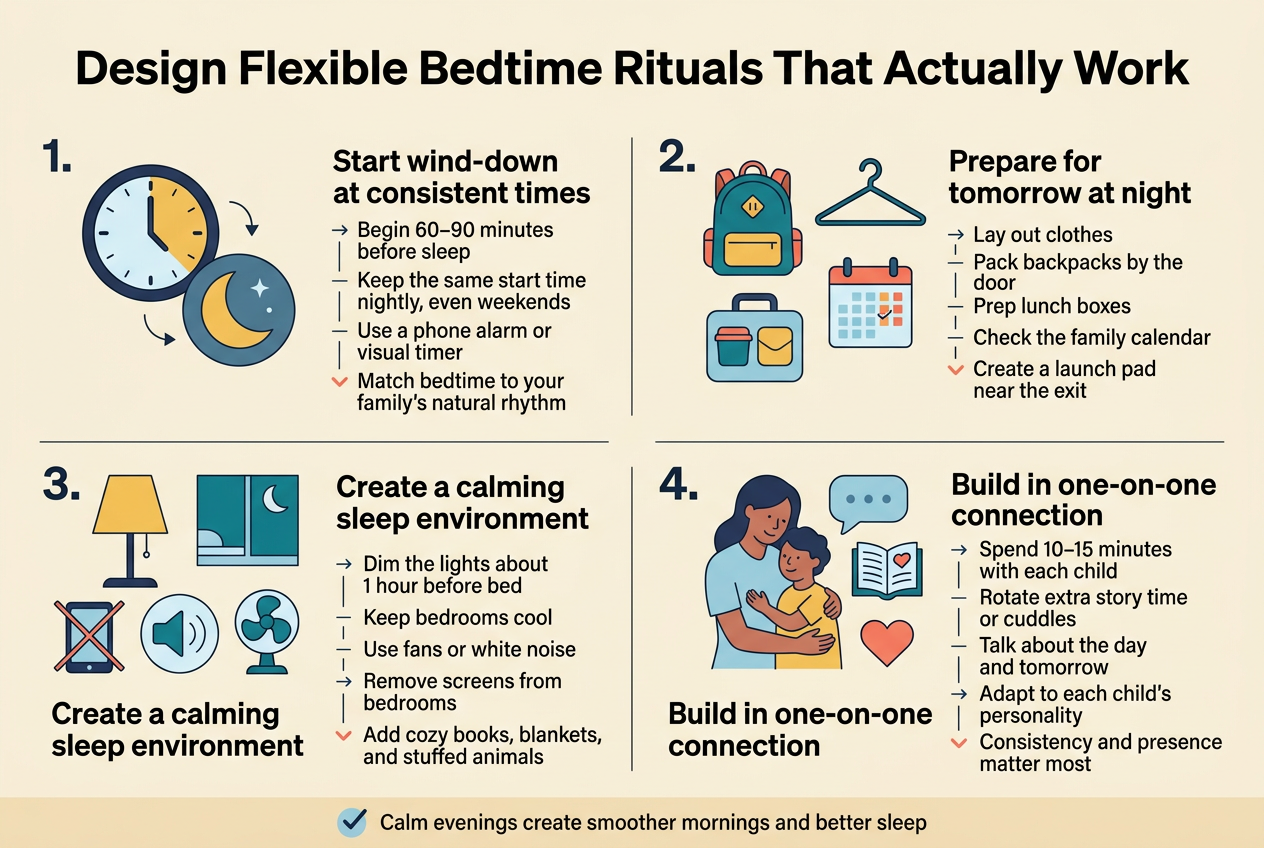
Start wind-down activities at consistent times
Timing really is everything when it comes to successful bedtime routines for families. Your children's bodies crave predictability, and starting your evening wind-down at the same time each night helps their internal clocks adjust naturally. Pick a time that works for your family's schedule and stick to it, even on weekends when possible.
Most families find success beginning their bedtime routines 60-90 minutes before actual sleep time. This gives everyone enough space to transition from the busy energy of the day to a calmer mindset. Set a phone alarm or use a visual timer that kids can see - this removes you from being the "bad guy" constantly announcing bedtime.
Consider your family's natural rhythms when choosing your start time. If you have early risers, an earlier bedtime makes sense. Night owl families might push things back a bit, but consistency remains key. The magic happens when your kids start recognizing the cues and automatically begin settling down.
Prepare for the next day during evening routine
Smart moms know that morning chaos can be avoided with just 15 minutes of evening preparation. Build these tasks into your bedtime routines so they become second nature for the whole family. This simple shift transforms hectic mornings into smooth starts.
Have your kids lay out tomorrow's clothes before getting into pajamas. Pack backpacks and place them by the door. Prep lunch boxes or at least gather the ingredients. Check the family calendar together and talk through what tomorrow holds. These small actions create huge time savings when everyone's rushing out the door.
Create a family "launch pad" near your main exit - hooks for backpacks, a basket for shoes, and a spot for important papers. During evening routines, make sure this area is reset and ready. Your future self will thank you when mornings flow effortlessly instead of starting with stress and forgotten items.
Create calming environments that promote better sleep
Your home's evening atmosphere plays a massive role in successful bedtime routines for families. Dim the lights throughout your house about an hour before sleep time. This signals everyone's brains to start producing melatonin naturally. Swap harsh overhead lighting for soft lamps or even battery-operated candles in kids' rooms.
Temperature control matters too. Keep bedrooms slightly cool - around 65-68 degrees works best for most families. If individual room control isn't possible, fans can help create comfortable sleep environments. White noise machines or soft classical music can mask household sounds that might wake light sleepers.
Remove screens from bedrooms entirely if possible. The blue light from tablets, phones, and TVs disrupts sleep patterns more than most parents realize. Create cozy reading nooks with soft blankets and stuffed animals instead. This gives kids something positive to focus on rather than feeling like bedtime is just about restrictions.
Consider using essential oils like lavender in a diffuser, but keep it subtle. Some children are sensitive to strong scents. The goal is creating a peaceful sanctuary that feels different from the active energy of daytime spaces.
Build in one-on-one connection time with each child
Individual attention during bedtime routines strengthens your bond with each child while addressing their unique needs. Even just 10-15 minutes of focused time makes children feel valued and heard, which actually helps them settle more peacefully.
Rotate who gets the longer bedtime story or extra cuddles each night if you have multiple children. This prevents sibling rivalry and gives each child something special to anticipate. Use this time for gentle conversations about their day, their feelings, or their plans for tomorrow. These quiet moments often reveal things your children wouldn't share during busier times.
Tailor your approach to each child's personality. Your introvert might crave quiet snuggling and soft whispers, while your extrovert might need to talk through everything that happened before they can wind down. Some kids respond well to back rubs or hair brushing, while others prefer having you simply sit nearby while they settle.
Remember that this individual time doesn't need to be elaborate or lengthy. Consistency and presence matter more than perfect execution. Even on your most exhausted evenings, these few minutes of connection create security that helps children sleep better and wake up feeling loved.
Master the Art of Delegation and Asking for Help
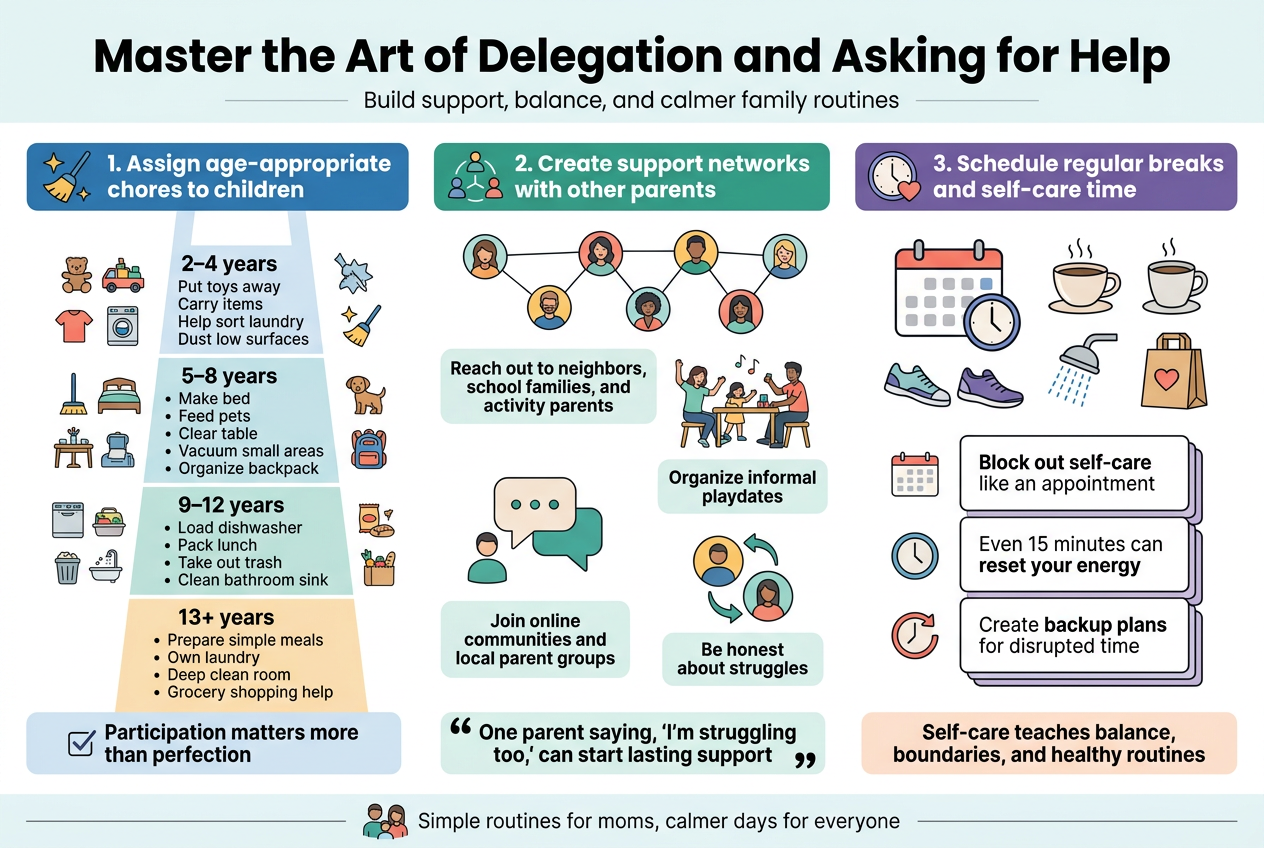
Assign age-appropriate chores to children
Teaching kids to help around the house isn't just about lightening your load - it builds responsibility and life skills. Start with simple tasks that match your child's development stage. Toddlers can put toys away and help feed pets, while preschoolers can sort laundry, set napkins on the table, and water plants with supervision.
School-age children can take on bigger responsibilities like loading the dishwasher, making their beds, and preparing simple snacks. Teenagers can handle cooking basic meals, doing their own laundry, and managing household tasks independently.
Create a visual chore chart that shows what needs doing and when. This helps kids understand expectations and gives them a sense of accomplishment when tasks are complete. Remember that quality matters less than participation at first - a wonky bed made by a six-year-old is still a success.
Age-Appropriate Chore Examples:
| Age Group | Daily Tasks | Weekly Tasks |
|---|---|---|
| 2-4 years | Put toys away, carry items | Help sort laundry, dust low surfaces |
| 5-8 years | Make bed, feed pets, clear table | Vacuum small areas, organize backpack |
| 9-12 years | Load dishwasher, pack lunch | Take out trash, clean bathroom sink |
| 13+ years | Prepare simple meals, own laundry | Deep clean room, grocery shopping help |
Create support networks with other parents
Building connections with fellow parents creates a safety net that makes motherhood routines more manageable. Start by reaching out to parents in your immediate circle - neighbors, school families, or parents from activities your children attend.
Organize informal playdates where kids entertain each other while parents connect. These relationships often naturally evolve into mutual support systems. You might discover another mom who loves meal prep and is willing to share tips, or find someone who's mastered bedtime routines for families with multiple children.
Consider joining or creating parent groups that align with your values and schedule. Online communities can provide 24/7 support when you need quick advice about everything from easy parenting tips to handling unexpected challenges. Local mom groups often arrange childcare swaps, giving you precious time for errands or self-care.
Don't underestimate the power of simply being honest about your struggles. When you share that you're having a tough week with mom time management, other parents often respond with practical help or emotional support. Many lasting friendships start with one parent saying "I'm struggling too."
Schedule regular breaks and self-care time
Self-care isn't selfish - it's strategic mom time management that keeps you functioning at your best. Block out specific times for yourself just like you would any other important appointment. Even 15 minutes of uninterrupted time can reset your energy and patience.
Trade childcare duties with trusted friends or family members. One afternoon per week where you can run errands alone, take a walk, or simply sit quietly can transform your entire week. If you have a partner, establish clear boundaries around when each person gets downtime.
Start small and be realistic about what works for your family's schedule. Maybe self-care means waking up 20 minutes early for coffee in silence, or taking a hot shower without interruptions. Some days it might be ordering takeout instead of cooking, and that counts too.
Remember that modeling self-care teaches your children important lessons about balance and personal boundaries. When they see you prioritizing your wellbeing, they learn that everyone deserves time to recharge. This becomes part of your family's daily routines for moms and creates a healthier dynamic for everyone.
Create backup plans for when your usual self-care time gets disrupted. Having alternative options prevents the frustration that comes when plans fall through, helping you maintain consistency in your mom life organization efforts.
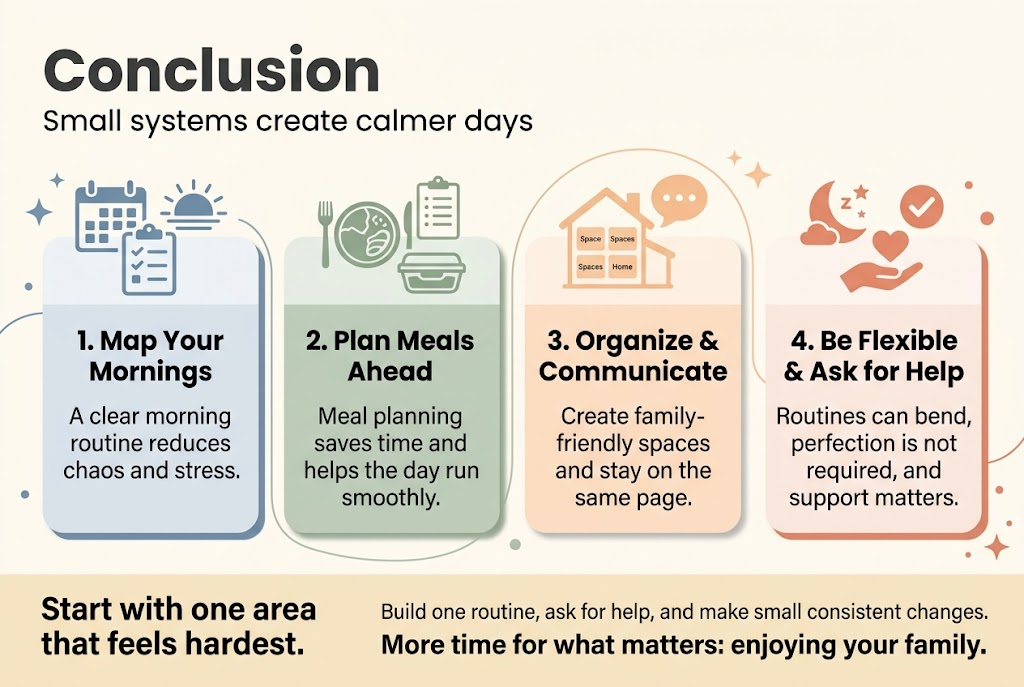
Creating simple systems and sticking to them really does make the chaos of motherhood feel more manageable. When you have your mornings mapped out, meals planned ahead, and spaces that work for your family, those overwhelming moments become much less frequent. Getting everyone on the same page with communication and having bedtime routines that bend without breaking gives you back some control over your days.
The real game-changer is learning that you don't have to do everything yourself. Start with one area that's driving you crazy right now - maybe it's the morning rush or dinner prep - and build a routine around it. Ask for help when you need it, and remember that perfect doesn't exist. Small, consistent changes will give you more time for what actually matters: enjoying your family instead of just surviving each day.
.png)


Comments
Post a Comment