If Moms Took a Day Off: What Would Happen?

Moms keep families running like well-oiled machines, but what happens when mom is away for just one day? For overwhelmed mothers wondering about their family's dependency on them and families who want to understand the true importance of mothers in their daily lives, a mom's temporary absence reveals surprising truths about household dynamics.
When moms take a day off, the immediate chaos that follows exposes just how much families rely on their constant care and coordination. You'll discover how everyone from partners to kids suddenly realizes the countless tasks mom handles behind the scenes - from remembering school events to knowing exactly where everything belongs.
We'll explore the ripple effects that extend beyond your front door, affecting carpools, playdates, and community connections. You'll also learn about the unexpected benefits that can emerge from this temporary shake-up, including increased family appreciation and practical solutions for mom burnout that create lasting positive changes in your household.
The Immediate Household Impact of Mom's Absence
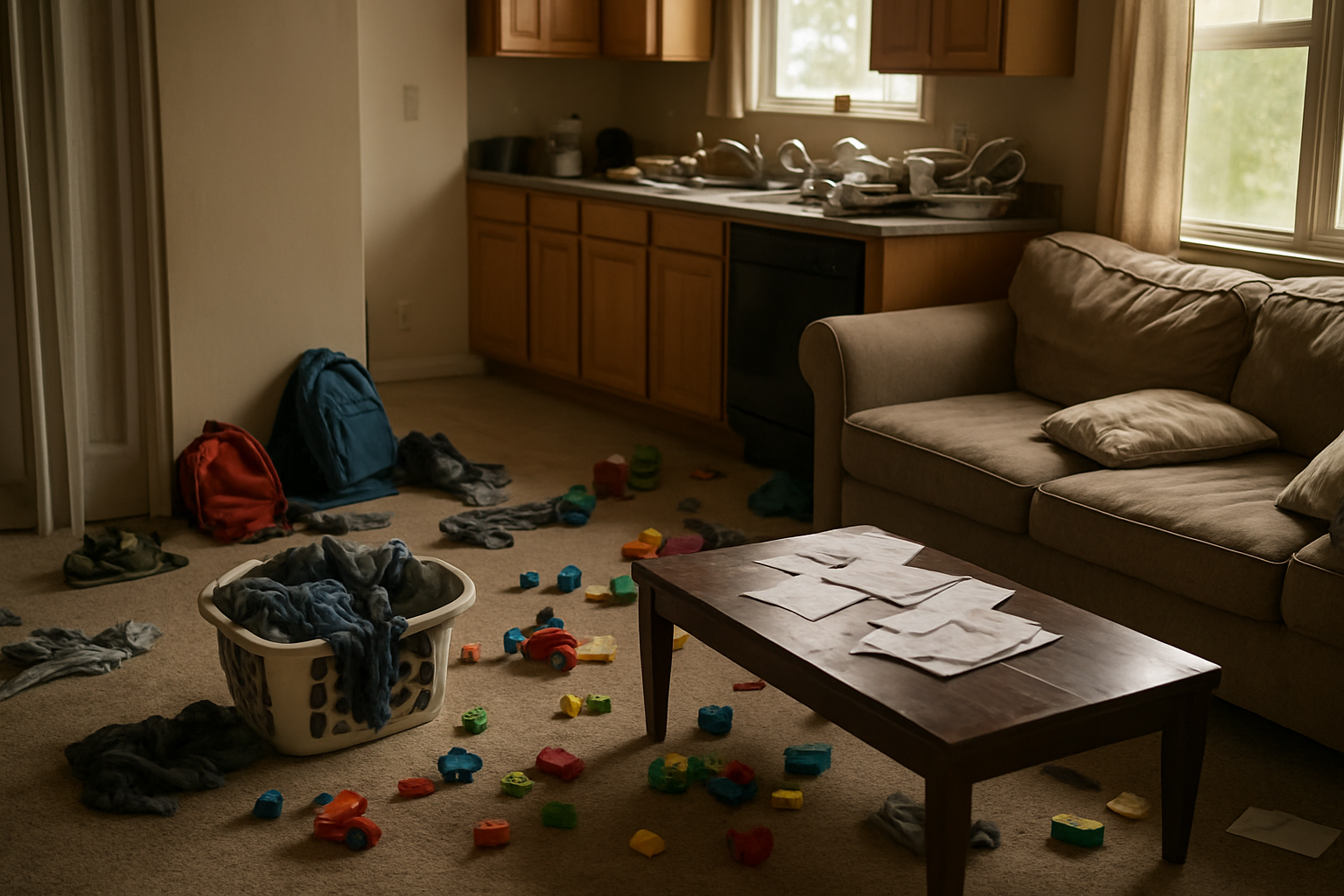
Children's Routines Fall into Disarray
Within hours of mom's absence, children's daily rhythms crumble like a house of cards. Morning chaos begins when nobody remembers where backpacks were left the night before. School lunches become a frantic scramble of whatever's available in the pantry – if they're prepared at all.
The magic of mom's internal clock becomes glaringly obvious when homework sits forgotten, soccer cleats remain missing, and permission slips stay unsigned. Kids who usually flow seamlessly from breakfast to school suddenly find themselves running late, wearing yesterday's clothes, and forgetting their assignments.
Bedtime routines completely unravel without mom's gentle but firm guidance. Stories go unread, teeth remain unbrushed, and the careful balance between structure and flexibility that moms maintain so effortlessly simply vanishes. What happens when mom is away becomes crystal clear as children struggle to navigate their day without their primary coordinator and emotional anchor.
Meals Transform into Takeout Adventures
The kitchen, once a hub of nutritional planning and home-cooked comfort, transforms into foreign territory. Dad stares blankly at the refrigerator, overwhelmed by the prospect of creating actual meals from raw ingredients. The mysterious art of meal planning – something mom makes look effortless – reveals itself as an incredibly complex skill.
Breakfast might start with good intentions, but by day two, cereal becomes the go-to solution for every meal. The careful balance of nutrition, preferences, dietary restrictions, and budget that moms navigate daily becomes an impossible puzzle. Pizza delivery numbers get memorized quickly, and the local Chinese restaurant starts recognizing the voice on the phone.
Family dependency on mothers becomes obvious when simple questions arise: Which kid hates mushrooms? Who's lactose intolerant this week? Where does mom keep the good snacks? The refrigerator holds ingredients, but without mom's culinary wisdom and organizational memory, they remain just individual items rather than potential meals.
Laundry Piles Multiply Exponentially
The laundry situation spirals faster than anyone anticipates. What seems like a simple task – throw clothes in washer, add soap, press button – reveals layers of complexity that moms handle invisibly every day. Colors bleed into whites, delicate fabrics shrink, and somehow every load comes out smelling slightly off.
The sorting system mom has perfected over years collapses immediately. Towels mixed with delicates, work clothes tangled with sports uniforms, and nobody can figure out which mysterious settings actually clean clothes without destroying them. The mountain of clean laundry sits unfolded for days because everyone underestimated the time and skill required for proper folding and organizing.
Household without mom means discovering that she somehow knew everyone's clothing sizes, preferences, and laundry schedules by heart. The rhythm of washing, drying, folding, and putting away that seemed automatic was actually a carefully orchestrated dance of timing and knowledge.
Home Organization Systems Collapse
Mom's invisible organizational matrix breaks down spectacularly. Important papers disappear into black holes, keys migrate to impossible locations, and the bathroom supply fairy stops working entirely. The house gradually shifts from organized chaos to pure pandemonium.
Nobody realizes how many systems mom maintained until they all start failing at once. The mail sorting process breaks down, bills get buried, and somehow the trash cans are always full but never make it to the curb on collection day. Her mental database of where everything belongs and when everything needs to happen proves irreplaceable.
The importance of mothers in maintaining household harmony becomes undeniable when family members spend more time searching for lost items than actually using them. Mom's ability to keep track of everyone's schedules, belongings, and needs simultaneously reveals itself as a superhuman feat that deserves far more recognition than it typically receives.
Family Members Discover Hidden Dependencies
Partners Realize the Extent of Daily Management Tasks
When moms take a day off, partners quickly discover the invisible workload that keeps families functioning. The morning routine alone reveals layers of coordination they never noticed - remembering who has soccer practice, which lunch boxes need packing, and where clean uniforms are stored.
Partners often find themselves frantically searching for items that seem to have designated homes only in mom's mind. The family calendar becomes a foreign language, filled with appointments, deadlines, and commitments they didn't know existed. What happens when mom is away becomes crystal clear as partners juggle meal planning, homework supervision, and bedtime routines simultaneously.
The mental load of motherhood responsibilities extends far beyond physical tasks. Partners realize moms aren't just doing laundry - they're tracking which child outgrew their shoes, monitoring everyone's emotional needs, and maintaining relationships with teachers, coaches, and other parents. This revelation often leads to deeper conversations about family dependency on mothers and how to better distribute the invisible labor.
Children Learn to Problem-Solve Independently
Household without mom scenarios force children to tap into problem-solving skills they didn't know they possessed. Suddenly, they're figuring out breakfast options beyond cereal, locating their own school supplies, and navigating sibling conflicts without their usual mediator.
Older children often step into leadership roles, helping younger siblings with tasks mom typically handles. They discover they can pack their own lunches, choose appropriate clothes for the weather, and even handle minor emergencies. This independence building becomes an unexpected benefit of temporary separation from their primary caregiver.
Children also learn to communicate their needs more clearly when their go-to person isn't available. They practice asking for help from other family members and become more resourceful in finding solutions. These experiences often boost confidence and self-reliance that carries over long after mom returns.
Extended Family Steps Up to Fill Critical Gaps
Grandparents, aunts, uncles, and family friends often emerge as crucial support systems when moms step away. These relationships, which might have been more peripheral, suddenly become central to maintaining family stability. Extended family members discover their own capabilities and the joy of deeper involvement in daily family life.
The ripple effect on community and social networks becomes apparent as neighbors offer assistance and friend groups rally together. School pickup arrangements, emergency childcare, and meal preparation often involve multiple people working together to cover mom's role in family operations.
This collective response frequently strengthens family bonds and community connections that might have remained underdeveloped otherwise. Extended family members gain new appreciation for the complexity of modern family management and often maintain increased involvement even after mom returns to her regular routine.
The Ripple Effect on Community and Social Networks
School and Extracurricular Activities Face Disruption
The school pickup line becomes absolute chaos when mom is away. Dad frantically searches through text messages trying to decode who's supposed to be picked up where and when. Soccer practice gets missed because nobody remembered to check the sports app for schedule changes. The volunteer coordinator at the elementary school calls three times wondering where the promised cupcakes are for the class party.
What happens when mom is away becomes crystal clear at 2:30 PM when teachers start calling about forgotten lunch money, permission slips, and costume pieces for the school play. Carpool arrangements fall apart because other parents only had mom's contact information. The after-school tutoring session gets skipped entirely because dad didn't know it existed.
Dance recital rehearsals hit a snag when the costume bag goes missing, and nobody else knows about the backup outfit hidden in the hall closet. Piano lessons get rescheduled because the sheet music is somewhere in mom's organized filing system that might as well be written in hieroglyphics to everyone else.
Neighborhood Support Systems Activate
Something beautiful happens when moms taking a day off reveals how interconnected communities really are. The neighbor who usually borrows sugar suddenly appears with a casserole and offers to watch the kids. Mrs. Patterson from across the street shows up with fresh-baked cookies and stays to help fold laundry.
The informal neighborhood network that moms have quietly built over years springs into action. Text chains light up with offers of help:
-
"I can grab your groceries while I'm out"
-
"Want me to take your kids to the park with mine?"
-
"I made extra dinner if you need it"
-
"Happy to do school pickup today"
These support systems prove that motherhood responsibilities don't exist in isolation. They're woven into the fabric of entire communities. When one mom steps back, others step forward, creating a safety net that many families never realized existed.
Social Plans and Commitments Get Reshuffled
The social calendar that seemed manageable suddenly becomes a puzzle with missing pieces. Birthday party RSVPs never got sent. The book club meeting gets forgotten entirely because mom's the one who usually remembers to read the monthly selection. Dinner plans with friends need last-minute rescheduling because nobody else knew about them.
Family dependency on mothers shows up in unexpected places. The weekly coffee date with girlfriends gets canceled because dad doesn't realize it's been a standing appointment for three years. Playdate arrangements fall through because other moms only coordinate through the mom who's taking her break.
Social obligations that seemed automatic require deliberate planning when mom steps away. The thank-you cards for last week's dinner party sit unwritten. The RSVP for the wedding invitation gets overlooked. These small social courtesies that keep relationships running smoothly suddenly demand conscious attention.
Volunteer Organizations Feel the Immediate Impact
Libraries, schools, and community centers discover just how much they depend on mom volunteers when those volunteers take time off. The food bank's weekly sorting session runs short-handed. The animal shelter's dog-walking schedule has gaping holes. Church committees postpone meetings because key organizers are unavailable.
Mom's role in family extends far beyond household boundaries into community service. When these dedicated volunteers step back, organizations scramble to fill gaps. Event planning stalls because the mom who usually coordinates everything isn't available. Fundraising efforts slow down because the parent who manages social media promotion is taking her well-deserved break.
Friend Networks Rally to Provide Emergency Support
True friendships shine brightest when family chaos without mom threatens to overwhelm households. Best friends drop everything to help with emergency childcare. College roommates drive across town with supplies and moral support. Mom groups activate like emergency responders, coordinating meal trains and backup babysitting.
These friend networks reveal the invisible support system that helps families function. Group texts explode with offers of assistance. Friends show up unannounced with wine, takeout, and extra hands. The friend who usually calls for advice becomes the one offering solutions.
Mom burnout solutions often emerge from these crisis moments when friends witness firsthand how much their mom friends actually handle. They start planning regular relief shifts and implementing buddy systems that outlast the original day off.
Unexpected Benefits of Temporary Mom Absence
Family Members Develop New Life Skills
When moms taking a day off leaves the family to fend for themselves, something remarkable happens. Dad suddenly becomes an expert at deciphering which cereal bowl belongs to which child, while teenagers discover they actually can operate a washing machine without breaking it. The 8-year-old who claimed they "didn't know how" to make a sandwich transforms into a budding chef, creating elaborate peanut butter and jelly masterpieces.
These forced learning moments aren't just about survival—they're about capability. Children who never touched a vacuum cleaner suddenly understand why mom always looks tired after cleaning day. Teenagers learn that clean clothes don't magically appear in their drawers, and partners realize that keeping track of everyone's schedules requires the organizational skills of a military commander.
The beauty lies in the discovery that everyone is more capable than they believed. Kids start taking pride in their newfound abilities, often continuing these tasks even after mom returns. Partners develop a genuine appreciation for the mental load that comes with running a household, not just the physical tasks.
Children Gain Appreciation for Daily Contributions
Nothing opens children's eyes quite like experiencing household chaos without mom around. The importance of mothers becomes crystal clear when kids realize that snacks don't automatically refill themselves and dirty dishes don't walk to the dishwasher on their own.
Children begin noticing the countless small acts that make their lives run smoothly. They start connecting mom's evening prep work to their stress-free mornings, understanding that clean uniforms and packed lunches don't happen by magic. The child who previously complained about mom's "nagging" about homework suddenly appreciates having someone who cares enough to keep track of assignment due dates.
This newfound awareness often translates into lasting behavioral changes. Kids become more willing to help with chores, more grateful for meals prepared for them, and more understanding when mom needs a few minutes to herself. They develop empathy for the constant juggling act that motherhood responsibilities require and begin to see mom as a person with her own needs, not just someone who exists to serve theirs.
Partners Experience Full Scope of Household Responsibility
When mom is away, partners get a crash course in the invisible labor that keeps families functioning. They discover that managing a household isn't just about completing tasks—it's about remembering, planning, coordinating, and anticipating needs before they become problems.
Partners suddenly find themselves fielding questions about everything from where the band-aids are kept to what's for dinner tomorrow night. They experience the mental exhaustion that comes from being the family's information hub and default problem-solver. The partner who thought they were "helping" with housework realizes they were actually just following directions rather than taking ownership.
This revelation often leads to more equitable distribution of household management. Partners begin to understand why conversations about family dependency on mothers are so important and start proactively taking on mental load tasks. They develop systems for tracking family schedules, start noticing when supplies are running low, and begin anticipating needs rather than just responding to immediate crises.
The experience creates a foundation for better communication about household responsibilities and helps partners understand that true partnership means sharing the thinking, not just the doing.
The Reality Check That Changes Everything

Invisible Labor Becomes Painfully Visible
When moms take a day off, the family gets hit with a brutal wake-up call about everything that happens behind the scenes. Suddenly, everyone realizes that clean clothes don't magically appear in drawers, meals don't prepare themselves, and appointments don't schedule themselves. The mental load that mothers carry becomes glaringly obvious when no one knows where the soccer cleats are, what time piano lessons start, or which kid has a field trip permission slip due.
Dad might find himself standing in the kitchen at 6 PM, wondering how dinner usually appears on the table by this time. Kids discover that their favorite snacks have been mysteriously restocked all along, and the bathroom doesn't actually clean itself. The household without mom reveals just how much coordination, planning, and execution goes into making daily life run smoothly.
This eye-opening experience extends beyond basic chores. Family members realize that mom remembers everyone's preferences, tracks important dates, manages social obligations, and handles countless micro-decisions throughout each day. The emotional labor of checking in on everyone's feelings, mediating sibling conflicts, and maintaining family connections becomes starkly apparent when it's missing.
Family Dynamics Shift Toward Greater Appreciation
The chaos that unfolds when mom is away creates a profound shift in how family members view her contributions. Children who previously took clean rooms and packed lunches for granted suddenly understand the effort involved. They witness dad frantically searching for lunch money while simultaneously trying to braid hair and find matching socks.
This newfound awareness doesn't fade quickly. Family dependency on mothers becomes crystal clear, sparking genuine gratitude that goes deeper than the usual "thanks, mom" mumbled at dinner. Kids start noticing when mom restocks their school supplies or remembers to wash their favorite shirt for picture day.
Partners experience their own reality check about motherhood responsibilities. They get a crash course in the juggling act that happens daily - managing schedules, handling emergencies, and keeping everyone fed, clothed, and emotionally supported. This firsthand experience creates lasting respect for the complexity of what mothers handle routinely.
Long-term Improvements in Household Participation
The temporary chaos when moms take a day off often leads to permanent positive changes in family dynamics. Once everyone understands the scope of work involved in running a household, they're more willing to pitch in regularly. Kids who struggled to remember their chores suddenly become more helpful when they've experienced the alternative.
Partners step up their game significantly after witnessing the importance of mothers in family functioning. They start taking initiative with meal planning, school communications, and household management instead of waiting for instructions. The appreciation for moms translates into concrete actions that reduce the overall burden.
Family members develop new routines and systems that distribute responsibilities more evenly. Children learn life skills they might have missed otherwise, becoming more self-sufficient and capable. The experience serves as powerful mom burnout solutions by creating sustainable changes that prevent one person from carrying the entire household load.
These improvements stick because they're born from understanding rather than guilt or nagging. When families truly grasp what happens when mom is away, they naturally want to prevent that level of dysfunction from happening again.

When moms step away for just one day, the entire ecosystem of family life reveals itself in ways nobody expected. The immediate scramble for breakfast, the frantic search for school permission slips, and the sudden realization that someone needs to coordinate carpools creates a beautiful chaos that opens everyone's eyes. Kids discover they're more capable than they thought, partners gain deep appreciation for the invisible work that happens daily, and extended family members suddenly understand why mom always seems busy.
This temporary absence doesn't just shake up one household – it creates ripples that touch teachers, neighbors, and friends who rely on mom's coordination skills. But here's the surprising part: families often emerge stronger, with everyone more aware of their roles and more grateful for what mom does. Take that day off, mama. Your family needs to see what happens when you're not there, and you need to remember that the world won't fall apart without you for 24 hours.
.png)


Comments
Post a Comment